
Application of interactive 3D simulation technology in innovating teaching methods for automotive technology at a college in Central Vietnam
DOI:
https://doi.org/10.65956/leqa.2026.59Keywords:
3D simulation, automotive technology, vocational education, digital transformation, automotive chassisAbstract
Automotive vocational training often faces difficulties in explaining the structure and operating principles of chassis systems because physical models are bulky, costly, and limited in their ability to demonstrate kinematic movement. This study presents the development and application of a web-based interactive 3D simulation system to support teaching innovation at a college in Central Vietnam. The system enables learners to rotate models 360°, separate structural layers, select components, access technical information, and view integrated instructional videos. Implemented in Automobile Technology teaching, the system was evaluated through classroom use and feedback from students and teachers. The findings show that the 3D simulation improved understanding of internal structures and operating principles, increased learner engagement and confidence, and supported a more effective integration of theory and practice. Teachers also reported that the system made lessons more vivid and practice-oriented. In addition, the simulation reduced dependence on expensive physical models and provided a safer, more accessible learning environment. The study suggests that web-based interactive 3D simulation is a practical solution for improving automotive vocational education and advancing digital transformation in teaching and learning.
INTRODUCTION
In the curriculum of the Automotive Technology vocational training program, the modules on “Automobile Structure” and “Automobile Chassis” play a foundational role, providing core knowledge about the shape, construction, and operating principles of vehicles. A solid understanding of the suspension, steering, braking, and power transmission systems is a prerequisite for learners to develop professional repair and maintenance skills. However, the current teaching of these contents faces numerous barriers related to teaching methods and learning materials. Currently, instruction on the chassis primarily relies on physical mechanical models or cutaway models. Although these models offer some level of visual clarity, they are often bulky, expensive to invest in, difficult to maintain, and limited in their ability to illustrate complex kinematic movements, such as steering geometry or the dynamic changes in the suspension system during operation. In addition, traditional printed materials only provide static images, lacking spatial depth, which makes it difficult for learners to visualize the organic relationships between components within a complete vehicle system.
This study was conducted at a college that is currently pursuing a strong digital transformation agenda and fundamental improvement in training methods towards a more modern approach. Most students enrolled in vocational programs at the college have average academic performance and often face difficulties when engaging with abstract technical knowledge through purely theoretical instruction. Therefore, there is an urgent need for a highly visual learning tool that allows multi-angle observation and deep interaction to help students absorb lessons more effectively. In reality, students of today prefer flexible learning methods and desire the ability to access and explore models anytime and anywhere using personal devices such as laptops or smartphones (Dang, 2025). However, in Vietnam, there is currently no specialized interactive 3D system designed specifically to align with the framework curriculum of vocational education to serve this purpose. Given the requirements for pedagogical innovation and the practical context of the college, the research and development of an interactive 3D simulation system for the automobile chassis based on WebGL technology is an essential solution. This system not only addresses the issue of high investment costs for physical models but also creates a dynamic virtual practice environment, enabling students to actively disassemble, observe, and deeply understand technical structures in the most intuitive way.
The Automotive Technology program at the college has been implemented since 2005. The overall instructions of the program relied heavily on textbooks, schematic diagrams, and cutaway models to convey technical knowledge. However, these approaches present several limitations. They often fail to provide a comprehensive visualization of complex mechanical structures and dynamic operating principles, making it difficult for students to fully grasp system interactions. As a result, learning tends to be passive, with students relying on verbal explanations rather than engaging in active exploration. Furthermore, instructors are required to invest significant effort in explaining and illustrating abstract concepts, which may reduce teaching efficiency.
To address these challenges, this study was conducted to develop and implement an interactive 3D simulation system for the course titled “Automotive Chassis Structure and Operation.” The study interviewed students and teachers who were using these simulations for initial feedback to improve this 3D system. Therefore, this study aims to address the research question, “How did students and teachers experience the use of the 3D models developed for the Automobile Technology program?” This article presents the results of developing a 3D simulation model for the content of “Automobile Structure” and “Automobile Chassis” for students in the Automotive Technology vocational college program, along with the findings from interviews with students and teachers regarding their experiences in using the model for teaching and learning.
LITERATURE REVIEW
The integration of interactive 3D simulation and virtual reality (VR) technologies has revolutionised teaching and learning in technical and vocational education, particularly in automotive technology programs where hands-on practice with complex mechanical systems is essential. Traditional methods relying on physical equipment, textbooks, or 2D diagrams often encounter challenges such as high costs, safety risks during disassembly and assembly or maintenance tasks, limited access to real vehicles, and difficulties in visualizing internal structures or dynamic operations. Interactive 3D simulation addresses these limitations by enabling immersive, repeatable, and risk-free practice, fostering deeper conceptual understanding, skill development, and student engagement. This section reviews global and regional studies on the application of such technologies in automotive engineering and vocational training, highlighting their benefits, implementations, and relevance to innovating teaching methods at some institutions.
Internationally, research demonstrates the transformative potential of interactive virtual simulation in automotive education. Wang et al. (2025) established a virtual simulation experimental teaching centre at Chengdu Technological University in China, integrating 3D engines (e.g., Unity and VeryEngine) with platforms for new energy vehicles, VR walking experiences, and creative development tools. The centre supports over 20 experiments, including intelligent connected vehicle algorithm testing, power performance evaluation, electric vehicle structure training, and powertrain assembly simulations. Structured into teaching hubs, research labs, and experiential facilities, it served 1,931 students over two years, with high completion rates (over 80% exceeding 60% progress) and support for competitions and cross-campus collaboration. Key advantages include cost reduction (minimizing physical hardware needs), enhanced safety (avoiding real-world risks), unlimited repetitive practice, and immersive learning that improves retention and comprehension of complex procedures. The authors conclude that virtual simulation promotes teaching reform by enabling self-directed learning and resource optimization, particularly for emerging fields like new energy vehicles and intelligent driving.
Similarly, Hernández-Chávez et al. (2021) developed a VR automotive laboratory using Unity3D, Oculus Rift S headsets, and Leap Motion hand-tracking for engineering students in Mexico. The system features a virtual workshop with detailed 3D models of a four-stroke combustion engine (11 components, including camshaft, crankshaft, pistons, and connecting rods), allowing interactive assembly/disassembly, manipulation, operation animation (linked to the Otto cycle), and part-specific information display. Scientometric analysis of Scopus data (up to 2021) confirmed growing interest in VR for automotive training, with peaks in publications post-2013. Student testing with 20 participants showed high ratings for immersion, learning effectiveness, and manipulation (means 4.00-4.50 on Likert scales for Oculus Rift S), positioning the VR lab as a cost-effective, repeatable tool that complements physical labs and aligns with Industry 4.0 and Education 4.0 principles. The study emphasizes how such environments enable active learning, self-paced skill development, and preparation for real-world challenges without material restrictions or risks.
In the context of automobile maintenance specifically, Chen (2021) explored 3D virtual simulation technology to simulate disassembly, assembly, and repair processes vividly in a virtual environment. Students can interact with detailed 3D models of automotive parts, visualizing internal structures and maintenance procedures that are difficult to observe in real settings. This approach enhances teaching by providing dynamic, multi-angle views and interactive practice, overcoming limitations of traditional physical demonstrations (e.g., equipment wear or safety issues). The study highlights improved student visualization and practical skill acquisition through simulation.
In Vietnam, localized research and implementations underscore the growing adoption of 3D technologies in automotive engineering education amid resource constraints. Tran et al. (2025), at Vietnam National University of Forestry, evaluated interactive 3D models (created in SolidWorks and exported to accessible HTML via eDrawings) for key automotive assemblies such as engines, steering systems, transmissions, and suspensions. Integrated into courses like Automotive Structure and Principles of Internal Combustion Engines, the models allowed rotation, zooming, and component interaction via projectors. A survey of 75 students across visualization/ comprehensibility, interest/engagement, and retention/application dimensions yielded mean scores of 4.26-4.39 (significantly above neutral, p < 0.001; Cronbach’s α = 0.813), confirming enhanced understanding of complex systems, greater engagement, and better knowledge retention for practical application. The authors recommend expanding such tools in Vietnamese contexts to bridge theory and practice without specialized software.
Complementing academic evaluations, practical deployments in Vietnamese higher education institutions further illustrate the technology’s impact. In 2024, Duy Tan University in Da Nang City, Vietnam launched an interactive 3D simulation system for smart automotive technology training. The platform enables multi-angle interaction with detailed 3D models of vehicle components and systems, supporting realistic practice of maintenance, fault diagnosis, and assembly scenarios (including high-risk situations like engine failures or braking issues) without physical equipment. It emphasizes real-time updates, immersive visualization, and direct user interaction to elevate teaching quality and student readiness for industry demands. Broader vocational education literature reinforces these findings. Virtual simulation systems revolutionize practical training by replicating enterprise scenarios digitally, reducing costs (up to 80-89% in high-risk fields like automotive repair), improving safety, and enabling personalized, repeatable skill-building aligned with Industry 4.0.
In sum, these studies establish that interactive 3D simulation enhances visualization of intricate automotive systems, boosts student engagement and retention, lowers training costs and risks, and supports innovative pedagogical reforms, particularly in resource-limited vocational settings. However, gaps persist. Most international work focuses on universities or specific maintenance/VR labs, while Vietnamese applications emphasize either driving simulators or broader 3D models rather than comprehensive, interactive 3D platforms tailored to college-level automotive technology curricula. Local colleges have limited documented implementations, creating opportunities to adapt and evaluate such technologies for local teaching innovation. This study addresses these gaps by applying interactive 3D simulation specifically to the automotive technology major at one college in Central Vietnam, contributing empirical insights into its effectiveness for method renewal.
METHODS
Design of 3D Models
The pedagogical design of the interactive 3D simulation system is deliberately aligned with established instructional theories to transform traditional automotive technology teaching at the college from passive, equipment-dependent lectures into active, learner-centred experiences. This section outlines how the technical implementation operationalizes key pedagogical frameworks, including constructivism, the 4C/ID model for complex vocational skills, and Mayer’s principles of multimedia learning, while addressing the specific constraints of a vocational college (limited physical resources, heterogeneous student backgrounds, and the need for safe, repeatable practice).
The overall design adopts a constructivist approach, where students actively acquire knowledge through direct interaction with 3D models rather than receiving transmitted information. By separating vehicle systems into modular meshes (chassis, suspension, differential, hub assemblies) during the Blender modelling phase, the system helps to create authentic learning tasks that mirror real automotive disassembly/assembly workflows. This modular structure directly implements the 4C/ID instructional model (Mulders, 2022), which organizes complex vocational competencies into progressive task classes with supportive information, just-in-time procedural guidance, and part-task practice. In vehicle painting training, Mulders demonstrated that 4C/ID in VR enables integrated acquisition of knowledge, skills, and attitudes by starting with whole authentic tasks and gradually fading scaffolding, precisely the pedagogical logic applied here through layer-based visibility controls. Students first explore complete vehicle structures, then isolate individual systems, reducing cognitive load while promoting transfer to real-world maintenance.
Optimization for low-spec devices, such as poly reduction to thousands, lightweight PBR materials, and backface culling, ensures accessibility and self-directed use on college computers or personal laptops, aligning with adult learners’ need for immediate applicability and internal motivation. Raycast-based object selection with golden highlighting and dynamic information panels (name, function, parameters) empowers students to control their learning pace, examine internal structures from any angle, and receive contextual explanations “just in time.”
Camera controls and zoom limitations prevent disorientation while preserving immersion, applying Mayer’s multimedia learning principles such as coherence, signalling, and spatial contiguity. The information panel appears adjacent to the selected mesh, avoiding split-attention effects, while golden highlighting serves as a signalling cue. Integration of real-motion video pop-ups follows the multimedia principle of temporal contiguity: students see abstract 3D animations reinforced by authentic video footage within the same interface, enhancing retention of dynamic processes (e.g., suspension movement or differential operation).
Layered system visibility (hide/show groups) and metadata-enriched GLB/GLTF export enable scaffolded, personalized learning paths. Instructors can assign progressive tasks, first visualization, then selective disassembly, finally full system diagnosis, mirroring the 3T pedagogical model (teaching innovation, technology improvement, technical support) identified in Liu et al.’s (2024) systematic review of VR/AR in vocational education. That review confirms VR simulations in automotive engine assembly improve spatial perception, autonomy, and practical skills while reducing cognitive load through layered, interactive 3D environments. The combination of optimized 3D models, intuitive interaction, modular layering, and multimedia support creates a risk-free, repeatable practice environment that directly addresses traditional automotive training limitations, such as equipment wear, safety risks, and limited vehicle access.
In summary, the pedagogical design transforms the technical system into a comprehensive instructional tool that (a) supports constructivist knowledge construction through active exploration, (b) applies 4C/ID for vocational competence development, (c) incorporates multimedia principles for cognitive efficiency, and (d) ensures equitable access in a Vietnamese local college context. This alignment positions the interactive 3D simulation as a catalyst for genuine teaching-method innovation at the college, bridging the gap between theoretical lectures and industrial practice while preparing students for Industry 4.0 automotive demands.
The 3D Topics
The following table presents the four topics that have been developed for the interactive 3D simulation platform (Table 1).
Table 1. The List of Topics with Interactive 3D Simulation
|
No. |
Topics |
Objectives |
|---|---|---|
|
1 |
Overview of Automobile Chassis Structure |
Help students identify the main components and their installation positions on a complete chassis system. |
|
2 |
Suspension System and Shock-Absorber Mechanism |
Analyse the structure and operating principles of common suspension systems (MacPherson, Double Wishbone). |
|
3 |
Steering and Power-Transmission System |
Understand the kinematic relationships between the steering wheel, steering rack, and differential mechanism. |
|
4 |
Braking System and Motion Safety |
Analyse the structure of disc brakes and the actuator mechanism. |
Participants
After the development of this 3D simulation model, a class of 24 students used it to learn related concepts in the program. Five students were randomly selected for interviews. All three teachers teaching in this program, with experience using the system, were also invited to participate in the interviews to share their experiences using the model (Tables 2 and 3).
Table 2. Teachers’ Profiles
|
Participant |
Teaching experience |
Classes/sessions using 3D |
|---|---|---|
|
Teacher 1 |
4 years |
4 sessions / 1 class |
|
Teacher 2 |
18 years |
Several sessions |
|
Teacher 3 |
24 years |
Several sessions |
Table 3. Students’ Profiles
|
Participant |
Gender |
Year of study |
Exposure to 3D learning |
|---|---|---|---|
|
Student 1 |
Male |
Year 3 |
4 sessions |
|
Student 2 |
Male |
Year 3 |
2 sessions |
|
Student 3 |
Male |
Year 3 |
3 sessions |
|
Student 4 |
Male |
Year 3 |
4 sessions |
|
Student 5 |
Male |
Year 3 |
2 sessions |
Interviews
The interview questions explored both students’ and teachers’ experiences with the interactive 3D learning model, its differences from traditional teaching methods, the usability of the system’s features, and any difficulties encountered during use. Students were asked about how the 3D model supported their understanding of automotive structures and operating principles, which learning activities they found most effective, whether it increased their interest and confidence, and their suggestions for improvement. Teachers were asked to evaluate the effectiveness of key features (such as layer visibility, raycast selection, information panels, and pop-up videos), observed improvements in student understanding, engagement, and confidence, the overall impact on teaching innovation, and their recommendations for further development of the system (Appendices 1 and 2). The interviews lasted approximately 15 minutes each.
Data Collection and Analysis
Interviews were conducted in March 2026 to explore students’ and teachers’ experiences with the interactive 3D simulation system. All interviews were carried out in Vietnamese. Teachers provided written responses, while students participated in oral face-to-face interviews. Informed consent was secured from all participants, who were assured of voluntary participation, confidentiality, and anonymity (with participant codes used in reporting). Participants were informed of their right to withdraw at any time without consequence and that the data would be used solely for research purposes. The collected qualitative data were analysed using thematic analysis (Braun & Clarke, 2021; Maguire & Delahunt, 2017). This involved familiarisation with the data, generating initial codes, searching for themes, reviewing and refining themes, and defining final themes related to usability, pedagogical effectiveness, differences from traditional teaching methods, student engagement, and suggestions for system improvement.
RESULTS
Activities for the 3D Topics
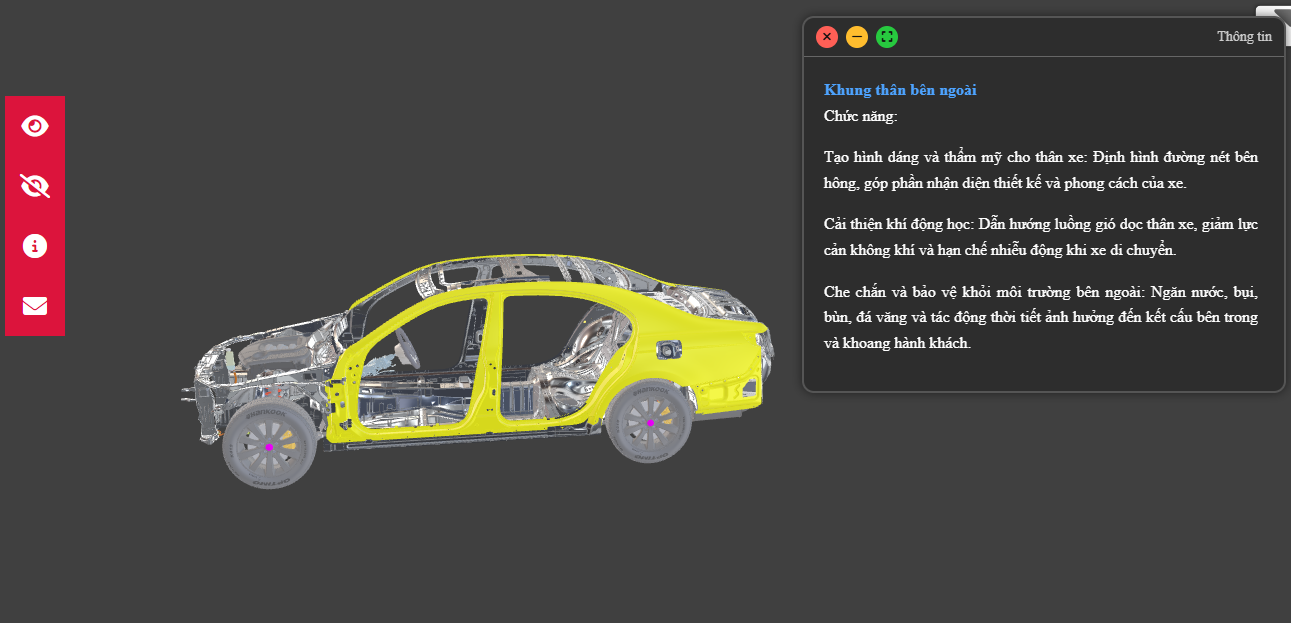
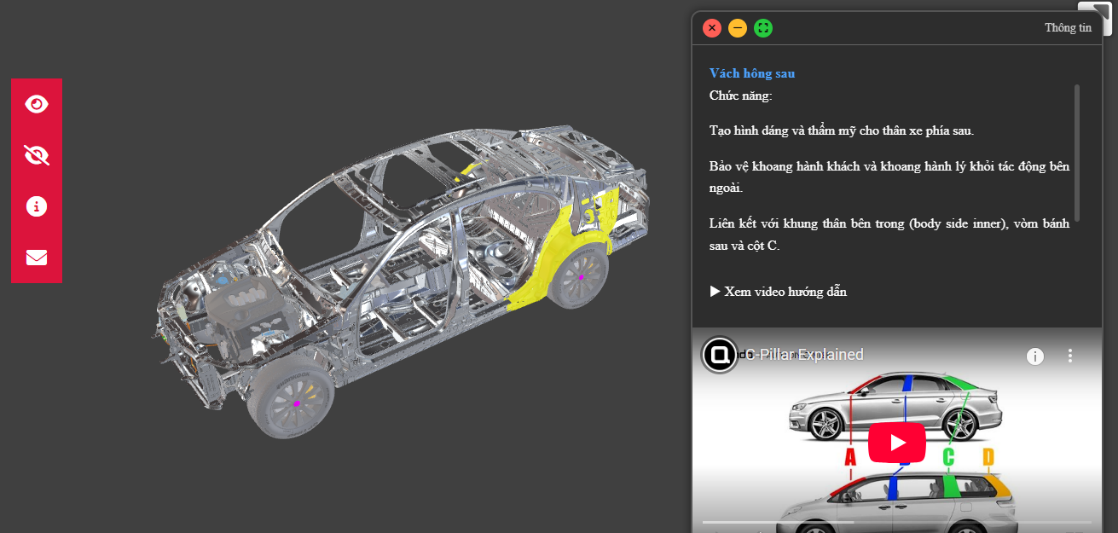
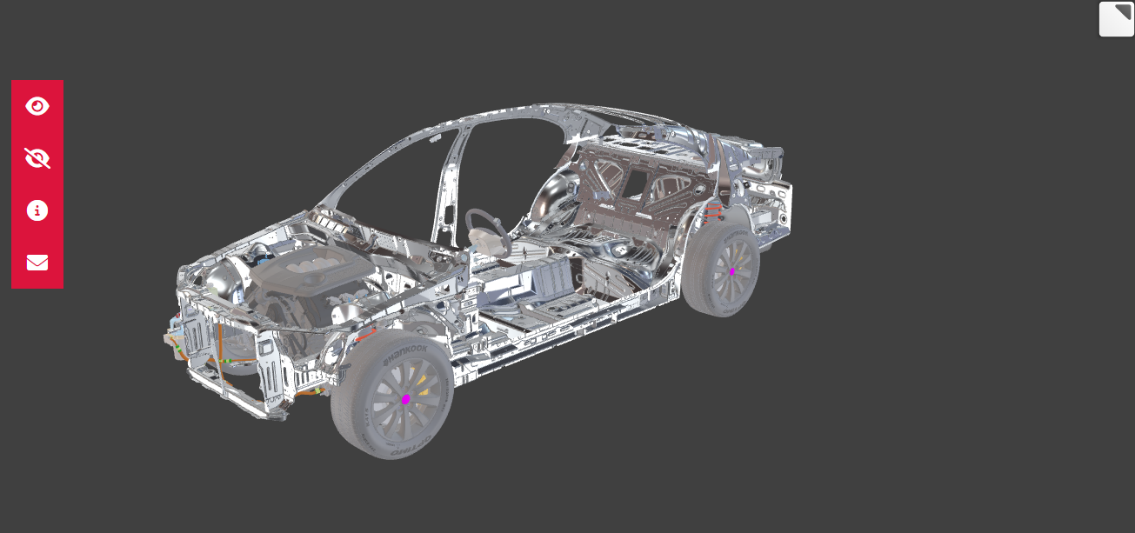
The following table presents how each topic integrates the technical features, including 3D modelling, raycasting selection, layer visibility, information panels, camera controls, and integrated video pop-ups to support active, constructivist learning in automotive technology (Table 4). These topics are ready for immediate classroom implementation and directly link every learning activity to the interactive 3D features (360° rotation, raycasting selection with golden highlighting, layered visibility, information panels, camera/zoom controls, and pop-up videos). The design ensures progressive skill development from basic visualization (Topic 1) to advanced kinematic analysis and assessment (Topics 3-4). Figures 1, 2, and 3 are images captured from the interactive 3D models.
Table 4. Activities with Interactive 3D Simulation for Each Topic
|
No. |
Topics |
Activities |
Timeframe |
|---|---|---|---|
|
1 |
Overview of Automobile Chassis Structure |
Activity 1: Explore the “Skeleton” of the car Use the 360° rotation feature to observe the entire load-bearing frame from multiple angles. Use the “Hide/Show Layers” feature to strip away the vehicle body, leaving only the original chassis system. Activity 2: Component Identification Require students to use the mouse (raycasting) to select individual parts such as chassis frame, drive shaft, hub assemblies, etc. The technical information panel will automatically display the name, function, and role of the selected component within the system. |
01 section with 5 periods |
|
2 |
Suspension System and Shock-Absorber Mechanism |
Activity 1: Layered Disassembly Students hide unrelated components to focus on control arms, springs, and shock absorbers. Golden highlighting is applied to key parts to clearly distinguish details within complex assemblies. Activity 2: Real-World Comparison Open the integrated pop-up video window directly in the 3D interface to view simulated motion of springs and shock absorbers when the vehicle travels over uneven roads. Compare differences between the 3D model and technical videos from manufacturers such as Toyota or Bosch. |
1 session (five 50-minute periods) |
|
3 |
Steering and Power-Transmission System |
Activity 1: Trace Power Flow Use close-up camera zoom on the differential and driveshaft assembly. Apply layer visibility to examine the internal structure of the differential, something static physical models cannot show. Activity 2: Kinematic Interaction Observe real-time 3D simulation of wheel steering angles when operating the rack-and-pinion steering system. |
1 session (five 50-minute periods) |
|
4 |
Braking System and Motion Safety |
Activity 1: Detailed Brake Assembly Zoom in on the disc brake unit at the hub to clearly view the brake disc, brake pads, and caliper piston. Use metadata to display standard technical specifications of braking systems on common vehicle models. Activity 2: Knowledge Assessment The instructor hides part names and requires students to click and correctly identify components based on the functional descriptions shown in the information panel. |
1 session (five 50-minute periods) |
Interview Results with Students
The analysis of five student interviews generated five themes concerning students’ experiences of learning Automobile Technology through interactive 3D models.
Students’ novelty, surprise, and brief disorientation after initial encounters with 3D
Students’ first experiences with the 3D system were consistently described as striking and unfamiliar. Participants framed their initial encounters as memorable, often because the technology differed substantially from their usual learning experiences. For some students, this reaction indicates their surprise. Student 2 stated that he was “very surprised,” and Student 4 likewise described his first impression as one of surprise. Other students emphasised curiosity alongside temporary uncertainty. Student 1 reported feeling “a little confused, but very curious,” while Student 5 described feeling “awkward” and “unfamiliar” with the model. Student 3 similarly characterised the first encounter as “strange,” while also noting the sharpness and detail of the model.
Perceived enhanced understanding of internal structures and mechanical principles
A dominant theme across all five interviews was that the 3D model helped students understand internal automotive structures and mechanical processes more clearly. Students repeatedly referred to the value of being able to visualise hidden parts, spatial relationships, and operating principles that are difficult to grasp through conventional theory-based instruction alone. Student 2 explained that he could “see through and peel away the whole outer shell of the car,” suggesting that the model made invisible structures accessible. Student 1 similarly highlighted the value of layer separation, noting that it made “the structure and connections of the automobile” very clear. Student 3 and Student 5 both emphasised that the 3D model made “all parts” or “every part” easier to understand, while Student 4 commented that complex machine parts were presented very clearly. These suggest that the 3D system did not merely provide visual support; rather, it helped students make sense of complexity by revealing internal arrangements and clarifying how components and systems relate to one another.
Interactive functions supported active, self-directed, and flexible learning
Students also experienced 3D learning as more active and flexible than traditional methods. Rather than passively receiving information, they described being able to manipulate the model themselves through functions such as zooming, rotating, highlighting, and showing or hiding layers. This control appeared to give students a stronger sense of agency in the learning process. Student 1 stated that the system allowed them to learn “more actively in my own way compared with the traditional method.” Similarly, Student 5 emphasised that adjusting the model independently was “very flexible.” Student 3 highlighted the practical benefit of individual access, explaining that each student had “their own car to practise on the computer,” which made learning easier. Student 4 further described the 3D approach as flexible because it combined theory and practice, while Student 2 noted that direct interaction made learning easy. As a whole, these responses indicate that interactivity was not simply a technical feature, but a core part of how students experienced the pedagogical value of the 3D environment.
Enhanced interest, engagement, and practical confidence through 3D learning
Another strong theme was that the 3D environment increased students’ engagement and helped them feel more confident in relation to practical tasks. Students often linked direct interaction with a stronger interest and a greater sense of readiness for real-world application. Student 1 described interactive learning as “very interesting,” while Student 5 said that direct interaction made learning “very exciting.” Student 2 reported feeling “very confident in all parts of the lesson,” and Student 4 similarly stated that he felt “very confident” when learning through the model. Student 3 connected this confidence to practical procedures such as engine disassembly and assembly, whereas Student 1 referred to understanding the operation of a gear pump, and Student 5 mentioned the screw mechanism. These examples show that students did not perceive the 3D model as separate from practical learning; instead, they saw it as a bridge between conceptual explanation and hands-on application. In this sense, the technology appeared to strengthen students’ confidence before engaging with real automotive systems.
Perceived safety and instructional effectiveness of 3D learning with technical barriers
The final theme concerns students’ overall preference for 3D learning. All five interviewees expressed positive views of the approach, and several explicitly stated that they preferred it to traditional theory-based learning or practice with real vehicles. Safety emerged as a particularly important reason for this preference. Three students explicitly stated that they liked the 3D simulation because it was safe. Student 5 added a slightly different perspective, explaining that 3D learning resembled real equipment while being “cleaner.” Beyond safety, students also associated 3D learning with clarity, flexibility, and convenience. However, not all experiences were without difficulty. Student 2 reported problems caused by a weak device, Student 5 explained that a low-specification computer ran slowly, and Student 3 found it difficult to select a component located behind or inside the model. These responses suggest that students’ evaluations of the 3D system were strongly positive overall, but that the quality of the experience could still be shaped by hardware limitations and interface challenges.
In summary, the five interviews show that students experienced interactive 3D learning as a valuable enhancement to Automobile Technology education. The technology was perceived as visually powerful, pedagogically engaging, and supportive of both conceptual understanding and practical confidence. Although a few limitations were noted, particularly in relation to device performance and selecting hidden components, these issues did not diminish students’ overall positive evaluation of the method. Indeed, several students stated that they would like more subjects to incorporate similar simulation-based learning, suggesting that they viewed 3D technology not merely as a useful supplement, but as a desirable direction for broader curriculum development.
Teachers’ Views on the Use of 3D Simulation in Automotive Technology Teaching
Analysis of the three teacher interviews identified five shared themes regarding the use of 3D simulation in Automotive Technology teaching.
3D simulation as a vivid instructional medium for integrating theory into practice
A consistent pattern across all three interviews was that teachers viewed 3D simulation as a way to make teaching more vivid and to connect theoretical instruction with practical learning. Rather than treating theory and practice as separate components, teachers perceived the 3D system as enabling a more integrated teaching approach. They wrote:
The system helps teach theory combined with practice more vividly. (Teacher 1)
Teaching theory combined with practice in a more vivid way. (Teacher 3)
This theme suggests that teachers did not see 3D merely as an additional visual aid. Instead, they framed it as a pedagogical resource that reshaped how automotive content could be delivered in a more dynamic and practice-oriented manner.
Teachers’ beliefs about students’ enhancement of conceptual understanding of structures and operating principles
Another strong shared theme was that teachers believed 3D simulation improved students’ understanding of automotive systems, especially in relation to internal structure and operating principles. Teachers repeatedly emphasized that students could visualize concepts more clearly and therefore understand lessons more effectively. They said:
Students understand the lesson better and can more easily visualize the structure and operating principles of the system. (Teacher 1)
Much better. For example, students can easily visualize the structure and operating principles of the system. (Teacher 3)
Teachers’ perceived enhancement of student engagement, attention, and participation
A further recurring pattern was that teachers associated 3D simulation with higher levels of student engagement. All three teachers reported that students were more attentive, interested, and active in lessons when 3D was used. All three teachers described students as attentive, interested, excited, and actively participating. The convergence of these responses suggests that teachers saw 3D not only as improving comprehension but also as influencing the emotional and behavioural dimensions of learning. In this dataset, increased attention and participation were key signs that the technology positively changed the classroom atmosphere.
Teachers’ perceptions of better transfer from 3D simulation to practical skills
Teachers also consistently linked 3D simulation with improved practical application. Their comments suggest that they viewed the system as helping students move from conceptual understanding to more confident and effective hands-on performance. Teacher 1 stated that “students grasp the content more firmly and their practical manipulation skills are better.” Teacher 2 made the same point, saying that “students learn the topics better, and their practical manipulation skills are better.” Although briefer, Teacher 3 echoed this view by stating “Yes. Students apply it better.” Teachers saw it as contributing to practice-oriented outcomes, which is especially significant in vocational and technical education contexts.
Easy to use, but requires technical and instructional improvements
The final theme captures a more nuanced teacher perspective. While teachers generally described the 3D system as easy to use, they also identified technical barriers and suggested areas for further improvement. Three teachers described the system as easy to use, but also reported that “students’ devices are weak” (Teacher 1), with “slow loading speed” (Teacher 2). Teacher 3 reported “no” technical difficulty, suggesting a more positive implementation experience in that case (Teacher 3).
Despite these differences in technical experience, all three teachers recommended further development, particularly enhancing interactivity, clarifying system functions, and incorporating instructional videos. They said:
It is necessary to upgrade interactivity, explain the functions, and add instructional videos for use. (Teacher 1)
It is necessary to upgrade interactivity and add instructional videos. (Teacher 3)
In sum, the results show a clear and consistent pattern across the three teacher interviews. Teachers viewed 3D simulation as an effective innovation in Automotive Technology teaching because it made lessons more vivid, strengthened students’ understanding of structures and mechanisms, increased engagement, and supported the application of knowledge in practice. At the same time, they emphasized that the system would be even more effective if technical limitations were reduced and additional guidance and interactivity were provided.
Comparison of students’ and teachers’ interview results
Both students and teachers viewed the 3D simulation very positively, particularly for its ability to improve understanding of complex automotive systems. Students emphasized how the model helped them see hidden structures, relationships between parts, and operating principles that were hard to grasp through traditional theory-based teaching alone. Teachers expressed a highly similar view, noting that 3D made lessons more vivid and helped students visualize structures and mechanisms more clearly. Students described this from the perspective of direct experience and discovery, whereas teachers framed it more in terms of pedagogical effectiveness and improved delivery of theory integrated with practice.
There was also strong agreement that 3D learning increased engagement and supported more active learning. Students valued the freedom to rotate, zoom, hide layers, and explore the model independently, which gave them a stronger sense of control, flexibility, and confidence for later practical work. From the teachers’ perspectives, they observed that students became more attentive, interested, excited, and participative in class. In this sense, both groups saw 3D not simply as a visual tool, but as something that changed the learning process itself. Students focused more on self-directed learning and confidence, while teachers highlighted classroom participation and improved transfer to practical manipulation skills.
At the same time, both groups recognized that the system still had limitations despite their overall positive evaluations. Students mentioned weak devices, slow performance, and difficulty selecting hidden components, while teachers also pointed to slow loading and uneven device quality. However, teachers were more likely to propose concrete improvements, such as upgrading interactivity, adding clearer function explanations, and including instructional videos. Students, by contrast, focused more on the benefits of safety, cleanliness, and convenience compared with real equipment. Overall, both groups agreed that 3D simulation was an effective and desirable direction for automotive teaching, but teachers offered a more implementation-oriented perspective on how it could be further improved.
DISCUSSION
This study was conducted to develop interactive 3D models for students of the automotive technology vocational program at one college in Central Vietnam. The 3D-based lessons were designed to move students beyond passive observation toward active exploration of automobile chassis systems. Across the four lessons, students engaged with key chassis subsystems through rotating, isolating, and interacting with 3D components, which helped them visualize structures, understand functional relationships, and observe mechanisms that are difficult to access in traditional classrooms. The lessons also integrated layered disassembly, metadata-supported identification, and embedded video comparison to connect abstract technical knowledge with real-world operation.
These lessons were implemented at the college. The study also conducted interviews with students and teachers about their experiences of these 3D lessons. Students and teachers both viewed the 3D simulation as effective for improving understanding of complex automotive structures and operating principles. Both groups agreed that it made learning more vivid, engaging, and easier to connect with practice. Students especially valued the ability to explore the model actively and independently, while teachers emphasized better classroom participation and stronger transfer to practical skills. Both groups also noted technical limitations, particularly weak devices and slow performance.
The present findings reinforce a growing body of literature suggesting that 3D simulation can enhance vocational learning by making complex technical systems more visible, interactive, and instructionally meaningful. Both students and teachers consistently reported that the 3D model improved understanding of internal structures and operating principles, which supports prior work showing that virtual environments are particularly useful for vocational tasks requiring spatial visualization and system-based reasoning (Liu et al., 2024; Mulders, 2022). In addition, students’ emphasis on rotating, zooming, and isolating components suggests that the pedagogical value of the system lies not only in visualization but also in learner control and active exploration. This aligns with Redman’s (2023) study, which found that immersive automotive instruction can strengthen engagement and help bridge theoretical learning with psychomotor practice. The findings also resonate with Mayer’s (2021) multimedia learning theory, particularly the principles of signalling and spatial contiguity, because highlighted parts and adjacent explanatory information appeared to reduce cognitive difficulty and support clearer understanding. However, the reported issues of weak devices and slow loading indicate that the educational benefits of 3D simulation remain partly contingent on technological infrastructure. Thus, while the results confirm the pedagogical promise of 3D simulation in automotive education, they also suggest that its effectiveness depends on adequate hardware, smooth usability, and continued instructional refinement.
CONCLUSION
This study successfully developed an interactive 3D simulation system of the automobile chassis with a full set of instructional support functions, including model rotation, component selection, technical information display, layer separation, and integrated demonstration videos. The product is not only a technical visualization tool but also a modern teaching resource that helps students understand complex automotive structures and operating principles more clearly. Given the pedagogical characteristics of Automotive Technology, where theoretical knowledge must be closely linked to practical understanding, the system demonstrates strong instructional relevance.
The experimental results and interview findings further confirmed the value of the system in teaching and learning. Students generally reported positive learning experiences, emphasizing that the 3D model helped them visualize internal structures, understand relationships between parts, and become more engaged, active, and confident before working with real equipment. Teachers similarly noted that the system made lessons more vivid, improved the integration of theory and practice, increased students’ attention and participation, and supported better transfer of knowledge to practical tasks. Although some limitations were reported, particularly related to device performance, loading speed, and interaction with hidden components, both students and teachers expressed strong overall support for the use of 3D simulation in Automotive Technology education.
Based on the findings, several recommendations can be made. First, the 3D simulation system should be officially implemented in the teaching of the Automobile Structure course at the college to maximize its pedagogical value. Second, the College should consider integrating the system into its Learning Management System so that it can be combined with interactive exercises, automated assessment, and learner progress tracking. Third, further technical improvement is needed, particularly in optimizing performance for low-spec devices, improving interactivity, and adding clearer instructional guidance or tutorial videos for users. Finally, future development should expand the model to other important automotive systems, such as gasoline and diesel engines, electrical and electronic systems, and air-conditioning systems, to build a more comprehensive digital simulation ecosystem for Automotive Technology training.
DECLARATION OF CONFLICTING INTERESTS
The authors declare that they have no conflict of interest.
DECLARATION OF GENERATIVE AI AND AI-ASSISTED TECHNOLOGIES IN THE WRITING PROCESS
During the preparation of this work, the authors used ChatGPT to edit the language and improve the readability of the manuscript. After using this tool, the authors reviewed and edited the content as needed and take full responsibility for the content of the published article.
ETHICS STATEMENT
The authors declare that all participants in this study were informed about its purpose, their voluntary participation, and the confidentiality of their data.
DATA AVAILABILITY STATEMENT
The authors declare that the data supporting this study will be made available upon request.
References
Braun, V., & Clarke, V. (2021). Thematic analysis: A practical guide. Sage. DOI: https://doi.org/10.4135/9781036232078.n9
Chen, G. (2021). The application of 3D virtual simulation technology in automobile maintenance teaching. In Proceedings of the 2021 4th International Conference on Information Systems and Computer Aided Education (ICISCAE ’21) (pp. 104-109). Association for Computing Machinery. https://doi.org/10.1145/3482632.3482655
Dang, T. T. (2025). Developing a model for learner autonomy capacity measurement in EFL learning. rEFLections, 32(2), 1099-1119. https://doi.org/10.61508/refl.v32i2.283186
Hernández-Chávez, M., Cortés-Caballero, J. M., Pérez-Martínez, Á. A., Hernández-Quintanar, L. F., Roa-Tort, K., Rivera-Fernández, J. D., & Fabila-Bustos, D. A. (2021). Development of virtual reality automotive lab for training in engineering students. Sustainability, 13(17), 1-17. https://doi.org/10.3390/su13179776
Liu, Y., Zhan, Q., & Zhao, W. (2024). A systematic review of VR/AR applications in vocational education: Models, affects, and performances. Interactive Learning Environments, 32(10), 6593-6614. https://doi.org/10.1080/10494820.2023.2263043
Maguire, M., & Delahunt, B. (2017). Doing a thematic analysis: A practical, step-by-step guide for learning and teaching scholars. All Ireland Journal of Higher Education, 9(3). https://doi.org/10.62707/aishej.v9i3.335
Mayer, R. E. (2021). Multimedia learning (3rd ed.). Cambridge University Press. DOI: https://doi.org/10.1017/9781108894333.003
Mulders, M. (2022). Vocational training in virtual reality: A case study using the 4C/ID model. Multimodal Technologies and Interaction, 6(7), 1-16. https://doi.org/10.3390/mti6070049
Redman, D. H. (2023). Virtual reality instruction in automotive technology education at Renton Technical College [Doctoral dissertation, Kansas State University]. Kansas State University Research Exchange.
Tran, T. V., Tran, C. C., & Pham, T. V. (2025). Evaluation of the effectiveness of applying 3D models of typical automotive parts in education. The University of Danang - Journal of Science and Technology, 23(12). https://doi.org/10.31130/ud-jst.2025.23(12).528E
Wang, Q., Yu, J., He, S., Deng, P., & He, Q. (2025). Enhancing automotive engineering education with interactive virtual simulation: A research perspective. Computer Fraud and Security, 2025(1). https://doi.org/10.52710/cfs.315

Downloads
Published
Data Availability Statement
Data will be made available on reasonable request.
Issue
Section
License
Copyright (c) 2026 Hong Chuong Pham, Tran Thanh Vu (Author)

This work is licensed under a Creative Commons Attribution-NonCommercial-NoDerivatives 4.0 International License.