
Integration of artificial intelligence in English language teaching at public schools in Vietnam: Teachers’ perceptions, readiness, and uses
DOI:
https://doi.org/10.65956/tila.2026.29Keywords:
English language teaching, artificial intelligence (AI), teacher professional development, AI integration in ELTAbstract
The rapid advancement of Artificial Intelligence (AI) is reshaping education, particularly English Language Teaching (ELT). AI offers interactive learning environments that enhance language teaching and learning. However, integrating AI into English teaching at public schools at primary, secondary, and high school levels remains underexplored in Vietnam. This study examines the integration of AI in teaching English as a Foreign Language (EFL) in Vietnam. The study particularly investigated EFL teachers’ perceptions, concerns, and readiness to integrate AI in EFL teaching. Data were collected from 247 EFL teachers across primary, secondary and high schools in four southern Vietnamese provinces through surveys, interviews, and classroom observations. Findings provide insights for policymakers, curriculum developers, and educators on the current state of AI adoption in English language teaching. They emphasize teachers’ professional development needs and illustrate how AI can boost student engagement, tailor learning, and improve English language use. While focused on Vietnam, the study contributes to global discussions on AI in education, offering perspectives relevant to similar contexts.
INTRODUCTION
Background
AI technologies are gaining global recognition for their potential to revolutionize language instruction (Luckin et al., 2016). These innovations offer personalized learning experiences, provide real-time feedback, and create more interactive learning environments, making them highly attractive for language acquisition and pedagogical improvements (Butarbutar, 2024; Holmes et al., 2022).
However, while AI in education holds promise, its integration into English language teaching, particularly at the primary, secondary and high school level, remains a challenging area. Studies indicate that teachers’ perceptions of technology, their perceptions about AI’s value strongly influence their willingness to use such innovations (Ertmer & Ottenbreit-Leftwich, 2010). Globally, the reaction to AI integration in teaching has been mixed. On one hand, there is a growing recognition that AI can alleviate administrative burdens, offer differentiated instruction, and support more objective assessments (Luckin et al., 2016; Zawacki-Richter et al., 2019). On the other hand, concerns persist about the potential displacement of teachers, human interaction, ethical issues related to data privacy, and the deepening of digital divides between well-equipped and under-equipped schools (Dang, 2025; Elmahdi et al., 2024; Selwyn, 2019).
Evidence from different international contexts further illustrates these varied perspectives. In China, for instance, teachers are generally optimistic about the benefits of AI, particularly in terms of reducing their workload and improving assessment accuracy, but express concerns about limited training and understanding of AI applications (Chen & Gong, 2025). In contrast, a study in the UK found that teachers welcomed AI for its potential to assist in administrative tasks but were more cautious about its role in direct classroom teaching, citing issues of trust, transparency, and ethical implications (Holmes et al., 2022).
In developing countries like Vietnam, additional challenges arise due to resource constraints, unequal access to technology, and the uneven availability of professional development opportunities. A study by Nguyen et al. (2022) revealed that many secondary schools, especially in rural and under-resourced areas, struggle with the financial, technical, and human resources, making AI integration difficult. Nevertheless, there is evidence that some teachers are beginning to adopt AI-driven language tools, especially in urban schools with better resources (Pham & Dang, 2025).
Given these global and local dynamics, this study seeks to explore the perceptions, readiness, and the integration of AI tools in the classroom among English language teachers in Vietnam. Understanding these teachers’ beliefs about AI teaching integration will contribute to the broader discourse on the effective integration of technological innovations in English language education, with a focus on primary, secondary and high schools.
Purpose of the Study
The purpose of this study is to explore the perceptions, readiness, and usage of AI tools in English language teaching among public school English teachers in some southern provinces of Vietnam. Specifically, the study aims to investigate how these teachers perceive AI’s role in education, their level of preparedness to integrate AI into their classrooms, and how their attitudes and readiness translate into actual usage of AI tools in teaching. Additionally, the study seeks to assess the impact of AI on teachers’ professional performance in enhancing instructional effectiveness, while also identifying the challenges they face in applying AI to improve instructional outcomes.
By examining these dimensions, this research hopes to provide valuable insights into the current state of AI integration in English language teaching at primary, secondary and high schools in Vietnam. It will also contribute to understanding the professional development needs of teachers as they adapt to emerging technologies, as well as highlight factors that can influence the successful adoption and effective use of AI in language education.
Research Questions
- What are the school English language teachers’ perceptions and readiness toward integrating artificial intelligence in English language teaching?
- How do school English language teachers use AI tools in the classroom, and what challenges do they face in applying AI to enhance teaching effectiveness?
LITERATURE REVIEW
The integration of AI into English language teaching (ELT) has marked a transformative shift in educational and pedagogical practices. The current landscape of AI in ELT has drawn much attention and effort to recognize its impacts on developing the quality of teaching and learning. This literature review synthesizes recent research studies on the use of AI in educational contexts, especially in English language teaching, and simultaneously highlights how teachers perceive the significance of AI and their implementation of AI in their teaching practices.
Integration of AI in Education and English Language Teaching (ELT)
Since the accelerating development of AI, it has rapidly become an indispensable component of the educational systems, stipulating a new era for teaching and learning solutions in different contexts (Cantos et al., 2023; Walter, 2024). For instance, Walter (2024) emphasizes that AI has changed traditional teaching methods into more personalized teaching and learning experiences that support a wide range of educational needs. Moreover, it assists in enhancing learning processes and simultaneously developing significant computational and critical thinking skills as well as adaptive skills needed for the 21st century (Le & Vu, 2024; Owan et al., 2023; Walter, 2024).
In English language teaching, some research has been conducted to explore how beneficial AI tools and applications are in the development of English language skills and knowledge for learners. The AI integration into ELT assists in addressing a range of challenges in traditional language teaching by enhancing interaction and engagement, facilitating personalized learning experiences, improving access to diverse high-quality resources, providing prompt feedback and formative assessment (Cantos et al., 2023; Eldin, 2024; Fitria, 2021; Walter, 2024). Together with the use of technology-enhanced approaches, a number of AI-powered tools and services have been developed and integrated into English language teaching to facilitate student learning (Huang et al., 2023). Many educators are exploring these tools to help them with writing and improving lessons or seeking available teaching resources as well as adapting and creating materials for more effective teaching (U.S. Department of Education, Office of Education Technology, 2023). Trinh and Do (2024) also highlight three prominent benefits of AI, incorporating creating practice exercises and giving useful feedback, providing personalized lessons that can meet the needs of different learners, and creating a more interactive learning environment for students’ active participation in their learning process.
Despite its crucial role, AI has posed significant pedagogical and technological challenges and limitations. The first challenge refers to accessibility and equity, especially in underserved countries where the use of AI is still limited in teaching and learning (Zainuddin, 2024). In addition, the risks to data privacy and security should be taken into consideration because AI may automatically create inappropriate or inaccurate output (U.S. Department of Education, Office of Education Technology, 2023). Another negative aspect of AI is students’ over-reliance on AI-powered tools because this might inhibit their active engagement, creativity and personal construction of knowledge (Hua & Le, 2024; Zainuddin, 2024). Finally, teachers’ unreadiness for AI integration is also an inevitable challenge (Eldin, 2024). For this reason, more extensive professional development training should be conducted to help teachers understand how AI works and they are expected to learn best practices and have more pedagogical uses (Ertmer & Ottenbreit-Leftwich, 2010).
AI Tools and Applications for Teaching and Learning
Recent studies have explored various AI tools that enhance teaching and learning. Tan et al. (2025) reviewed 95 studies and found ChatGPT is widely used for content generation (34.2%) and feedback (26%), with smaller roles in instructional design and language tasks. ChatGPT-designed lesson plans were shown by Karaman and Göksu (2024) to be as effective as teacher-created ones, while Karataş et al. (2024) and Hua and Le (2024) highlighted its benefits for writing, grammar, vocabulary, and student engagement.
Digital tools like Canva also play a crucial role by enabling teachers to create visually appealing resources, positively impacting student learning (Zebua et al., 2024). Kahoot! fosters thinking and interpersonal skills, with Wang and Tahir (2020) confirming its broad benefits despite minor technical issues. Padlet has been linked to improved interaction, reading, writing, and vocabulary skills through collaborative virtual boards (Alabbad & Huwamel, 2020; Vu et al., 2024). Similarly, Quizziz enhances grammar achievement and reduces stress, promoting engagement and self-directed learning (Le, 2024; Pham, 2023). Lumen5, an AI video tool, was shown by Yuniarti and Nurjannah (2025) to improve comprehension and motivation. Lastly, Twee supports multimodal material development, aiding vocabulary and content learning through authentic video-based exercises (Chen et al., 2024).
Teachers’ Perceptions and Readiness for AI Integration
AI integration in teaching and learning activities leads to new demands on teachers (Ayanwale et al., 2022), which requires them to acquire new skills, and know how to make improvements, address possible effects of technology on teaching and learning as well as ensure technology accessibility to students (van Deursen & van Dijk, 2019). In this light, a range of studies have been conducted to identify whether teachers are aware of the integration of AI in ELT and how they use AI-powered tools and apps in their teaching activities.
In those studies, most teachers recognize the significant role of technology, especially AI-powered tools in teaching and learning activities (Ayanwale et al., 2022; Eldin, 2024). For instance, Zainuddin (2024) claimed that teachers viewed AI-powered tools as “engaging, interactive resources that encourage student participation and curiosity” and as “an adaptable tool that supports individualized learning, allowing students to progress at their own pace and skill level” (p. 374). Meanwhile, Ayanwale et al. (2022) stated that teachers’ lack of knowledge is considered as a barrier to AI instructional facilitation at schools while their confidence level and perception of AI as a relevant instruction predict their readiness for AI integration. Particularly, teachers’ familiarity with AI and their experience with educational technology are also one of the factors that likely affect teachers’ attitudes towards AI integration in education (Kim & Kim 2022).
Although considerable research has been conducted to investigate both positive and negative impacts of AI in education, there remains a gap in literature regarding teachers’ perceptions and readiness of AI integration in English language teaching at the public-school levels in Vietnamese contexts. To bridge this gap, this study is conducted to explore the attitudes, concerns, and readiness and the integration of AI tools in the classroom among English language teachers in different southern provinces of Vietnam particularly Dong Nai, Binh Duong, Vinh Long and Bac Lieu Province.
Conceptual Framework
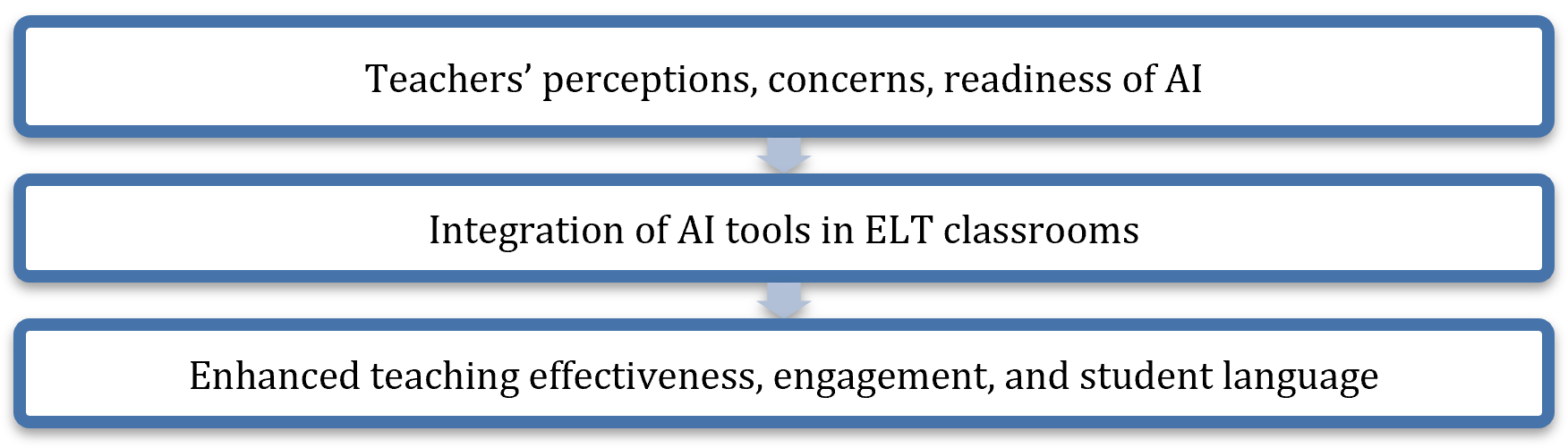
This study draws on the TPACK framework (Mishra & Koehler, 2006) and the Technology Acceptance Model (Davis, 1989) to explore how teachers’ perceptions and readiness shape their integration of AI tools (ChatGPT, Canva, Kahoot!, Padlet, Quizziz, Lumen5, Twee) into English language teaching. Situated within Vietnam’s digital transformation context (Trinh & Do, 2024), this framework posits that these factors and contextual influences drive the integration of AI tools in ELT classrooms, leading to enhanced teaching effectiveness, learner engagement, and language skill development.
METHODOLOGY
This study adopted a mixed-methods approach, combining both quantitative and qualitative data to gain comprehensive insights into English language teachers’ perceptions, readiness, concerns and actual use of AI in teaching. The quantitative component provided a general overview of attitudes and readiness levels, while the qualitative component explored in-depth experiences, challenges, and the practical integration of AI in classrooms (Creswell & Plano Clark, 2018).
Participants and Sampling
The target population of this study consisted of 247 English language teachers from primary, secondary and high schools across various provinces in southern Vietnam. Convenience sampling method was employed. Participants were recruited during professional development workshops organized in the selected provinces. Teachers attending these workshops were invited to participate voluntarily. The participants represented diverse educational contexts, including urban, district, and rural schools. Their teaching experience ranged from less than five years to over twenty years, ensuring variation in professional background and school settings.
Data Collection Methods
Questionnaire survey
A structured questionnaire was designed to collect data on teachers’ perceptions, readiness, actual use, challenges, and suggestions regarding AI integration in English language teaching. The survey also included a demographic section covering age, gender, teaching experience, school location, and level. The main body of the questionnaire employed Likert-scale items which ranged from 1 to 5 in which 1 is strongly disagree and 5 is strongly agree, multiple-choice questions, and open-ended responses to capture both quantitative data and brief qualitative insights (Dörnyei & Dewaele, 2023).
The internal consistency of the questionnaire was assessed by using Cronbach’s Alpha value, and it was piloted for validity check. The questionnaire items were then reviewed to ensure the validity. Teacher respondents are mainly from 21 to over 50 years of age. Among them, 20.3 % are under 30; 72.5% are from 31 to 50 years of age and 4.9 % are over 50. In terms of gender, 85.4 % fall into female and 14.6% are male. They are working in different school locations such as urban, district, and rural areas. Their teaching experience varied from less than 5 years (20.6%), 5 to 10 years (20.2%), 11 to 20 years (30.4%) and over 20 years (28.7%).
Semi-structured interviews
Six teachers representing different educational levels participated in semi-structured interviews. The interview consisted of six key questions, followed by extended and guiding questions during the interview. Those 6 teachers were selected to represent 3 levels of education which were primary, secondary and high schools. These interviews aimed to provide deeper understanding of teachers’ practical use of AI, the challenges they encountered, and their professional development needs (Kvale & Brinkmann, 2009). Interview protocol was designed with expert review before using.
Classroom observation
A classroom observation form was used to observe six classes taught by six other representative teachers from the participant pool, including primary, secondary and high schools. The focus was on the use of AI tools in teaching, how they supported learning, and any challenges faced by teachers (Wragg, 2012). The content of the observation form was carefully designed and aimed to identify actual use of AI by the teacher in the classroom.
Data Analysis
Descriptive statistics were used to summarize demographic information and analyse the perceptions, readiness, AI usage, and challenges. Inferential statistical techniques were applied to explore significant differences across demographic groups. Interview data were analysed using thematic analysis to reveal patterns related to AI use in the classroom. Data from classroom observations were also analysed to understand how AI tools were practically implemented by teachers across different school levels.
FINDINGS
The findings are organized in accordance with the two research questions. Quantitative findings from the questionnaire are presented to provide an overall picture of teachers’ perceptions, readiness, and classroom practices. Qualitative data from interviews and classroom observations are integrated to contextualize and explain the quantitative trends.
Teachers’ Perceptions and Readiness toward AI Integration
This section presents findings related to teachers’ perceptions of artificial intelligence and their self-reported readiness to integrate AI into English language teaching. The analysis focuses on teachers’ views of AI as an instructional support tool, their confidence in using AI-enabled applications, and the extent to which professional preparation and contextual conditions shape their perceived readiness for classroom integration.
Positive perceptions of AI in English language teaching
The descriptive analysis from questionnaire results shows that not all of the teachers have been familiar with the concept of AI in education (M = 2.24, SD = 0.62). But they believed that the use of AI can help enhance the quality of English language teaching (M = 4.42, SD = 0.68). They also had strong agreement on the positive impact of AI on student learning (M = 4.21, SD = 0.59). These findings suggest that teachers’ perceptions of AI were shaped more by its perceived usefulness than by in-depth technical knowledge.
Interview data confirms these findings when teachers consistently described AI tools such as Canva, Quizizz, and ChatGPT as helpful in giving them ideas and resources when designing materials, such as images, handouts, or language practice tasks.
“I often use Canva and ChatGPT to prepare for warm-up games or get ideas for reading activities.” (T2 – Primary school).
“Sometimes I use ChatGPT to generate quick quizzes for formative assessment or even fun grammar games.” (T5 - High school)
Several teachers described how these tools supported lessons in vocabulary explanation, grammar instruction, and receptive skills like listening and reading. Despite varying levels of experience, all teachers acknowledged the potential of AI tools to support their teaching. They believed that AI reduced the time and effort required for lesson preparation. This convergence between quantitative and qualitative data suggests that positive perceptions of AI were widespread across the sample, despite variations in technical familiarity.
Perceived readiness and professional preparation
With regard to readiness, approximately two thirds of the teachers responded that they felt confident when integrating AI into their teaching. Particularly, 74% reported feeling “quite confident” and 3.6% felt “very confident,” while the rest stated that they were not confident. However, qualitative data reveals a more nuanced “uneven confidence.” Although all teachers shared a general awareness of AI tools, only two demonstrated high confidence in using them regularly in class. The remaining four teachers cited various barriers that hindered consistent AI use. These barriers included limited time for preparing new materials, uncertainty about the effectiveness of AI use in the classroom, and low confidence in their own technological competence.
“I don’t use AI much because I’m not sure I can finish all the textbook content if I try new things.” (T4 – Secondary school)
Some teachers also expressed concern about straying from the textbook content, fearing they might not complete required curriculum elements if they experimented with unfamiliar tools.
“I don’t use AI much because I’m not sure I can finish all the textbook content if I try new things.” (T4 – Secondary school).
These insights reveal disparities in confidence and motivation that directly influence how frequently and effectively AI is integrated into classroom teaching.
Regarding professional development, approximately 64% of teachers participated in at least one training course on AI. This indicates the initial professional support which is necessary for teachers. Despite initial training, interviewees noted they often forget how to operate tools due to irregular use. There is a clear demand for diverse training modes with 45% of teachers preferring online courses, 23% preferred face-to-face workshops, and more than 15% chose to learn from peers. The analysis also shows that the teachers have their own professional orientation, but they also require diverse forms of support.
While all interviewed teachers had been exposed to AI-related training, only two demonstrated sustained confidence in using AI tools regularly in class. The remaining teachers expressed uncertainty about their own technological competence and emphasized the need for more hands-on, practice-oriented training.
“AI can help, but only if we use it regularly and properly. Otherwise, it might just create more pressure.” (T6 - High school)
Teachers also reported diverse preferences for professional learning modes, including online courses, face-to-face workshops, and peer learning, highlighting the importance of flexible professional development pathways.
Contextual influences on perceptions and readiness
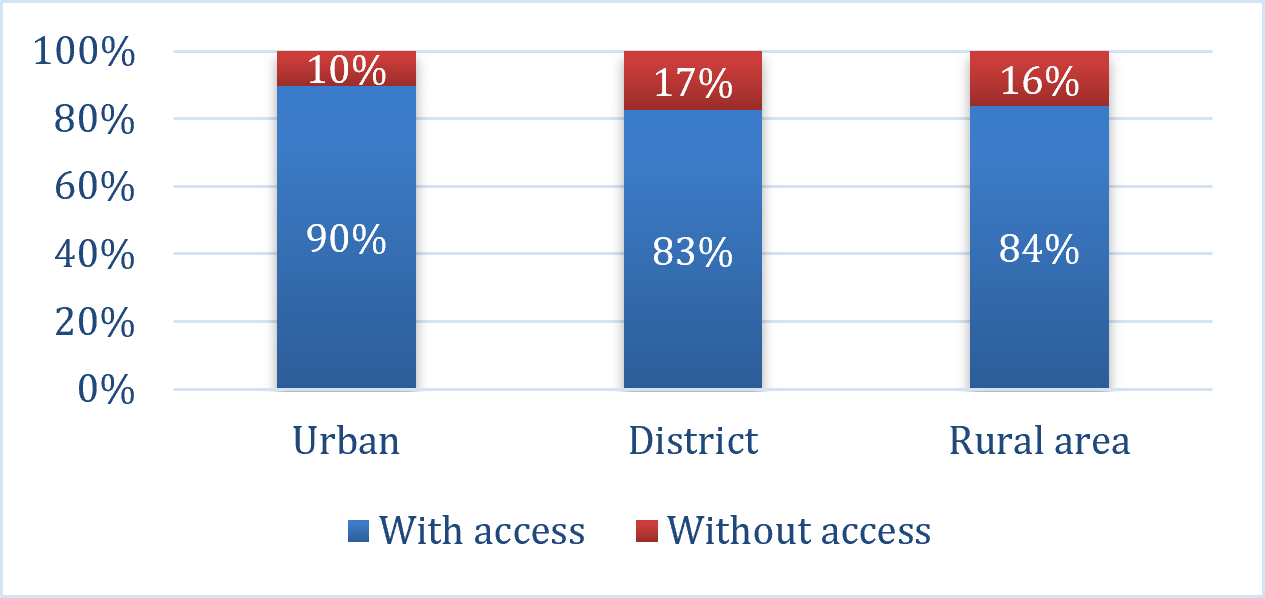
Further analysis revealed variations in teachers’ perceptions and readiness across school contexts. Teachers working in urban schools tended to report higher levels of confidence and access to AI tools than those in district or rural settings. The survey analysis revealed that there was some variation in accessibility across school locations. Teachers in urban areas had the highest rate of access (90%), followed by those in district (83%) and rural schools (84%) as shown in Figure 2. Although the different rates of access among areas were not statistically significant, the findings suggest that teachers in urban areas are somewhat more advantageous in terms of technology.
Classroom observations supported these findings. Teacher proficiency in using technology and the availability of classroom infrastructure were key factors influencing the quality of AI integration. In a high school located in an urban area, a relatively young teacher demonstrated high digital literacy, effectively embedding AI-generated content and interactive visuals into the lesson. In contrast, a teacher at a rural high school relied solely on PowerPoint slides and handouts, with minimal interaction and no use of AI-based tools. These disparities underscore the uneven readiness of teachers and schools to adopt educational technologies. Together, these findings suggest that teachers’ perceptions and readiness were shaped not only by individual perceptions but also by institutional and infrastructural conditions.
Overall, school English language teachers demonstrated positive perceptions of AI and initial readiness to integrate it into teaching. However, readiness varied considerably and was closely influenced by access to technology, training opportunities, and school context.
Classroom Use of AI Tools and Perceived Constraints
This section analyses teachers’ classroom implementation of AI across different educational levels and lesson stages, with particular attention to the constraints that shape and limit its integration in English language teaching.
Reported classroom uses of AI tools
The analysis of teachers’ use of AI tools reported through the survey that PowerPoint is the most preferable tool with 96% teachers used. However, it is important to note that PowerPoint is not a fully AI-based tool as it is primarily a general presentation application with some AI-assisted features incorporated. With those tools powered by AI, 83.4% of teachers used ChatGPT, 72.5% employed Canva, and 70.9% took Quizizz. Other tools like Twee (34.8%), Kahoot (30%), Padlet (29.1%), and Lumen5 (25.9%) were used to a lesser extent.
Figure 3 shows the differences in AI usage frequency among teachers in teaching English at three educational levels: primary, secondary, and high school. In general, high school teachers reported significantly higher AI usage frequency than both primary (M = 3.47, SD = 1.09) and secondary school teachers (M = 3.49, SD = 1.09). No significant difference was found between primary and secondary school teachers.
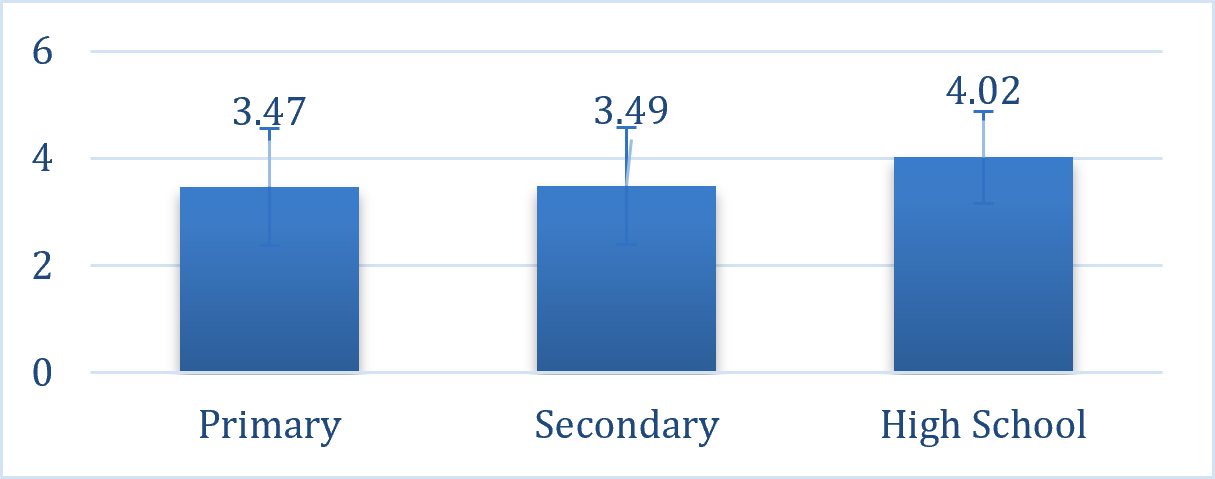
Differences in usage frequency were observed across educational levels, digital tools such as PowerPoint, Canva, and multimedia content from platforms like YouTube were integrated into lesson delivery. In primary and secondary school classrooms, these tools supported lesson structuring, especially in warm-up and presentation stages. For instance, animated videos and children’s songs were frequently employed to enhance students’ motivation and contextualize new vocabulary. The use of such tools was not limited to content delivery; rather, they served as scaffolds for managing classroom routines and ensuring learner attention. These findings suggest that AI use was more prevalent at higher levels of schooling, where curriculum demands and assessment requirements may encourage greater reliance on digital tools.
Pedagogical purposes and stages of AI use
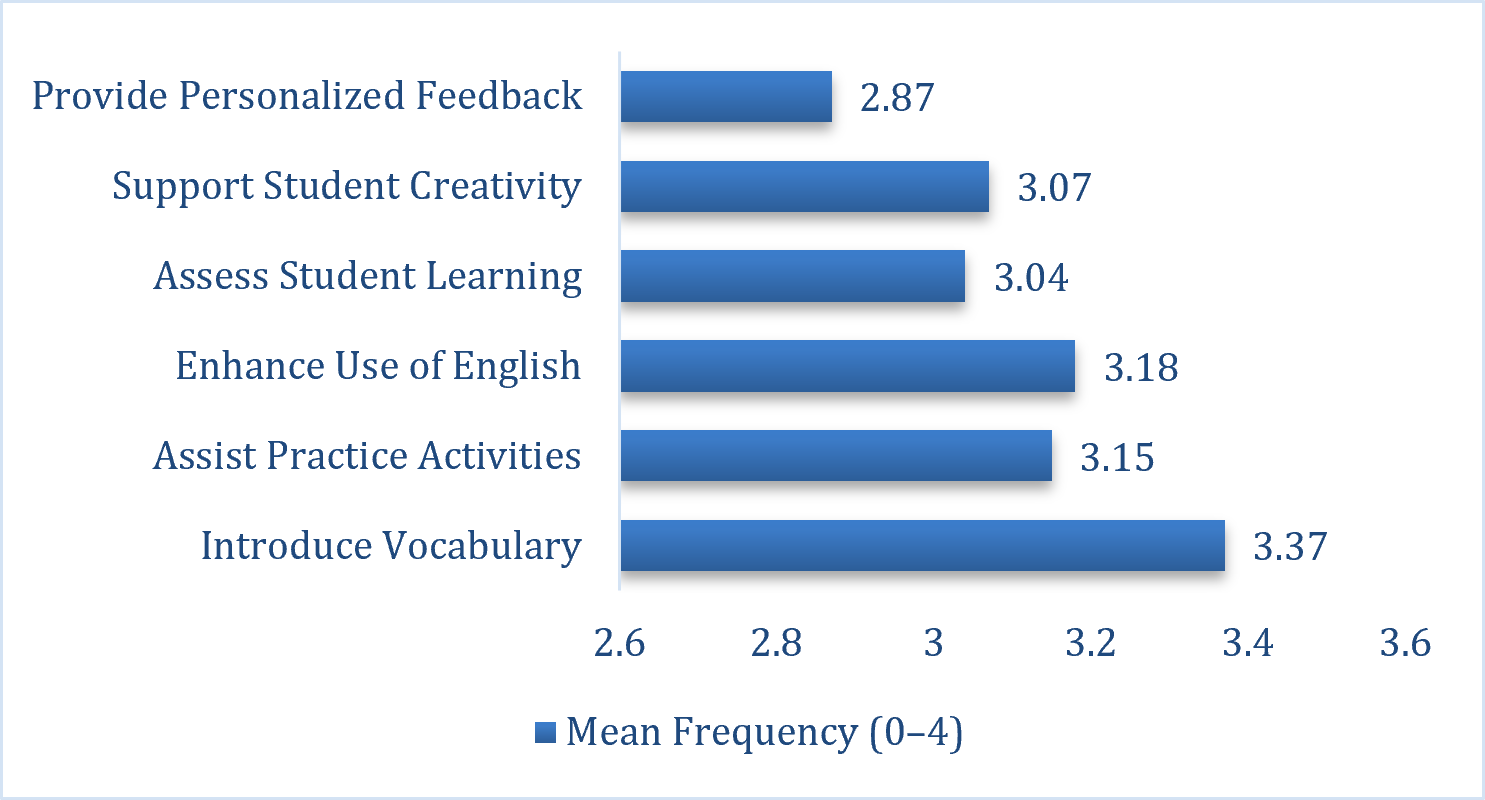
The findings from the survey indicated the purposes of using AI to introduce new vocabulary (M = 3.37, SD = 0.79), facilitate practice activities (M = 3.15, SD = 0.96), and enhance students’ use of English (M = 3.18, SD = 0.93). Other purposes such as learning assessment, creativity support, and personalized feedback were employed though to a lesser extent as shown in Figure 4. Classroom observations confirmed the use of AI-generated content like grammar tasks, vocabulary games, and communicative activities.
While the mean frequency of AI use for introducing vocabulary was the highest (M = 3.37), the relatively low standard deviation (SD = 0.79) suggests a high level of consistency in teacher responses across the sample. The highest variability in AI use was found in providing individual feedback (SD = 1.03), indicating differing practices and possibly unequal access or training.
Interview and observation data provided further insight into how AI was embedded in lessons. AI is most frequently utilized during the warm-up stage (typically 5 to 7 minutes). Observations showed that digital tools like YouTube and animated videos were used to motivate students and contextualize vocabulary at the beginning of lessons. Some teachers also integrated AI into the pre-skill and post-skill stages for content introduction and review. Interviewed teachers described using AI at different points in their lesson plans. Generally, they reported using AI during the warm-up stage, typically for 5 to 7 minutes. In addition, three teachers indicated that they used AI during the pre-skill and post-skill stages to introduce new content or review key concepts. Four teachers explained that they occasionally used AI-generated tasks during the main instructional phase (while-stage) and to prepare formative and summative assessments. The tools most frequently used were PowerPoint, Canva, ChatGPT, and Quizzes. These tools were used not only for instructional delivery but also for creating interactive content such as games and songs to reinforce grammar, vocabulary, and pronunciation. These applications reflect a growing but still selective approach to AI integration across the lesson structure.
Perceived Constraints and Challenges in AI Integration to Enhance Teaching Effectiveness
Despite generally positive perceptions and available accessibility of the AI tools, several psychological and technical barriers hinder effective AI application.
Psychological and pedagogical concerns
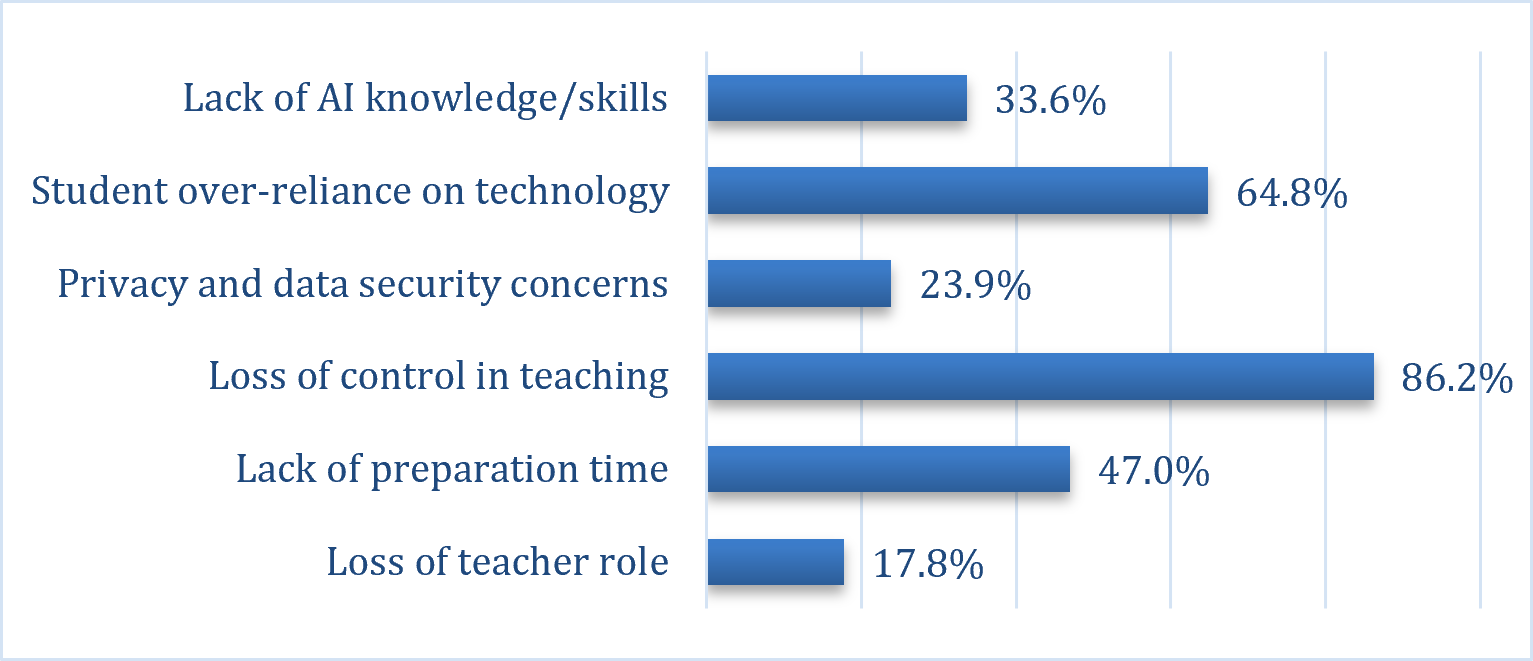
Among 247 teachers completed the questionnaire, 86.2% of them concerned about losing their control to manage class flow when incorporating AI tools, and 64.8% were worried about students becoming overly reliant on technology. Nearly half of the teachers (47.0%) reported that they did not have enough time to prepare for the AI integrated lessons, and one third of them mentioned that they lacked AI skills. Other concerns related to loss of teachers’ roles and privacy and data safety were also noted though to a lesser extent as indicated in Figure 5.
According to the teachers being interviewed, several challenges emerged regarding the integration of AI into English language teaching. Four out of six teachers noted that because they did not use AI tools regularly, they often forgot how to operate them efficiently. Three teachers pointed to time constraints during class as a barrier to using AI-enhanced activities. Teachers also shared concerns about their lack of expertise in prompting tools like ChatGPT, which led to unsatisfactory results.
Logistical and technical barriers
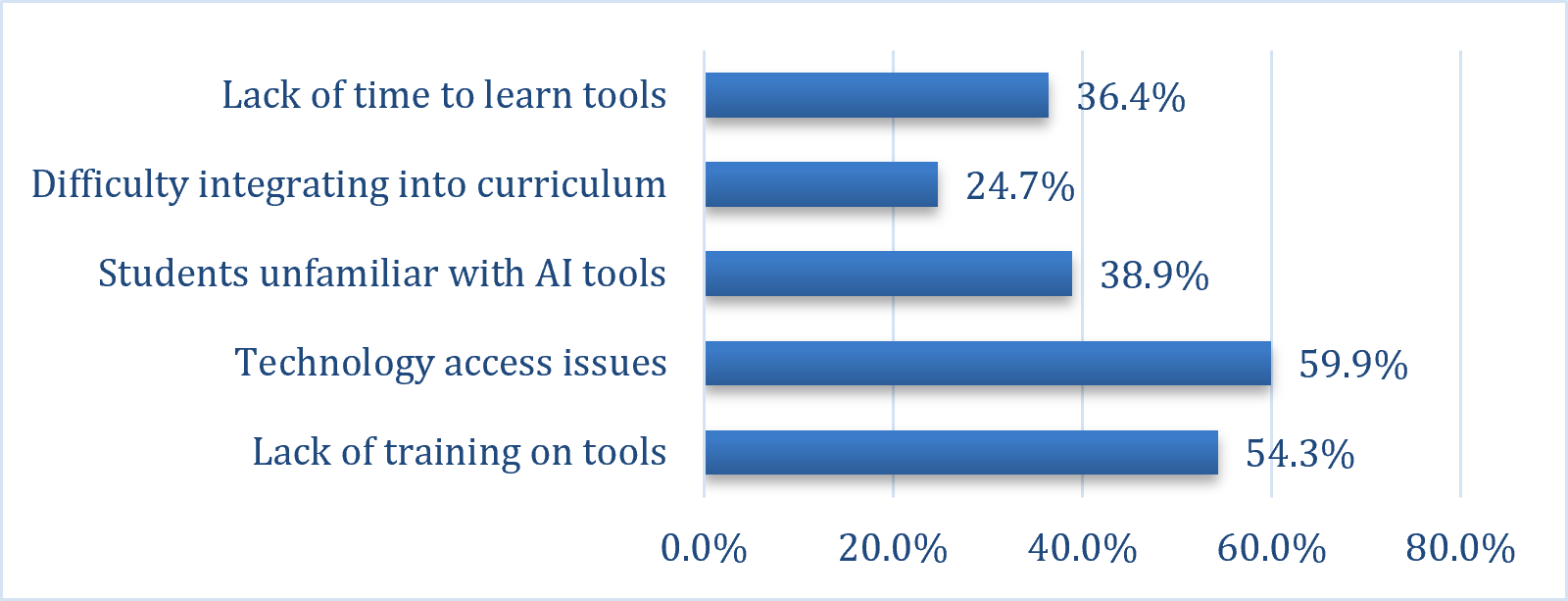
In terms of practical challenges when integrating AI tools in teaching, teachers reported that the most common issue was the limited technology access such as Internet, facilities (59.9%), and lack of formal training on how to use the tools (54.3%). Other difficulties included students’ unfamiliarity with AI tools (38.9%), insufficient time to learn and use effectively (36.4%), and challenges in aligning AI use with the existing curriculum (24.7%), as shown in Figure 6.
Two teachers mentioned infrastructure issues at their schools during the interviews, such as inconsistent access to internet, speakers, or display devices.
“Even if I have a good activity, I can’t always use it because we don’t have working speakers or internet.” (T1 – Primary school)
Additionally, mobile devices were often restricted, limiting students’ ability to engage with AI content. These findings underscore both technical and psychological barriers to effective AI adoption in classrooms.
Contextual differences in classroom practice
Classroom observations further revealed how contextual factors shaped AI use. Student engagement varied significantly across the observed classrooms. In technology-rich and pedagogically dynamic settings, learners were visibly motivated and actively involved in group and pair work. In primary school classrooms, for instance, gamified vocabulary revision using tools like “Spin the Wheel” fostered high levels of excitement and participation. Conversely, in classrooms with limited technological integration, particularly at the rural high school level, student interaction was minimal, and the learning environment was notably passive. These observations underscore the role of contextual inequality in shaping both the extent and quality of AI integration.
Taken together, the findings reveal a clear discrepancy between teachers’ positive perceptions and readiness toward AI and their cautious classroom practices. While teachers recognized the potential of AI and expressed willingness to integrate it, actual use remained limited in scope and depth due to a combination of individual, institutional, and contextual constraints. This gap between perception and practice is further examined in the Discussion section.
DISCUSSION
This study reveals English language teachers’ perceptions, and use of AI tools in primary and secondary schools across four southern provinces of Vietnam. Echoing global trends (Ertmer & Ottenbreit-Leftwich, 2010; Zainuddin, 2024), most teachers recognized AI’s potential to enrich ELT through personalization, increased engagement, and diversified resources. These perceptions closely align with the benefits of AI tools reported in previous studies (Cantos et al., 2023; Fitria, 2021; Walter, 2024) and have been shown to positively influence the teachers’ readiness for AI integration (Ayanwale et al., 2022).
However, despite generally positive perceptions and widespread familiarity with AI tools, integration often remained limited, primarily to preparing handouts or short warm-up activities. This suggests that the teachers possess Technological Knowledge (TK), but they have yet to develop the Technological Pedagogical Knowledge (TPK) required for transformative instruction as conceptualized in TPACK framework by Mishra and Koehler (2006). This finding indicates that familiarity with technology does not automatically translate into meaningful or transformative pedagogical integration.
AI integration is hindered by significant psychological and technical barriers, including a fear of losing classroom control, concerns over curriculum alignment, and limited confidence in managing AI-supported activities reflect the attitudinal constraints identified by Ertmer and Ottenbreit-Leftwich (2010) and Kim and Kim (2022). At the same time, the infrastructure disparities continue to constrain meaningful AI use. Urban schools benefited from stable internet and multimedia-equipped classrooms, while teachers in rural settings often relied on basic digital tools due to limited facilities, mirroring Vietnam’s persistent digital divide (Nguyen et al., 2022; van Deursen & van Dijk, 2019).
Moreover, the teachers’ reliance on PowerPoint over specialized AI tools like Twee or Padlet suggests a preference for technologies perceived as reliable, low-risk, and cost-free. While they have begun experimenting with new AI tools like ChatGPT and Quizizz, these are often funnelled through PowerPoint to maintain a sense of instructional structure and classroom management. This behaviour is likely linked to psychological and technical barriers, specifically the fear of losing control over the class flow, straying from textbook content or failing to complete the required curriculum, a concern expressed by several interviewees. This teachers’ selective adoption can be interpreted through the Technology Acceptance Model (Davis, 1989), which emphasizes perceived ease of use and perceived usefulness as key determinants of technology acceptance. While tools like Twee, Kahoot!, and Padlet have been shown to support collaboration, interaction, feedback, and engagement (Karataş et al., 2024; Pham, 2023; Vu et al., 2024), teachers in this study tended to adopt AI in ways that minimized risk rather than maximized pedagogical innovation.
Notably, although many teachers had participated in AI-related professional development, teachers reported forgetting how to operate tools due to lack of regular use, highlighting that technical awareness does not equal sustainable pedagogical competence. To move beyond surface-level use, there is a clear demand for more sustained, diverse training and peer learning opportunities. This finding reinforces the importance of iterative, practice-focused professional development to build confidence and pedagogical integration skills (Ertmer & Ottenbreit-Leftwich, 2010; U.S. Department of Education, Office of Education Technology, 2023).
In sum, while AI adoption in Vietnam’s ELT classrooms is advancing, maximizing its educational impact requires addressing infrastructural gaps, alleviating teacher concerns through clearer integration models, and strengthening ongoing professional support. Future work could investigate how tailored training influences long-term AI use or explore student experiences to inform balanced, learner-cantered AI integration strategies.
CONCLUSION
This study explored the perceptions, readiness, and uses of primary and secondary school English teachers regarding the integration of AI in English language teaching across four southern provinces of Vietnam. The findings revealed that while most teachers hold positive views about AI’s potential to enrich language instruction, particularly through motivation, engagement, and resource diversification, actual integration remains uneven and often limited to supportive rather than transformative uses. Constraints such as infrastructural disparities, time limitations, and gaps in pedagogical training continued to hinder deeper adoption, especially in rural contexts. As Vietnam advances its digital transformation agenda, addressing these barriers through targeted investments in infrastructure and iterative capacity-building will be essential to ensure that AI serves as a meaningful catalyst for improving English language education. Future research might delve into the long-term impacts of AI-enhanced instruction on student outcomes and explore how teacher support systems can help to foster more innovative, learner-centred applications of AI. By engaging these dimensions, stakeholders can better harness AI’s promise to advance equitable and effective language learning across diverse educational contexts.
RECOMMENDATIONS
Based on the findings of this study and the broader literature on AI integration in language education, several targeted recommendations can be proposed. First, it is essential to strengthen sustained and practice oriented professional development. This should be done by offering iterative, hands-on training that builds teachers’ confidence in pedagogical uses of AI tools. Also, it is necessary to encourage peer mentoring and communities of practice to allow teachers to share effective strategies for integrating AI into different lesson stages.
In parallel, investment in school infrastructure should be increased, including multimedia-equipped classrooms and mobile devices, especially in rural schools. Addressing these disparities is essential for equitable AI integration, ensuring that teachers in rural areas can use similar tools and approaches as their urban counterparts.
There is a clear demand to develop practical pedagogical guidelines for AI use in language education. Schools should create practical frameworks and examples that help teachers incorporate AI effectively into their language teaching. These guidelines should emphasize how AI can be used for academic purposes.
References
Alabbad, A., & Huwamel, H. S. B. (2020). The effect of using Padlet as a vocabulary knowledge enhancement application on Saudi EFL female learners, and their attitudes toward its value in learning. Arab World English Journal (AWEJ) Special Issue on CALL (6), 357-378. https://dx.doi.org/10.24093/awej/call6.24
Ayanwale, M. A., Sanusi, I. T., Adelana, O. P., Aruleba, K. D., & Oyelere, S. S. (2022). Teachers’ readiness and intention to teach artificial intelligence in schools. Computers and Education: Artificial Intelligence, 3(1), 100099. https://doi.org/10.1016/j.caeai.2022.100099
Butarbutar, R. (2024). Artificial intelligence for language learning and teaching: A narrative literature study. Englisia: Journal of Language, Education and Humanities, 12(1), 147-163. https://doi.org/10.22373/ej.v12i1.23211
Cantos, K. F. S., Varas Giler, R. C. V., & Castro Magayanes, I. E. C. (2023). Artificial intelligence in language teaching and learning. Ciencia Latina Revista Científica Multidisciplinar, 7(4), 5629-5638. https://doi.org/10.37811/cl_rcm.v7i4.7368
Chen, C., & Gong, Y. (Frank). (2025). The role of AI-assisted learning in academic writing: A mixed-methods study on Chinese as a second language students. Education Sciences, 15(2), Article 141. https://doi.org/10.3390/educsci15020141
Chen, Z., Liu, T., & Liu, X. (2024). Twee: Artificial intelligence assistant to generate versatile materials for language education. RELC Journal, 56(3), 810-814. https://doi.org/10.1177/00336882241282471
Creswell, J. W., & Plano Clark, V. L. (2018). Designing and conducting mixed methods research (3rd ed.). Sage.
Dang, T. T. (2025). AI tools for language learners: The promotion of learning independence or reliance. In Pham, V. P. H., Lian, A., Lian, A., White, J. (Eds.), Empowering educators: Integrating AI tools for personalized language instruction, (pp. 263-280). Springer Nature. https://doi.org/10.1007/978-3-032-01348-4_11
Davis, F. (1989). Perceived usefulness, perceived ease of use, and user acceptance of information technology. MIS Quarterly, 13, 319-340. https://doi.org/10.2307/249008
Dörnyei, Z., & Dewaele, J.-M. (2023). Questionnaires in second language research: Construction, administration, and processing (Third edition.). Routledge.
Eldin, A., H., S. (2024). Using artificial intelligence in EFL teacher education programs. Sustainability Education Globe, 2(1), 26-35. https://doi.org/10.21608/seg.2024.272816.1004
Elmahdi, O. E. H., AbdAlgane, M., & Balla, A. A. S. (2024). AI’s role in EFL: Optimizing opportunities while mitigating risks. International Journal of Linguistics, Literature and Translation, 7(10), 21-37. https://doi.org/10.32996/ijllt.2024.7.10.4
Ertmer, P. A., & Ottenbreit-Leftwich, A. T. (2010). Teacher technology change: How knowledge, beliefs, and culture intersect. Journal of Research on Technology in Education, 42(3), 255-284. https://doi.org/10.1080/15391523.2010.10782551
Fitria, T. N. (2021). The use of technology based on artificial intelligence in English teaching and learning. ELT Echo: The Journal of English Language Teaching in Foreign Language Context, 6(2), 213-223. https://doi.org/10.24235/eltecho.v6i2.9299
Holmes, W., Porayska-Pomsta, K., Holstein, K., Sutherland, E., Baker, T., Shum, S. B., Santos, O. C., Rodrigo, M. T., Cukurova, M., Bittencourt, I. I., & Koedinger, K. R. (2022). Ethics of AI in education: Towards a community-wide framework. International Journal of Artificial Intelligence in Education, 32(3), 504-526. https://doi.org/10.1007/s40593-021-00239-1
Hua, H. H., & Le, T. T. (2024). Exploring the impact of AI in language education: Vietnamese EFL teachers’ views on using ChatGPT for fairy tale retelling tasks. International Journal of Learning, Teaching and Educational Research, 23(3), 486-503. https://doi.org/10.26803/ijlter.23.3.24
Huang, A. Y. Q., Lu, O. H. T., & Yang, S. J. H. (2023). Effects of artificial intelligence-enabled personalized recommendations on learners’ learning engagement, motivation, and outcomes in a flipped classroom. Computers & Education, 194, 104684. https://doi.org/10.1016/j.compedu.2022.104684
Karaman, M., & Go ̈ksu, I. (2024). Are lesson plans created by ChatGPT more effective? An experimental study. International Journal of Technology in Education, 7(1), 107-127. https://doi.org/10.46328/ijte.607
Karataş, F., Abedi, F. Y., Ozek Gunyel, F., Karadeniz, D., & Kuzgun, Y. (2024). Incorporating AI in foreign language education: An investigation into ChatGPT’s effect on foreign language learners. Education and Information Technologies, 29, 19343-19366. https://doi.org/10.1007/s10639-024-12574-6
Kim, N. J., & Kim, M. K. (2022). Teachers’ perceptions of using an artificial intelligence-based educational tool for scientific writing. Frontiers in Education, 7, 755914. https://doi.org/10.3389/feduc.2022.755914
Kvale, S., & Brinkmann, S. (2009). InterViews: Learning the craft of qualitative research interviewing (2nd ed.). Sage.
Le, T. N. H. (2024). The effectiveness of using Quizizz in teaching English as a foreign language at a tertiary level. Journal of Knowledge Learning and Science Technology, 3(1), 207-220. https://doi.org/10.60087/jklst.vol3.n1.p222
Le, X. C., & Vu, T. L. G. (2024). Positive teaching methods combined with artificial intelligence in university teaching. Journal of Science Hanoi Open University, 119, 20-27. https://jshou.edu.vn/houjs/article/view/455
Luckin, R., Holmes, W., Griffiths, M., & Forcier, L. B. (2016). Intelligence unleashed: An argument for AI in education. Pearson.
Mishra, P., & Koehler, M.J. (2006). Technological pedagogical content knowledge: A framework for teacher knowledge. Teachers College Record, 108(6), 1017-1054. https://doi.org/10.1111/j.1467-9620.2006.00684.x
Nguyen, G., Nguyen, N., & Giang, N. (2022). Situation and proposals for implementing artificial intelligence-based instructional technology in Vietnamese secondary schools. International Journal of Emerging Technologies in Learning (iJET), 17(18), 53-75.
Owan, V. J., Abang, K. B., Idika, D. O., Etta, E. O., & Bassey, B. A. (2023). Exploring the potential of artificial intelligence tools in educational measurement and assessment. Eurasia Journal of Mathematics, Science and Technology Education, 19(8). https://doi.org/10.29333/ejmste/13428
Pham, A. T. (2023). The impact of gamified learning using Quizizz on ESL learners’ grammar achievement. Contemporary Educational Technology, 15(2), ep410. https://doi.org/10.30935/cedtech/12923
Pham, T. N., & Dang, T. X. (2025). An investigation into the application of artificial intelligence for language teaching and learning in Vietnam. Vietnam Journal of Education, 9(2). https://doi.org/10.52296/vje.2025.557
Selwyn, N. (2019). Should robots replace teachers?: AI and the future of education. John Wiley & Sons.
Tan, X., Cheng, G., & Ling, M. H. (2025). Artificial intelligence in teaching and teacher professional development: A systematic review. Computers and Education: Artificial Intelligence, 8, Article 100355. https://doi.org/10.1016/j.caeai.2024.100355
Trinh, T. H., & Do, T. M. T. (2024). Impacts of digital transformation on English teaching and learning in Vietnam today. International Journal of Education and Social Science Research, 7(2), 226-231. https://doi.org/10.37500/ijessr.2024.7214
U.S. Department of Education, Office of Educational Technology. (2023). Artificial intelligence and the future of teaching and learning: Insights and recommendations. U.S. Department of Education. https://files.eric.ed.gov/fulltext/ED631097.pdf
van Deursen, A. J., & van Dijk, J. A. (2019). The first-level digital divide shifts from inequalities in physical access to inequalities in material access. New Media & Society, 21(2), 354-375. https://doi.org/10.1177/1461444818797082
Vu, T. K. C., Nguyen, H. T. T., & Dang, V. M. T. (2024). An investigation into students’ perceptions of using padlet as a discussion board at Saigon University. Proceedings of the AsiaCALL International Conference, 6, 310-324. https://doi.org/10.54855/paic.24622
Walter, Y. (2024). Embracing the future of artificial intelligence in the classroom: The relevance of AI literacy, prompt engineering, and critical thinking in modern education. International Journal of Educational Technology in Higher Education, 21(15), 1-29. https://doi.org/10.1186/s41239-024-00448-3
Wang, A. I., & Tahir, R. (2020). The effect of using Kahoot! for learning - A literature review. Computers and Education, 149. https://doi.org/10.1016/j.compedu.2020.103818.
Wragg, E. C. (2012). An introduction to classroom observation (Classic ed.). Routledge. https://doi.org/10.4324/9780203357279
Yuniarti, F., & Nurjannah, A. (2025). EcoLingua: Optimizing Indonesian learning through Lumen5 in digital era. EBONY: Journal of English Language Teaching, Linguistics, and Literature, 5(1), 53-68.
Zainuddin, M. (2024). Teachers’ perceptions of AI tools in enhancing student engagement for English language learning. Research Studies in English Language Teaching and Learning, 2(6), 367-380. https://doi.org/10.62583/rseltl.v2i6.64
Zawacki-Richter, O., Marín, V. I., Bond, M., & Gouverneur, F. (2019). Systematic review of research on artificial intelligence applications in higher education - Where are the educators? International Journal of Educational Technology in Higher Education, 16(1), 1-27. https://doi.org/10.1186/s41239-019-0171-0
Zebua, W., Gulo, S., Bawamenewi, A., & Gulo, K. M. (2024). Developing interactive learning with PowerPoint via the Canva application. Journal International Inspire Education Technology (JIIET), 3(1), 132-138. https://doi.org/10.55849/jiiet.v3i1.654
Downloads
Published
Data Availability Statement
The data supporting the findings of this study are available from the corresponding author upon reasonable request.
Issue
Section
License
Copyright (c) 2026 Ho Thanh My Phuong, Nguyen Thi Thuy Trang, Mach Buu Hien

This work is licensed under a Creative Commons Attribution-NonCommercial-NoDerivatives 4.0 International License.