
Exploring the role of ePortfolios in developing academic writing, reducing anxiety, and promoting autonomy among Vietnamese EFL learners
DOI:
https://doi.org/10.65956/ltlt.2026.19Keywords:
eportfolios, writing anxiety, learner autonomy, academic writingAbstract
This study investigates the effectiveness of electronic portfolios (ePortfolios) in enhancing university students’ writing skills, learner autonomy, and reducing writing-related anxiety in the context of Vietnamese EFL higher education. A total of 187 undergraduates will be participating in this study as they are completing an 11-week long online academic program using electronic portfolio-based writing instruction through a Learning Management System (LMS) to collect both quantitative and qualitative data from the participants. Quantitative data will be collected via writing assessments, a writing anxiety survey and a learner autonomy survey. In addition to the surveys, effect sizes will be calculated to determine the magnitude of change. Qualitative data will also be collected via participant completed reflection journals and via semi-structured student interviews. The results show that the inclusion of ePortfolios helped promote a more process-based and reflective way for students to write; with students able to see how they were developing as writers over time, and with access to feedback on an ongoing basis. Students also felt less anxious about writing because they had been using the digital platform, which was a very individualized, and relatively low stress experience. Furthermore, the use of ePortfolios was found to foster greater learner autonomy, enhance feedback literacy, and develop metacognitive awareness. The study concludes that the implementation of an ePortfolio through an LMS can provide a strong tool for supporting writing instruction, decreasing students’ writing anxiety, and increasing learners’ overall agency in their learning in EFL tertiary education.
INTRODUCTION
In Vietnamese higher education, particularly in English language education, academic writing supports language learners as a means of assessment and engaging with disciplinary knowledge (Hyland, 2016; Wingate, 2012). In EFL contexts, learners often have difficulties in writing due to anxiety, limited autonomy, and inadequate opportunities for timely feedback, leading to the demand for innovative instructional strategies (Horwitz, 2010; Benson, 2011; Hyland, 2006). Despite previous studies examining the effects of ePortfolios in language teaching, limited empirical evidence is available regarding the combined impact of writing performance, learner autonomy, and writing anxiety in EFL higher education settings. In Vietnam, The Ministry of Education and Training (MOET) has identified English proficiency as a key competency for global integration and academic mobility (Circular No. 32/2018/TT-BGDĐT; MOET, 2018). Accordingly, MOET has focused on developing communicative competence, learning autonomy, and encouraging students to take responsibility for their own learning through self-regulation, and reflection. In terms of writing, students are expected to engage in Process-Writing Approach, which includes planning, drafting, revising, and self-assessment. Although there are gaps between policy expectations and what occurs in actual classroom settings, with the emphasis on improving student performance particularly in productive skills, such as writing academically, several of these initiatives stress learner-cantered pedagogy and use technology in both the delivery of instruction and in the processes of teaching and learning.
Although many Vietnamese students continue to struggle with writing (Thach & Khau, 2025), many of them have difficulty organizing their thoughts, developing an argument that is logical and coherent and using conventional academic formats such as citation, references, or critical evaluation; limited vocabulary, grammatical errors, and lack of exposure to authentic academic writing also hinder their ability to write in a manner that effectively conveys complex ideas. In addition, many of these traditional classrooms are based upon a teacher-centred instructional model and generally focus on the end product rather than on the processes involved in producing that product. This can be limiting as far as providing students with the opportunity to receive feedback and interact with others while practicing writing. As students continue to experience difficulties and frustrations while attempting to engage in the process of writing academically, they may begin to develop a negative attitude towards writing and feel anxious about the process of learning to write academically. Therefore, an alternative approach to delivering instruction will be necessary in order to improve the writing competence and engagement of students in the process of academic writing.
In recent years, digital tools have increasingly influenced the teaching of EFL writing. A well-known example of this is ePortfolio technology, which has been shown to enhance both the reflection and process aspects of student learning. Students using an ePortfolio are able to collect, revise, reflect upon their own work and demonstrate improvements in writing ability over time, as well as become more active participants in their own learning and goal-setting processes (Abrami et al., 2013; Yastibas & Yastibas, 2015).
ePortfolios create a continuous learning environment that is supportive of students by reducing the stress of writing (writing anxiety) and providing opportunities for students to be autonomous. Students are able to track their progress through continual revisions and feedback from instructors as opposed to one single final product which allows students to reflect upon their own strengths and weaknesses and develop confidence in writing over time. The use of ePortfolios provides opportunities for students to have control over their own learning and support a student-centred view of teaching writing.
Although prior studies on ePortfolio usage show the benefits to student writing and learner autonomy (Abrami et al., 2013; Yastibas & Yastibas, 2015) there is very little research about the combined impact on writing anxiety, learner autonomy, and academic writing for students in a Vietnamese EFL environment. There is also little research into how ePortfolios relate to the National Educational Policies which stress learner centred and process-based education. Therefore, this study investigates the use of ePortfolios to enhance writing skills, promote learner autonomy, and reduce writing anxiety among Vietnamese EFL students. The findings are expected to provide practical implications and empirical evidence for the use of ePortfolios in university-level EFL writing courses.
LITERATURE REVIEW
Writing in EFL Context
Writing in a second or foreign language is often considered one of the most challenging language skills because it requires vocabulary knowledge, grammatical accuracy, logical organization, and the ability to express ideas clearly (Hyland, 2016). In EFL contexts, many learners struggle with writing due to limited language resources, unfamiliar rhetorical conventions, and limited opportunities for authentic writing practice (Richards & Renandya, 2002). Writing may also require students to develop both the generation of and organization of ideas and the ability to express those ideas clearly in English; relying on their native language may also compromise the clarity and quality of the written product (Fareed et al., 2016).
Beyond linguistic challenges, emotional factors such as writing anxiety also influence students’ writing performance. Writing anxiety is commonly described as a multidimensional construct that includes cognitive anxiety, somatic anxiety, and avoidance behavior (Cheng, 2004; Horwitz, 2010). A fear of being evaluated negatively, lack of confidence, and a limited ability to use language may limit students’ willingness to engage in writing tasks and lower the quality of the work produced (Zhang, 2011). Anxiety will often hinder students’ abilities to generate ideas, write smoothly, and take risks when using language.
Several studies have demonstrated that pedagogical methods which support language and rhetoric skills, while creating an environment to minimize the amount of anxiety and build learner’s confidence with respect to writing are highly important (Sun et al., 2024). Process-oriented writing instruction has been widely recommended. It engages learners in a recursive process involving planning, drafting, revising, and editing instead of producing a final writing at one time. This approach helps develop students’ critical thinking and self-regulation, which can strengthen their learning autonomy (Raimes, 1983). Teaching strategies such as scaffolding, constructive feedback, and low-pressure assessment can also reduce anxiety and encourage greater participation, leading to improved writing performance (Pajares & Johnson, 1994). Additionally, digital resources have provided additional opportunities to support writing instruction through providing students the opportunity to receive feedback, reflect upon their writing, and revise outside of the classroom setting.
In terms of tools that can be used to promote writing development, ePortfolios have been gaining recognition as one of the most effective approaches. The nature of ePortfolios allows students to collect their work, continually revise and reflect upon it over time; thereby providing an opportunity for students to continually improve their writing in a less pressured manner than traditional assessment methods. Additionally, ePortfolios provide learners with opportunities to become more autonomous by allowing them to establish goals, track their own progress, and take greater responsibility for their learning which could potentially result in reduced writing anxiety, and increased independence in learning.
Learners Autonomy in Writing
Learner autonomy, defined as the ability to manage one’s own learning (Holec, 1981), is widely considered an important factor in language learning. Autonomy typically develops when learners are in supportive environments, such as those providing learner guidance, expectations, peer interaction, and the opportunity for decision-making regarding the learner’s own learning rather than being dependent on teacher correction (Chan, 2001; Hyland, 2003; Phung & Dang, 2016). As learners gradually notice their progress, their confidence and motivation to engage in learning also increase (Cotterall & Reinders, 2000; Tassinari, 2012). In addition, autonomy has been associated with metacognitive knowledge (i.e., the ability to reflect upon one’s learning strategies). The reflection of one’s learning strategies may help learners identify and revise more effectively, and produce clearer written work (Wenden, 1998). However, learner autonomy does not develop automatically but requires appropriate pedagogical support (Benson, 2011; Dang, 2024). Traditional writing instruction, which often focuses on accuracy and final products, may limit opportunities for students to make independent decisions in the writing process (Hyland, 2006).
The Relationship between Learning Anxiety and Learner Autonomy
Self-regulation through goal setting, process control and self-reflection, allows learners to achieve competence and develop self-regulated learning (Zimmerman, 2002; Little, 1991). Studies have shown that there is a strong link between an increase in learner autonomy and a reduction in both academic anxiety and disengagement (Teng et al., 2006). As such, from this viewpoint, autonomy and anxiety seem to be interrelated with respect to one another: High levels of anxiety could restrict the development of autonomy while increased autonomy will likely result in reduced performance anxiety.
The Application of ePortfolios
The use of ePortfolios in language education is gaining attention due to the ability to assist students with their writing and enhance their autonomous learning. Barrett (2007) identifies ePortfolios as electronic collections of learners’ works that promote reflection, self-assessment and evidence of growth over time. Lam (2018) states that the ePortfolio provides an environment for iterative drafts of student writing, peer feedback through structured checklists, and idea development. The checklists also enable learners to provide more targeted feedback and standardize peer review criteria. The ePortfolio is a digital collection of student writing that enables students to arrange their work and revise it much easier than paper-based portfolios and make the writing process more collaborative and reflective (Phung & Dang, 2022). Additionally, ePortfolios support goal setting, feedback, and reflection over time; thus, promoting a more process-based approach to writing (Barrett, 2007).
ePortfolios may support student autonomy in the use of technology by allowing students to select content, set goals, and reflect on their own progress (Nguyen & Ikeda, 2015) thereby fostering a sense of ownership that supports self-regulated behaviour and intrinsic motivation essential for lifelong learning (Little, 1991), and by providing learners with an opportunity to see how they have developed and what they need to improve, this will provide them with the ability to make decisions about their learning that are consistent with more autonomous forms of learning (Baturay & Daloğlu, 2010).
Recent Studies indicate that Digital Tools can aid in the development of self-regulated learning and metacognitive awareness and ultimately assist students with developing their writing and evaluating skills (Fahrni et al., 2025). Specifically, ePortfolios will allow for students to review and revise their drafts repeatedly and aid them in developing better coherence and cohesion in their writing. Although there are still challenges to implementing ePortfolios (Saraç et al., 2022), research on previous use of ePortfolios has indicated positive results, including improved structure of student’s writing, stronger argumentation by students, and an increased awareness of the strengths and weaknesses of learners (Baturay & Daloğlu, 2010; Lam, 2014; Nguyen & Ikeda, 2015).
In Vietnam, several studies have examined the use of ePortfolios in different contexts, including promoting reflective learning among engineering students (Nguyen et al., 2022) and assessing English speaking skills (Ngo & Luu, 2023), while other research has focused on secondary and high school settings (Van Loi et al., 2025; Minh & Anh, 2022). However, few studies have explored the effectiveness of ePortfolios in improving writing skills and learner autonomy, and even fewer have examined their potential role in reducing writing anxiety among Vietnamese EFL students.
To address this gap, the present study investigates the pedagogical value of ePortfolios in enhancing university students’ writing performance, fostering learner autonomy, and reducing writing anxiety. Based on this gap, the following research questions are proposed.
- What is the impact of ePortfolio-based instruction on Vietnamese EFL undergraduates’ academic writing performance?
- How do Vietnamese learners self-assess their autonomy and writing anxiety after using ePortfolios?
- What are the perceptions of Vietnamese EFL students about using ePortfolios in academic writing?
Theoretical Framework
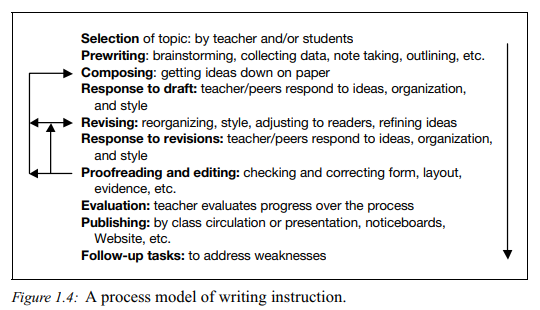
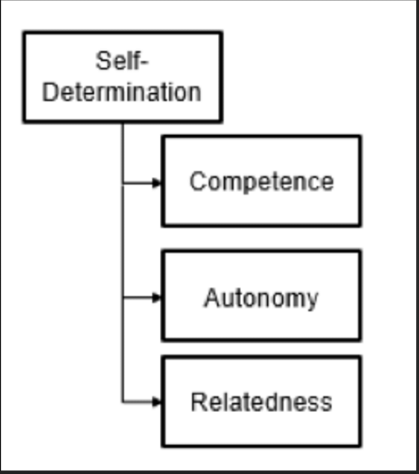
The present study draws on the Process Writing Approach (PWA) (Hyland, 2003) and Self-Determination Theory (SDT) (Ryan & Deci, 2000) as its conceptual framework. The PWA views writing as a recursive, multi-stage process that involves prewriting, drafting, revising, and editing (Figure 1). Through these stages, learners are able to generate ideas, organize content, and refine their language through feedback and reflection (Hyland, 2003). The shift toward process-oriented writing approaches (PWA) has moved the focus of teaching and learning writing away from the final product and toward the development of writing skills that are more in-depth and student-centred. The Self-Determination Theory (SDT) also serves as a motivational theory to understand how educational environments affect students’ engagement and persistence in their studies (Figure 2). SDT is based on the assumption that the satisfaction of the three basic psychological needs of autonomy, competence, and relatedness support the learners’ intrinsic motivation and enhance their ability to learn over time (Ryan and Deci, 2000; Deci and Ryan, 1985). SDT focuses on supporting students with respect to their basic psychological needs by providing them with opportunities to make autonomous choices, receive constructive feedback, and experience competence through their own actions. PWA and SDT serve as an interdisciplinary basis for the current study. While PWA provides the pedagogical structure for iterative writing development, SDT explains how ePortfolio-based instruction can promote learner autonomy, strengthen perceived competence, and reduce writing anxiety. Therefore, the integration of PWA and SDT informs the design and implementation of the ePortfolio intervention in this research.
METHODOLOGY
Research Design
This research used a convergent mixed-methods design to determine how e-Portfolios impacted the writing skills of Vietnam’s undergraduate English as a Foreign Language (EFL) students; their anxiety when writing; and their autonomy as writers. The quantitative strand of this research measured the improvements in writing performance; the reductions in writing anxiety; and the increases in student autonomy, while the qualitative strand allowed the researchers to gather richer understandings of the students’ experiences and beliefs regarding ePortfolios. The integration of the two strands takes place at three main stages. Firstly, quantitative and qualitative data are collected, with surveys and interviews conducted within the same period. During the analysis and interpretation phase, the two sets of data are brought together through a merging process, allowing for direct comparison and triangulation.
Participants
The study involved 187 undergraduate English majors from a university in Vietnam who were enrolled in a B2-level Academic Writing course. Most participants were second-year students aged between 19 and 21 with an intermediate level of English based on a placement test. Participation was voluntary and based on convenience sampling, and informed consent was obtained before data collection. In addition, 20 students were randomly selected to participate in interviews to share their experiences using ePortfolios in the writing class.
Instructional Context and Intervention
During an 11-week program, students participated in ePortfolio-based writing instruction through a Learning Management System such as Moodle. They uploaded their drafts, received feedback, and documented revisions using the platform’s assignment and discussion tools. Each writing task followed a three-stage process: an outline, a first draft, and a revised draft accompanied by a reflection. Submissions were scheduled across three weeks, and feedback was provided within seven days to support timely revision. Before conducting peer review, students attended a 60-minute training session on how to provide constructive feedback. They were introduced to a peer review checklist and practiced reviewing a sample essay. During the activity, each draft received feedback from two peers using a standardized rubric.
Data Collection and Analysis
Quantitative data were collected using three instruments. Writing performance was measured through pre-test and post-test essays assessed with an analytic rubric adapted from the IELTS Writing Task 2 public band descriptors. The rubric included four criteria: Task Achievement, Coherence and Cohesion, Lexical Resource, and Grammatical Range and Accuracy. Each criterion was worth 2.5 points, giving a total score of 10. Although the original IELTS scale contains nine bands, the descriptors were adjusted to fit the 10-point system while maintaining the core assessment standards. All raters were trained to ensure consistent scoring. Essays were rated blindly by two independent examiners, and the final score was calculated as the average of their ratings. When there was a large difference between the two scores, the raters discussed the script to reach agreement. Writing anxiety was measured using an adapted version of Gardner’s (1985) Anxiety Scale. Several items were modified to better reflect anxiety related to academic writing. The scale consisted of eight items rated on a five-point Likert scale from 1 (strongly disagree) to 5 (strongly agree). Learner autonomy was assessed using a modified Learner Autonomy Questionnaire adapted from Borg and Al-Busaidi (2012). The questionnaire contained 10 items rated on a five-point Likert scale and focused on students’ ability to plan, monitor, and evaluate their own learning.
In addition, qualitative data from both the reflective journals written during the course and the post-project interviews were analysed thematically in accordance with the six phases outlined by Braun and Clarke (2006), in order to identify recurring patterns and themes describing how ePortfolios affect the writing development of students, their experiences with writing anxiety, and their perceptions of learner autonomy. Twenty participants took part in 30-minute interviews which were conducted in Vietnamese to reduce language barriers. Selection criteria for the interviews were based on a maximum variation purposive sampling strategy which covered different writing proficiency levels, levels of engagement with ePortfolios, and experiences of writing anxiety. All interviews were audio-recorded with participants’ consent and were translated into English for thematic analysis.
Quantitative data were analysed using SPSS. Paired-samples t-tests were conducted to compare participants’ pre- and post-intervention writing scores. Cohen’s d was calculated to estimate effect size, and 95% confidence intervals were reported. Normality was checked using the Shapiro-Wilk test, and potential outliers were examined before analysis. Writing anxiety and perceived learner autonomy were measured through a post-project questionnaire and analysed descriptively using means and standard deviations, as no pre-intervention data were collected. Qualitative data from reflective journals and post-project interviews were analysed thematically following the six-phase framework proposed by Braun and Clarke (2006). Initial codes were generated inductively from the data. One researcher conducted the coding, while two additional coders reviewed a subset of transcripts to ensure credibility, and disagreements were resolved through discussion. Twenty participants took part in 30-minute interviews conducted in Vietnamese to reduce language barriers. Participants were selected using maximum variation purposive sampling to represent different writing proficiency levels, engagement with ePortfolios, and experiences of writing anxiety. All interviews were audio-recorded with participants’ consent and translated into English for analysis.
FINDINGS
Improvement in Writing Performance
Table 5.1. Paired-Samples t-Test Results for Writing Performance (Pre-test vs. Post-test)
|
IELTS Criteria |
Pre-test Mean (SD) |
Post-test Mean (SD) |
Mean Diff |
t |
df |
p-value |
Cohen’s d |
|---|---|---|---|---|---|---|---|
|
Task Achievement |
5.12 (0.62) |
6.03 (0.58) |
+0.91 |
14.25 |
186 |
< .001 |
1.04 |
|
Coherence and Cohesion |
5.08 (0.66) |
5.95 (0.61) |
+0.87 |
13.84 |
186 |
< .001 |
1.01 |
|
Grammatical Range and Accuracy |
5.05 (0.65) |
5.92 (0.63) |
+0.87 |
13.76 |
186 |
< .001 |
1.01 |
|
Lexical Resource |
5.15 (0.60) |
6.01 (0.57) |
+0.86 |
14.02 |
186 |
< .001 |
1.03 |
|
Overall Writing Score |
5.10 (0.63) |
5.98 (0.60) |
+0.88 |
14.47 |
186 |
< .001 |
1.06 |
Table 5.1 shows that students’ writing performance improved significantly across all IELTS criteria after the ePortfolio intervention. Task Achievement increased by 0.91 (t = 14.25, p < .001, d = 1.04), Coherence and Cohesion by 0.87 (t = 13.84, p < .001, d = 1.01), Grammatical Range and Accuracy by 0.87 (t = 13.76, p < .001, d = 1.01), and Lexical Resource by 0.86 (t = 14.02, p < .001, d = 1.03). The Overall Writing Score rose from 5.10 to 5.98, an improvement of 0.88 (t = 14.47, p < .001, d = 1.06). According to Cohen’s (1988) benchmarks, these effect sizes represent large improvements, indicating that the ePortfolio intervention had a strong and consistent impact on students’ writing performance across all assessed criteria.
Students’ Perceptions of Learner Autonomy
Table 5.2 shows students’ self-evaluation of learner autonomy after using ePortfolios. Overall, the results indicate a relatively high level of autonomy, with a mean score of 3.79 (SD = .66). The highest-rated behaviours included acting on peer or instructor feedback (M = 3.95, SD = .57) and reflecting on strengths and weaknesses in each assignment (M = 3.90, SD = .58). Students also reported engaging in goal setting (M = 3.86) and monitoring their progress to adjust strategies (M = 3.82). Maintaining a reflective journal (M = 3.62, SD = .76) and asking for help appropriately (M = 3.68, SD = .73) received lower ratings, though still above the midpoint. These findings suggest that students perceived themselves as demonstrating a relatively strong degree of independence in planning, monitoring, and revising their writing after participating in the ePortfolio-based activities. However, the students may need additional instruction to develop their skills in the areas of journaling and developing a plan for requesting assistance when needed.
Table 5.2. Students’ Self-Evaluation of Learner Autonomy
|
Item |
After using ePortfolios, I can…. |
N = 187 |
|
|---|---|---|---|
|
M |
SD |
||
|
1 |
set specific goals for my writing |
3.86 |
0.62 |
|
2 |
plan my writing tasks and timeline independently |
3.79 |
0.66 |
|
3 |
monitor my progress and adjust strategies when needed |
3.82 |
0.64 |
|
4 |
reflect on my strengths and weaknesses after each assignment |
3.90 |
0.58 |
|
5 |
seek additional resources (models, references) without being told |
3.74 |
0.69 |
|
6 |
act on peer/instructor feedback to revise my drafts |
3.95 |
0.57 |
|
7 |
use class and out-of-class time constructively to improve my writing |
3.71 |
0.70 |
|
8 |
ask for help appropriately when facing difficulties |
3.68 |
0.73 |
|
9 |
try different writing strategies when I encounter problems |
3.80 |
0.65 |
|
10 |
maintain a reflective journal to track my learning |
3.62 |
0.76 |
|
Average |
3.79 |
0.66 |
|
Students’ Perceptions of Writing Anxiety
Table 5.3. Students’ Self-Evaluation of Writing Anxiety
|
Item |
After using ePortfolios, I feel less anxious because I can … |
N = 187 |
|
|---|---|---|---|
|
M |
SD |
||
|
1 |
organize my ideas more clearly before writing |
3.87 |
0.89 |
|
2 |
receive feedback gradually instead of only at the end |
3.97 |
0.86 |
|
3 |
revise drafts without fear of losing face |
3.90 |
0.90 |
|
4 |
track my progress over time, which boosts my confidence |
4.00 |
0.85 |
|
5 |
focus on improvement rather than grades |
3.89 |
0.87 |
|
6 |
feel more comfortable sharing drafts with peers |
3.71 |
0.98 |
|
7 |
reduce stress by managing writing tasks step by step |
3.92 |
0.85 |
|
8 |
gain confidence in handling different writing tasks |
3.94 |
0.88 |
|
Average |
3.90 |
0.88 |
|
Table 5.3 shows that most students reported reduced writing anxiety after using ePortfolios (N = 187). Overall responses were positive, with a mean score of 3.90 (SD = .88), suggesting that ePortfolios helped reduce writing-related stress. Students particularly appreciated being able to track their improvement over time, which increased their confidence (M = 4.00, SD = .85). They also valued the gradual feedback received during the process (M = 3.97, SD = .86) and felt more confident handling different writing tasks (M = 3.94, SD = .88). Although students were slightly less comfortable sharing drafts with classmates (M = 3.71, SD = .98), the data suggested that overall, the ePortfolios had an effect on the students feeling less stressed and more confident in their writing.
Learners’ Perceptions of Using ePortfolios
The analysis of weekly reflection journals and semi-structured interviews revealed that the employment of ePortfolios brings both educational benefits and practical challenges. While ePortfolios assisted students in achieving the outcomes in terms of promoting the process-oriented approach in writing, enhancing learner autonomy, providing timely feedback, reducing writing anxiety, and supporting metacognitive development, there still existed some obstacles related to time management or technology.
Promoting a reflective, process-oriented approach
A prominent theme was the shift in the perception of students regarding the writing process. Many students described writing as a process when students produced a draft and submitted it instantly. With the integration of e-portfolios, they increasingly understood writing as a continuous process of drafting, constructing, revising, and editing. Students have more opportunities to observe their learning process. Most of the students noted in their journal entries about the effectiveness of ePortfolios. One student noted that
Before, I just wrote one draft and finished, but now I see writing has many steps. I learn more when I revise and check again. (S72)
Similarly, an interview participant explained: “The writing portfolio helps me in my writing. Sometimes, I care about my score, but I think I can learn a lot from my previous draft.” The record of drafts encouraged students to revisit their work and compare with other versions to see how their writing developed. The reflection in their writing was valuable as it was not a subjective process imposed by the teacher.
Tracking progress
Another positive aspect gained from the employment of this method was the ability to track their development. Students reflected that they could monitor their progress, which was different from a one-time product where students only received the results at the particular time. Students experienced a sense of accomplishment and improved the motivation to write. A journey entry noted: “It makes me quite proud of what I have done as I see fewer mistakes.” Another student from the interview added: “I can follow my progress as I can compare my first writing with my latter writing.” This function of ePortfolios acts as an effective tool for learners to acknowledge their strengths and weaknesses as well as build their confidence through the process. Additionally, for many learners, it could provide a sense of growth as they could observe their learning path and evaluate their writing instead of depending on the teacher.
Receiving timely feedback
During the process, different types of feedback including teacher’s feedback, peer feedback and self-evaluation were applied. It was accessible to be seen, and it became an ongoing process when students could receive feedback and correct their mistakes immediately.
I can read comments and make some adjustments to my writing. I don’t need to wait until the next section. (S24)
My teacher tries to provide constructive feedback. It feels like guidance for me. (S98)
Some students also doubted the effectiveness of peer feedback as they are not certain about the reliability of their friends’ comments. However, after the process, they realized it helped them learn from different perspectives and encouraged them to rethink their writing strategies.
Fostering self-evaluation and learner autonomy
The data revealed that there was an increase in self-regulation during the process. Many students themselves had plans for their learning progress such as improving the use of advanced vocabulary or enhancing the flexibility of employing linking devices. As a journal stated: “I believe that only when I’m aware of my targets, I can be more careful in writing.” Also, learners had more opportunities to self-evaluate their writing with the checklist provided by the teacher. A learner emphasized the importance of materials provided and responsibility that fostered students’ autonomy.
I can use the checklist provided to assess my writing and then I can also check the progress by myself without waiting for the teacher. (S56)
The feeling of taking control over their own learning reflects a growth in learner autonomy. Students have more opportunities to monitor and adjust their own learning strategies, enabling them to think critically about how they learn.
Reducing writing anxiety in a low-pressure environment
The significant aspect was the decline in students’ writing anxiety. Initially, they were unwilling to write even a short paragraph due to the negative feeling towards skill, including being afraid of making mistakes or receiving negative evaluation. One student wrote: “At first, I was nervous, I used to struggle with writing, but now the portfolio shows that writing is a process and I can learn and improve step by step. An interviewee similarly reflected this.
It’s not as stressful as I thought it would be. I know I can edit or change some parts later. (S98)
The supportive environment of e-portfolios allowed students to be more willing to write, lowering the anxiety.
Encountering difficulties in managing time and technology-related obstacles
Although students generally valued the application of ePortfolios, several challenges emerged from the reflection journals and interviews. Some students expressed concern that there were some technical problems occurring when they uploaded or edited work. One student mentioned that
When the internet is slow, I feel frustrated as I have to spend a lot of time dealing with the issues. (S08)
Maintaining weekly reflections was observed to be an effective way for students to track their progress. However, several students admitted that they felt the workload was heavy for them as they explained that writing every week helped them reflect on their work, but sometimes they did not have enough time to strike a balance with other assignments. Therefore, sufficient guidance and infrastructure can be helpful to deal with these difficulties.
Facing distractions during online work
Although students generally valued ePortfolios, some reported that the online environment increased distractions. In interviews, a few participants explained that
I sometimes get tempted to check other apps or social media when I opened the ePortfolio, so it takes me longer to finish my writing. (S40)
I often lose concentration with other things happening around me when writing in the ePortfolios at home. (S108)
This suggests that while ePortfolios support flexibility, they also require strong self-discipline, and without guidance, learners may find it challenging to sustain focus on writing tasks.
Struggling with ethical concerns in using AI tools
While e-portfolios were designed to foster reflection and independent writing, some students admitted turning to AI tools like ChatGPT for quick assistance. Although this sometimes helped with vocabulary and sentence structure, it also raised ethical concerns. In an interview, one student shared that
I feel guilty because sometimes I paste my draft into ChatGPT and let it rewrite. It looks better, but then it is not fully my work anymore. (S146)
Students realized the line between receiving support and becoming overly dependent on AI in ways that may be considered academically dishonest. Several students voluntarily admitted overreliance on AI supports when being asked about some disadvantages of using ePortfolios instead of conventional Portfolios.
Through journals and interviews, the findings demonstrate that e-portfolios encouraged reflective, process-oriented writing, supported progress tracking and timely feedback, enhanced self-evaluation and autonomy, and reduced anxiety by creating a low-pressure environment. Nevertheless, students may also encounter barriers such as time management, technical problems, distractions during online work and ethical concerns. These findings highlight the urgent need for educational institutions to improve policies as well as have clearer pedagogical guidance on the ethical use of AI in EFL writing. Instead of focusing on detecting AI use, educational institutions should provide practical support to help students use AI tools more responsibly and transparently.
DISCUSSION
This study investigated the pedagogical impact of ePortfolio-mediated writing instruction on academic writing performance, learner autonomy, and writing anxiety among Vietnamese EFL undergraduates. The discussion is structured according to the research questions in order to synthesize the quantitative and qualitative findings and situate them within the theoretical and empirical literature.
Impact on Academic Writing Performance
The results suggest a statistically meaningful gain in all five of the writing criteria for students who used the ePortfolio. It is likely that these gains in writing are due to the changes in the process of writing that students experienced while working with the ePortfolio. The ePortfolio provided a supportive environment for students to engage in recursive drafting, revision and reflection which is consistent with the principles of the Process Writing Approach (Hyland, 2003). For error-treatment researchers, language development occurs when learners work with their own errors, and do not simply avoid them (Corder, 1967; Ferris, 2011). As students submitted assignments multiple times, they had additional opportunities to revise their ideas, select better vocabulary and write grammatically correct sentences. Therefore, the ePortfolio was not simply a repository of final products, but a space where students can develop their writing by iteratively revising their assignments. Consequently, these data suggest that the improvements in writing that occurred were most closely tied to the revisions of the writing process than to the technology employed.
Learner Autonomy and Writing Anxiety
High levels of perceived learner autonomy and decreased writing anxiety were identified in the post-test results indicating a possible interconnectedness of these two variables. The portfolio format may be seen to support the students’ belief in their ability and autonomy through providing them with more freedom to revise, pace and make decisions in relation to the development of their assignments (Self-Determination Theory, Ryan & Deci, 2000). Additionally, the shift from a summative approach to a more formative and multi-drafting process may have reduced the level of evaluative pressure experienced by the students and therefore enhanced their confidence in the development of their written work (Foreign Language Anxiety Theory, Horwitz et al., 1986). Although the portfolios did not remove all anxiety inducing factors for the students they provided them with a means to regulate this anxiety, thus creating a positive amount of cognitive tension which is conducive to more complex and creative thought processes in language development (Zheng, 2008; Spielmann & Radnofsky, 2001).
Learners’ Perceptions of the Writing Process
Qualitative findings indicated a shift in students’ view of writing from a single product to an iterative process. Students reported monitoring their progress, revisiting drafts, and adjusting strategies, suggesting emerging metacognitive regulation. These changes align with models of learner autonomy that emphasize self-monitoring and strategic awareness (Benson, 2011). Being able to observe their writing development over time also appeared to motivate students, as it made progress more visible (Abrami et al., 2013). However, the evidence in addition to highlighting the technical issues such as workload pressures and distractions from technology showed that the key to the success of ePortfolios would be the extent of the pedagogic support provided for students by their teachers and the way in which students’ tasks were designed, and that the role of technology is secondary to both of these.
Journal reflections and student interviews indicated that ePortfolios shifted students’ view of writing to that of a feeding process of drafting, revising, and reflecting as opposed to a one-shot product (Hyland, 2003). Many students mentioned enjoying revisiting previous drafts which bolstered their confidence and motivation (Abrami et al., 2013). Communal goal setting and reflections encouraged students to take more responsibility for their learning (Benson, 2011). In addition, students reported feeling less anxious because the ePortfolio environment reduced the pressure of immediate evaluation (Cheng, 2004). However, some students still experienced challenges related to workload and technology, like those reported by Baturay and Daloğlu (2010).
Although ePortfolios bring many pedagogical benefits, one of the drawbacks from qualitative analysis is the significant amount of time required for learners. Some learners showed that they became overwhelming, particularly when ePortfolios are added to an already heavy academic workload. To address this issue, future research should focus on balancing the pedagogical benefits of ePortfolios with their practicality in real classroom contexts.
In addition, several limitations should be acknowledged. First, the absence of a control group makes it difficult to determine whether the improvement of students’ learning outcomes is from the effectiveness of using ePortfolios or the duration of learning. Second, the utilization of pre-test and post-test can lead to better results since learners have become familiar with the task format. Third, research was based on self-reported data, which can be influenced by social desirability or participants’ subjective perceptions. Finally, as the study was conducted at a single institution, the generalisability of the findings to other educational contexts may be limited. Future research employing experimental designs across multiple sites would help to strengthen the validity and applicability of these findings.
Pedagogical Implications in the Vietnamese Linguistic Context
Writing instruction in Vietnamese classrooms has traditionally emphasized product-oriented writing and accuracy-based assessment rather than a process approach. The integration of ePortfolios, however, allowed students to view writing as a process of drafting, revising, and improving, consistent with the Process Writing Approach. In addition, ePortfolios supported the gradual development of learner autonomy by shifting students from reliance on teacher correction toward greater self-regulation. In line with Self-Determination Theory, the portfolio environment also created a low-stakes context where mistakes were seen as part of learning, enabling students to experiment, revise, and build confidence without the pressure of summative evaluation.
Despite its pedagogical benefits, technological access remains a challenge. To address this, institutions should provide user-friendly platforms and basic technical support to ensure the effective use of ePortfolios. Teachers should also foster a supportive classroom environment by emphasizing that peer feedback is collaborative rather than judgmental and that reflection supports learning rather than self-criticism. Guided checklists can help students provide more constructive feedback, while short weekly reflections (around 100-150 words) can encourage goal setting and reflection on writing challenges. Institutions are also advised to offer orientation sessions and technical guidance at the beginning of the course, along with clear expectations regarding AI use and academic integrity. Finally, aligning ePortfolios with structured drafting cycles, peer interaction, and institutional assessment practices can enhance their effectiveness in higher education contexts.
CONCLUSION
This study found that ePortfolios are associated with improvements in learning outcomes in EFL academic writing instruction for Vietnamese EFL students. Both qualitative and quantitative data from this study provide insight into how ePortfolios can improve the writing abilities of EFL students, promote student autonomy, reduce problems faced by students, and highlight areas where there may be some challenges that must be overcome. Furthermore, ePortfolios allow students to monitor their own development through continuous feedback, and engage in a non-threatening, motivating, and confident environment that encourages students to take charge of their own learning, or develop self-regulatory behaviour.
In addition, the results of the study provide practical implications for pedagogy, specifically in terms of providing opportunities for students to reflect, use feedback effectively (i.e., feedback literacy), and to develop learner autonomy. However, future research must account for specific contextual issues including limited time available for instruction, and/or technical challenges that may impact the adoption and implementation of ePortfolios. Therefore, it is recommended that future research focus on developing more user-friendly platforms, investigate the potential long-term effects of ePortfolios, and conduct studies within various educational contexts. Ultimately, if ePortfolios are aligned with curriculum goals and supported at an institutional level, they have the potential to become a viable and effective strategy to advance writing instruction in EFL higher education.
References
Abrami, P. C., Bures, E. M., Idan, E., Meyer, E., Venkatesh, V., & Wade, A. (2013). Electronic portfolio encouraging active and reflective learning. In R. Azevedo & V. Aleven (Eds.), International handbook of metacognition and learning technologies (pp. 503-515). Springer. https://doi.org/10.1007/978-1-4419-5546-3_32
Abrami, P. C., Venkatesh, V., Meyer, E. J., & Wade, A. C. (2013). Using electronic portfolios to foster literacy and self-regulated learning skills in elementary students. Journal of Educational Psychology, 105(4), 1188-1209. https://doi.org/10.1037/a0032448
Barrett, H. C. (2007). Researching electronic portfolios and learner engagement: The REFLECT initiative. Journal of Adolescent & Adult Literacy, 50(6), 436-449. https://doi.org/10.1598/JAAL.50.6.2
Baturay, M. H., & Daloğlu, A. (2010). E-portfolio assessment in an online English language learning course. Computer Assisted Language Learning, 23(5), 413-428. https://doi.org/10.1080/09588221.2010.520671
Benson, P. (2011). Teaching and researching: Autonomy in language learning. (2nd ed.) Taylor & Francis. https://doi.org/10.4324/9781315833767
Borg, S., & Al-Busaidi, S. (2012). Teachers’ beliefs and practices regarding learner autonomy. ELT Journal, 66(3), 283-292. https://doi.org/10.1093/elt/ccr065
Braun, V., & Clarke, V. (2006). Using thematic analysis in psychology. Qualitative Research in Psychology, 3(2), 77-101. https://doi.org/10.1191/1478088706qp063oa
Chan, V. (2001). Readiness for learner autonomy: What do our learners tell us? Teaching in Higher Education, 6(4), 505-518. https://doi.org/10.1080/13562510120078045
Cheng, Y. S. (2004). A measure of second language writing anxiety: Scale development and preliminary validation. Journal of Second Language Writing, 13(4), 313-335. https://doi.org/10.1016/j.jslw.2004.07.001
Corder, S. P. (1967). The significance of learner’s errors. International Review of Applied Linguistics in Language Teaching, 5(4), 161-170. https://doi.org/10.1515/iral.1967.5.1-4.161
Cotterall, S., & Reinders, H. (2000). Fortress or bridge? Learners’ perceptions and practice in self-access language learning. TESOL Quarterly, 34(4), 623-642. https://doi.org/10.2307/3587785
Dang, T. T. (2024). Cultural and situational constraints on undergraduate students’ performance of learner autonomy in EFL learning. Journal of Language Teaching and Research, 15(6), 1791-1799. https://doi.org/10.17507/jltr.1506.04
Deci, E. L., & Ryan, R. M. (1985). Intrinsic motivation and self-determination in human behavior. Plenum
Fahrni, D., Iten, G., Prasse, D., & Hascher, T. (2025). Teachers’ practices in the use of digital technology to promote students’ self-regulated learning and metacognition: A systematic review. Teaching and Teacher Education, 165, 1-13. https://doi.org/10.1016/j.tate.2025.105150
Fareed, M., Ashraf, A., & Bilal, M. (2016). ESL learners’ writing skills: Problems, factors and suggestions. Journal of Education and Social Sciences, 4(2), 81-92. https://doi.org/10.20547/jess0421604201
Ferris, D. (2011). Treatment of error in second language student writing. University of Michigan Press.
Gardner, R. C. (1985). Social psychology and second language learning: The role of attitudes and motivation. Edward Arnold.
Holec, H. (1981). Autonomy and foreign language learning. Pergamon.
Horwitz, E. K. (2010). Foreign and second language anxiety. Language Teaching, 43(2), 154-167. https://doi.org/10.1017/S026144480999036X
Horwitz, E. K., Horwitz, M. B., & Cope, J. (1986). Foreign language classroom anxiety. The Modern Language Journal, 70(2), 125-132. https://doi.org/10.2307/327317
Hyland, K. (2003). Second language writing. Cambridge University Press.
Hyland, K. (2016). Methods and methodologies in second language writing research. System, 59, 116-125. https://doi.org/10.1016/j.system.2016.05.002
Hyland, K. (2016). Teaching and researching writing (3rd ed.). Routledge.
Hyland, K., & Hyland, F. (2006). Feedback on second language students’ writing. Language Teaching, 39(2), 83-101. https://doi.org/10.1017/S0261444806003399
Lam, R. (2014). Understanding EFL students’ development of self-regulated learning through e-portfolios. Language Learning & Technology, 22(3), 28-41. https://doi.org/10.10125/44643
Lam, R. (2018). Portfolio assessment for the teaching and learning of writing. Springer.
Little, D. (1991). Learner autonomy 1: Definitions, issues and problems. Authentik.
Minh, N. T. H., & Anh, P. H. (2022). The implementation of e-portfolios to support self-directed English learning for secondary students. TNU Journal of Science and Technology, 227(6), 64-72. https://doi.org/10.34238/tnu-jst.5861
MOET (2018). Chuong trinh giao duc pho thong: Chuong trinh mon tieng Anh [English curriculum for the secondary school]. Education Publishing House.
Ngo, N. T. D., & Luu, T. M. V. (2023). Implementing e-portfolios in English speaking assessment: Vietnamese students’ perspectives. AsiaCALL Online Journal, 14(2), 98-117.
Nguyen, L. T., & Ikeda, M. (2015). The effects of ePortfolio-based learning model on student self-regulated learning. Active Learning in Higher Education, 1-13. https://doi.org/10.1177/1469787415589532
Nguyen, T. K. H., Lai, G. N. T., Do, T. M. T., Vy, P. V. D., & Ngoc, H. P. (2022). Applying pilot e-portfolio in some of Vietnam’s institutes. Journal of Technical Education Science, 17(3), 59-69. https://doi.org/10.54644/jte.70A.2022.1215
Pajares, F., & Johnson, M. J. (1994). Confidence and competence in writing: The role of self-efficacy, outcome expectancy, and apprehension. Research in the Teaching of English, 28(3), 313-331.
Phung, L. T. & Dang, T. T. (2016). The effects of speaking eportfolios on learner autonomy for non-English major students at PetroVietnam University. Hirao School of Management Review, 6. 106-169.
Phung, L. T. & Dang, T. T. (2022). Reconsiderations on the effects of speaking eportfolios on students' speaking achievements. Journal of Inquiry into Languages and Cultures, 6(1), 60-72.
Raimes, A. (1983). Techniques in teaching writing. Oxford University Press.
Richards, J. C., & Renandya, W. A. (Eds.). (2002). Methodology in language teaching: An anthology of current practice. Cambridge University Press.
Ryan, R. M., & Deci, E. L. (2000). Self-determination theory and the facilitation of intrinsic motivation, social development, and well-being. American Psychologist, 55(1), 68-78.
Saraç, M. & Saraç, N. & Öztürk, Ö. (2022). A literature review on e-portfolios in teaching writing in English as a foreign language classes. RumeliDE Journal of Language and Literature Studies, 29, 904-916.
Spielmann, G., & Radnofsky, M. L. (2002). Learning language under tension: New directions from a qualitative study. The Modern Language Journal, 85(2), 259-278. https://doi.org/10.1111/0026-7902.00108
Sun, J., Li, M., Zhang, H., & Wang, X. (2024). Exploring writing anxiety during the writing process: Sources and implications for EFL writing instruction. Quality & Quantity. https://doi.org/10.1007/s11135-024-01438-9
Tassinari, M. G. (2012). Evaluating learner autonomy: A dynamic model with descriptors. Studies in Self-Access Learning Journal, 3(1), 24-40.
Thach, L. S., & Khau, A. H. (2025). Vietnamese EFL students’ anxiety in foreign language classrooms: speaking, listening, reading, and writing. Theory and Practice in Language Studies, 15(4), 1245-1254.
Van Loi, N., Thao, T. N., & Lap, T. Q. (2025). Challenges and sustained motivation in producing speaking e-portfolios: Vietnamese high-school students’ reflections. The Journal of Educational Research, 1-11.
Wenden, A. L. (1998). Metacognitive knowledge and language learning. Applied Linguistics, 19(4), 515-537. https://doi.org/10.1093/applin/19.4.515
Wingate, U. (2012). Using academic literacies and genre-based models for academic writing instruction: A ‘literacy’ journey. Journal of English for Academic Purposes, 11(1), 26-37. https://doi.org/10.1016/j.jeap.2011.11.003
Yastibas, A. E., & Yastibas, G. C. (2015). The use of e-portfolio-based assessment to develop students’ self-regulated learning in English language teaching. Procedia - Social and Behavioral Sciences, 176, 3-13. https://doi.org/10.1016/j.sbspro.2015.01.437
Zhang, H. (2011). A study on ESL writing anxiety among Chinese English majors: Causes, effects and coping strategies for ESL writing anxiety [D-essay in English Didactics, Kristianstad University].
Zheng, Y. (2008). Anxiety and second/foreign language learning revisited. Canadian Journal for New Scholars in Education, 1(1).
Downloads
Published
Issue
Section
License
Copyright (c) 2026 Phu Dai Nguyen, Ngoc Anh Tran, Thach Thao Thai

This work is licensed under a Creative Commons Attribution-NonCommercial-NoDerivatives 4.0 International License.