
Understanding future self-continuity and intertemporal decision-making among preservice language teachers
DOI:
https://doi.org/10.65956/ltlt.2026.45Keywords:
future self-continuity, self-connectedness, preservice teachers, intertemporal choiceAbstract
Teachers’ future self-continuity refers to the subjective sense of connectedness between their present self and mental presentations of their future self. While prior research has established the associations between future self-continuity and agency, motivation to change, and academic outcomes, its role in shaping teachers’ orientation towards delayed but larger rewards, as opposed to immediate but less favourable gains, remains inconclusive. This basic qualitative research, drawing on the concept of future self-continuity (Hershfield, 2011), seeks to examine such perceived connectedness and its contribution to intertemporal decision-making. The data consisted of written responses from 44 second-year preservice English language teachers (PSTs) at a public university in southern Vietnam. The findings revealed that psychological connectedness between present and future selves of the PSTs took the forms of continuity in being and continuity in becoming. While the former emphasises the future self as an extension of the present self, the latter highlights an ongoing process of self-development. Future self-continuity was reported to shape the PSTs’ preference for delayed, larger rewards since it functioned as an orientational and motivational resource and supported emotional regulation. These findings illustrate the need for educators to engage the PSTs in episodic future thinking through interventions that enable them to experience vivid and realistic professional futures.
INTRODUCTION
A body of research has highlighted the importance of self-continuity in how teachers work and learn, as it informs the extent to which teachers maintain a coherent sense of self across time. The concept of self-continuity can be understood as the perceived connectedness between past and present selves, between present and future selves, as well as among past, present and future selves (Sedikides et al., 2023). In general, experiences of continuity contribute to behavioural change (Oyserman et al., 2015), well-being and perseverance throughout development (Caspi & Moffit, 1991), decision-making and future planning (Sani, 2008), and they also promote self-control through directing one’s attention to long-term outcomes of their actions (Adelman et al., 2016; Joireman et al., 2008). In the academic context, when teachers experience a sense of discontinuity, they may encounter negative outcomes, such as attrition (Hong et al., 2016), feelings of ambiguity or uncertainty (van Rijswijk, 2020), a decrease in self-confidence (Akkerman & Meijer, 2011) and in motivation (Sutton & Wheatley, 2003). For that reason, both in-service and preservice teachers attempt to maintain or reestablish a sense of coherence and continuity over time (Akkerman & Meijer, 2011; Hong et al., 2016).
Professional learning of preservice teachers (hereafter PSTs) has been conceptualised as a longitudinal and complex internal process that includes struggling with questions such as who am I as a teacher? and what kind of teacher do I want to become? (Beijaard & Meijer, 2017). Early work posits that positive future selves can function as important motivational resources (Sedikides et al., 2023). From this perspective, increasing the salience of a positive future self is expected to enhance motivation, which is believed to promote university students’ capacity to regulate their learning (Dang, 2024). However, salience alone does not reliably translate into higher motivation or behavioural change (Oyserman et al., 2015). Instead, what matters is its relevance to present selves. Future selves are more likely to guide present actions when they are linked to concrete strategies for attainment (Oyserman et al., 2004), or experienced as psychologically close rather than temporally distant from the present selves (Nurra & Oyserman, 2018). This argument underscores the perceived connectedness between future and present selves, known as future self-continuity, which reflects the degree of coherence in teacher identity over time.
Prior studies have examined the continuity and discontinuity of teacher identity through the concept of self. To be specific, while discontinuity is reflected in terms such as “unstable” or “fragmented” identities (MacLure, 1993), continuity is manifested in the teacher as a transcendent self that remains recognisable across time (Akkerman & Meijer, 2011). In this temporal stance, teacher identity neither exists in isolation nor is captured at a single point in time; rather, the present self can be interpreted in relation to an imagined future self. Accordingly, identity development is not necessarily linear or cumulative; it may be experienced as continuous or fragmented over time, depending on how individuals negotiate tensions between aspirations, experiences, and contextual constraints (van Rijswijk et al., 2020). For example, Tran et al. (2024) found that some early career teachers largely maintained their established self-image while others faced ongoing challenges that generated internal conflicts and ultimately reshaped their professional images.
Decision-making is an integral part of language teacher education, as the PSTs continually navigate a wide array of choices and commitments that shape their academic pathways and future professional trajectories. Such decision-making processes are inherently embedded within a temporal framework (Klapproth, 2008). This is because past experiences can contribute to the formation of present preferences, while decisions are also directed towards the future and reflect attempts to shape forthcoming circumstances and anticipated outcomes over time. As human beings, preservice teachers possess a general capacity for such temporal awareness by recalling past experiences and projecting themselves into the future. This capacity enables them to engage with decisions that require weighing immediate rewards against future outcomes. Nevertheless, individuals differ in how they relate to time. Some adopt a more future-oriented perspective, whereas others place greater emphasis on the present or draw more heavily on past experiences. Such differences in temporal orientation can shape both the formation and enactment of decisions (Klapproth, 2008). In many important events, greater emphasis is often placed on when outcomes will occur rather than on the outcomes themselves or the specific nature of the trade-offs involved (Berns et al., 2007; Frederick et al., 2002). Research in psychology and economics has demonstrated that individuals tend to assign less value to future outcomes than to those that are immediately available, a phenomenon referred to as temporal discounting. However, the ability to delay rewards plays a critical role in educational contexts, where education is fundamentally structured as a future-oriented investment (Lee et al., 2012). To support such investment, the emphasis is placed on individuals’ capacity for goal-setting, planning, and self-regulation, which underpin learning (Dang, 2010; Hartley et al., 2024) and constitute key competencies in the 21st-century labour market (Dang & Le, 2021; Nguyen et al., 2022). In their professional life, language teachers are also required to act as decision-makers (Nguyen, 2023). In addition, it is essential to connect current actions to anticipated future roles in order to establish goals and make informed decisions that may shape later opportunities. Those who possess a clearer orientation towards the future tend to be more successful in achieving future goals and demonstrate more predictive forms of behaviour, along with greater confidence. From this perspective, behaviour is organised around the pursuit of future goals and rewards; however, the assigned value is inherently subjective (Hoffman et al., 2025).
The present study contributes to the literature in three significant ways. First, although numerous studies have examined the PSTs’ future selves through the lens of possible selves, the relationship between teachers’ current selves and their future selves remains underexplored (Ng, 2018). Second, its specific contribution to intertemporal decision-making has received limited attention, as highlighted in de Bruin’s (2025) call for further research. Moreover, conclusions regarding the relationship between future self-continuity and temporal discounting rates remain inconclusive. According to Hershfield (2011), individuals with higher levels of future self-continuity are more likely to make present decisions that support favourable future outcomes and are therefore associated with lower levels of temporal discounting in intertemporal decision-making. However, other studies reveal constant or even increasing discounting (Anderhub et al., 2001; Sutter et al., 2010). Therefore, this study aims to examine the contribution of the degree to which preservice teachers feel connected to mental representations of their future selves to their decision-making related to academic events in the present. The research questions are:
- How do preservice teachers perceive the connectedness between their future and present selves as English language teachers?
- How does future self-continuity shape these teachers’ intertemporal decisions?
LITERATURE REVIEW
Future Self-continuity
This study employs Hershfield’s (2011) concept of future self-continuity to examine the intertemporal decision-making of PSTs, as it is grounded in the premise that one’s imagination of the future shapes how they regulate their present actions in order to secure more favourable future outcomes. In the literature, this construct has also been discussed under related terms, including future self-identification (Bixter et al., 2020) and future self-connectedness (Bartels & Urminsky, 2011). Future self-continuity refers to the degree to which individuals experience psychological connectedness with mental representations of their future selves (Hershfield, 2011). It is conceptualised as a construct comprising multiple aspects, including vividness (how clearly individuals can mentally represent themselves in the future), similarity (the perceived match between their present and future selves), and positivity (the extent to which individuals hold positive views of their future selves) (Hershfield, 2011). Closely related to this is the concept of possible selves, introduced by Markus and Nurius (1986), which represents “individuals’ ideas of what they might become, what they would like to become, and what they are afraid of becoming” (p. 954), which correspond to the hoped-for self, expected self, and feared self, respectively. However, although possible selves are informed by the past self and encompass the future self, the concept does not explicitly account for the connectedness among these temporal selves.
The concept of self-continuity has historically been recognised as a central issue in theories of personal self. This concern has been examined across diverse philosophical traditions, including ancient Greek and Buddhist philosophy (Conze, 1959; Plutarch, 1932, as cited in Hershfield, Garton et al., 2009). Given that the human body undergoes continuous change over time and ultimately consists of entirely new material, the question arises as to when, if at all, the self should be recognised as a new and distinct entity. The self is characterised by multiplicity, comprising a collection of selves that represent the individual across temporal points (Parfit, 1984, as cited in Bixter et al., 2020). It remains relatively stable, and at the same time evolves as different aspects vary in salience at particular moments (Berkman et al., 2017). Within the literature on teachers, the boundary between self and identity remains fuzzy, and identity is understood as “a developmental self” (Almanee, 2020, p. 90). Therefore, the continuity and discontinuity of teacher identity may be understood as responses to the recurring question of self: “Who am I at this moment?” (Akkerman & Meijer, 2011, p. 310).
According to Kraehe (2012), the teacher’s sense of self is formed through an ongoing process of becoming, which is conditioned by social, cultural, and historical contexts and never fully complete. Although teachers may perceive their future self as maintaining continuity with their present self, it can be experienced as psychologically distant and unfamiliar. This sense of distance is captured by the concept of psychological distance, which refers to the degree to which an experience is removed from direct self-experience across dimensions such as time, space, and social perspective. As the temporal distance between the present and the future increases, people tend to feel less connected to their future self and perceive it as different from who they are now (Hamilton & Cole, 2017; Hershfield, Wimmer et al., 2009; Pronin et al., 2008). According to Costin and Vignoles (2020), self-discontinuity is associated with discomfort, partly due to a perceived loss of coherence, purpose, and mattering.
Empirical studies indicated that the PSTs differ in their experiences of future self-continuity. A strong sense of continuity is typically associated with confidence in their development as teachers, often rooted in positive reflections on past experiences (Sani, 2008). In contrast, discontinuity reflects the PSTs’ perception of becoming a teacher as a new and demanding process (Beijaard et al., 2004). In cases of an ambiguous sense of continuity, their developmental trajectory is experienced as fluctuating and uncertain. These differences suggest that future self-continuity varies across PSTs, with some endorsing a greater sense of connectedness to their future selves than others.
Intertemporal Decision-Making
Intertemporal decision-making concerns choices in which the outcomes of available options are realised at different periods in time. In addition to considering the outcome itself, such decisions require individuals to evaluate when an outcome will occur (Berns et al., 2007). As such, intertemporal choices reveal how individuals orient themselves towards the future and how they mentally represent events that are temporally near or distant. Making an intertemporal choice requires decision-makers to compare gains and losses and evaluate trade-offs between outcomes that differ in temporal proximity (Frederick et al., 2002). Typically, this involves comparing an option that offers an immediate but less favourable outcome with an alternative that provides a more favourable outcome at a later point in time. When confronted with these trade-offs, most individuals place greater weight on immediate outcomes and devalue outcomes that are delayed. This tendency is commonly referred to as temporal discounting (Frederick et al., 2002). Within this framework, the temporal interval that separates present and future outcomes is commonly referred to as the delay. Future self-continuity has emerged as a particularly relevant factor linked to variation in discount rates (Hershfield, 2011).
Because meaningful decisions are inherently embedded within a temporal frame and involve outcomes that extend beyond the present moment, variation in how individuals perceive and relate to time has important implications for decision-making. In light of the definition of intertemporal choice presented earlier, it becomes apparent that most decisions made by individuals in real-world contexts are intertemporal in nature. Although existing studies have examined a wide range of choice situations, there is a well-established consensus that future outcomes tend to be discounted relative to those that are immediately available. In other words, an identical (positive) outcome is perceived as more attractive when it is temporally closer to the point at which a decision is made. Effective decision-making, therefore, requires not only the ability to mentally represent events that are psychologically distant, but also the capacity to integrate such representations into present choices. For teachers, decision-making is conditioned by contextual factors such as resources, institutional constraints, and personal philosophies (Cascarilla et al., 2025).
Future Self-Continuity and Intertemporal Decision-making
As discussed earlier, the PSTs differ in the extent of continuity they experience with their future selves. These differences may shape how future rewards are valued, as a stronger sense of continuity facilitates the anticipation of how present actions lead to favourable outcomes for the future self. Bixter et al. (2020) suggest that each of the core components of future self-continuity, namely similarity, vividness, and positivity, contributes independently to the prediction of temporal discounting. According to Bartels and Urminsky (2011), individuals who perceive greater continuity and overlap between their present and future selves tend to make more patient intertemporal choices. When the future self is experienced as distant, it is more likely to be represented in abstract rather than concrete ways. Such abstract construals are associated with higher levels of procrastination (McCrea et al., 2008) and underestimation of the likelihood of future events (Wakslak & Trope, 2009). Similarly, when outcomes lie in the distant future, they are typically construed at a more abstract level, whereas temporally proximal outcomes tend to be represented in more concrete and detailed terms. As a result, decision-making is likely to stem from internal conflicts between selves that are oriented towards different temporal horizons, comprising a short-sighted doer and a long-term planner (Bénabou & Pycia, 2002, as cited in Hershfield, 2011). This process, therefore, involves a trade-off between present gains and future benefits. As a result, effective goal pursuit depends on individuals’ ability to construct and elaborate on a realistic future self, together with the identification of concrete strategies for achieving that future self (Oyserman et al., 2004).
Research has demonstrated a close relationship between the self and teacher identity (Almanee, 2020), while teacher identity serves as a crucial organising element in teachers’ decision-making (van Lankveld et al., 2021). In addition, future self-view has been recognised as enabling “more direct connection between motives and specific actions” (Markus & Nurius, 1986, p. 961). The strategic use of present-future self-continuity to support self-enhancement has also been observed (Peetz & Wilson, 2008). In the field of education, Hamman et al. (2013) reported that the PSTs’ possible selves contributed to the regulation of their behaviours in learning to teach, informing their use of strategies, supporting the monitoring of progress, and serving as a source of motivation for learning. Ng (2018) highlighted that both possible future selves and the positive emotions associated with hoped-for selves constitute key sources of motivation that guide, direct, and reinforce teachers’ actions, fostering self-congruent actions and emotions.
However, although literature in the educational field has emphasised the role of continuity in the development of self as a teacher, and studies in other disciplines have established that future self-continuity influences intertemporal decision-making, such a relationship has been less explored in research on PSTs, as noted in recent discussions by de Bruin (2025). Therefore, this study aims to examine how PSTs perceive their future self-continuity and how this perception informs their decisions. In doing so, the study foregrounds the interpretive processes through which the PSTs construct meaning from their experiences.
METHODOLOGY
Research Design
The current study adopted the basic qualitative research design (Merriam & Tisdell, 2016) since it enabled researchers to investigate “how meaning is constructed, how people make sense of their lives and their worlds. The primary goal […] is to uncover and interpret these meanings (Merriam & Tisdell, 2016, p. 25). This is because the study set out to examine the perceived connectedness between the future and present selves of the PSTs, which is inherently subjective and dependent on participants’ interpretations and meaning-making processes. Accordingly, the analysis focused on how individual PSTs assigned meaning to their experiences and how these meanings informed their understanding of future self-continuity and, subsequently, their decision-making. As this study does not seek to distil a universal essence of future self-continuity, develop a holistic understanding of a particular bounded phenomenon, or reconstruct coherent life stories, other forms of qualitative research are less appropriate.
Participants
The participants were 44 preservice English language teachers at a public university in southern Vietnam. The programme was structured over four years, and in the first semester of the final year, the PSTs were required to engage in a school-based practicum at local public high schools. In their second year of study, they undertook their first Teaching Methodology course, which provided foundational knowledge of language teaching and learning, the characteristics of teachers and learners, and popular teaching approaches and methods. All participants were of the same age (19 years old), which would limit the potential correlation between age and future self-similarity. The level of stability in life circumstances has been found to increase with age; each time interval is therefore experienced as subjectively shorter (Hershfield, 2011). Table 1 provides an overview of the participants’ teaching and tutoring experience.
Table 1. Overview of the Participants’ Teaching and Tutoring Experience
|
Teaching experience |
Number |
|---|---|
|
No teaching experience |
8 |
|
Tutor |
19 |
|
Tutor & teaching assistant |
6 |
|
Tutor & online teacher |
4 |
|
Tutor, online teacher & teaching assistant |
1 |
|
Teaching assistant |
3 |
|
Teacher (at language centres or kindergartens) |
3 |
Data Collection
Data were generated from the participants’ written responses in Vietnamese to the prompts and open-ended questions. These responses were retrospective reports that reflected participants’ recollections.
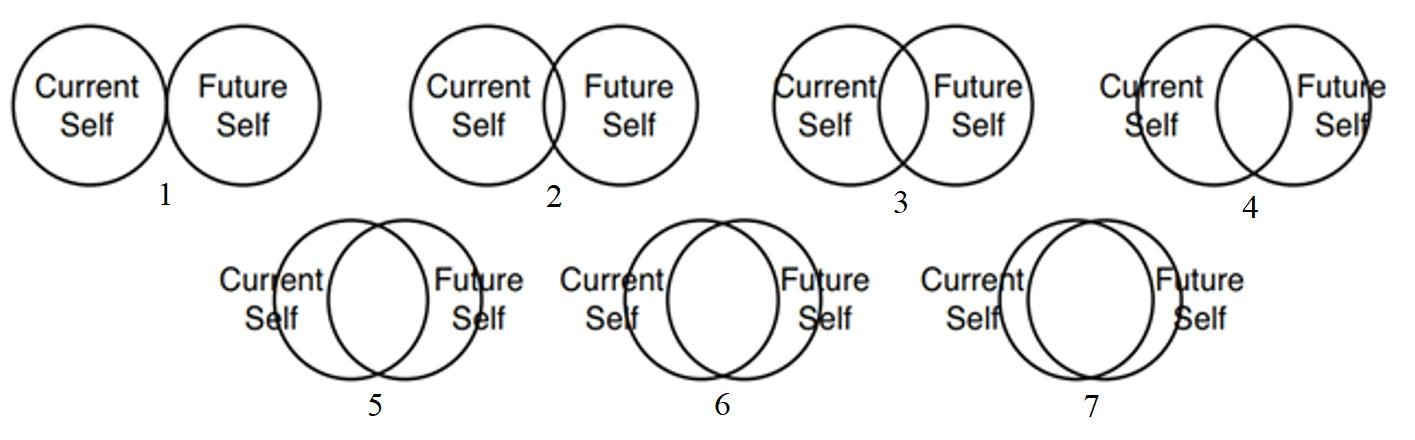
First, they were asked to describe their future self as an in-service English language teacher over a five-year timescale. Given that the psychological connectedness between present and future selves becomes less robust as temporal distance increases (Hershfield, 2011), a five-year frame was adopted as it constitutes a meaningful but accessible future for the 19-year-old PSTs. Details included the institution's type and location, position, student population, and a description of a typical workday. This task was intended to verify that the participants were thinking about who they might become in the future. Next, they selected one set of overlapping Euler circles that best represented their perceived similarity to their future selves in five years’ time (Figure 1). These circles, further developed by Hershfield (2011), were to measure future self-similarity by visualising the level of overlap between present and future selves. This instrument extended the work of Aron et al. (1992, as cited in Hershfield, 2011) on measuring self and other-connectedness. The PSTs were also required to reflect on the degree of vividness and positive feelings they held toward their future selves. Finally, they reported a situation in which they had to choose between two different options: one that offered immediate benefits at the time and another that was associated with delayed and greater rewards. They then explained the reasons for their decisions, including whether they considered their future selves during the decision-making process. Participants submitted their files through the school’s learning management system.
The first author adopted the single translation approach (Liamputtong, 2010) to translate all responses into English. Her proficiency in both Vietnamese and English, together with her background in English language teacher education and her familiarity with the participants’ culture, facilitated the translation in preserving the accuracy of the participants’ intended meanings.
Data Analysis
To ensure anonymity, each preservice teacher was assigned one pseudonymous code (PST1-PST44) throughout data analysis and data presentation.
This study employed thematic analysis (Braun & Clarke, 2006) to analyse the written responses of the PSTs. First, the researchers carefully read these responses a couple of times to familiarise themselves with the general meaning of the datasets. Next, coding of the first dataset was conducted, and initial codes were formed with the integration of Saldaña’s (2016) First Cycle Coding methods, such as in vivo, emotion, values, process and descriptive coding. To be specific, in vivo codes preserved meaningful words and phrases by the PSTs, emotion codes reflected the PSTs’ feelings and emotions, values codes captured the PSTs’ beliefs and attitudes towards their future self as English language teachers and the teaching profession, process codes identified actions and processes related to their past experiences, activities in the present and future, while descriptive codes summarised the main topic of a data segment. For example, initial codes included “a good listener”, “feeling worried about future self”, “teaching with care”, “working on assignment long before deadline” and “future vision guiding effort”. The next step was to review and revise the initial codes to identify and remove overlaps. Then, the same procedure was repeated in the analysis of the remaining dataset. Finally, initial codes across all responses were compared, grouped into categories, and then organised into themes. Data analysis was conducted using MAXQDA software.
FINDINGS
In this section, we present findings on the preservice English language teachers’ experiences of future self-continuity through psychological connectedness with mental representations of their future selves and its contribution to their intertemporal decision-making. The distribution of the overlapping Euler circle sets is provided in Table 2, while a summary of the findings is presented in Table 3.
Continuity in Being: An Extension of Self
In their perception of self as an English language teacher, participants described a strong sense of connectedness between present and future selves across time. Two versions of self were reported to share many similar positive attributes, which the PSTs imagined with relative clarity. As a result of such perception, their sense of career fit was strengthened. The PSTs also expressed a belief that these were existing strengths that they would continue to maintain, and some of which had been formed and developed from earlier stages of their lives. In this way, these attributes served as stable links connecting who they are now with who they will be in five years’ time. Because the perceived overlap between present and future selves was substantial, the PSTs anticipated limited change in their core professional dispositions. For this reason, the future self was understood not as a fundamentally different identity but as an extension of the present self, as it was seen to carry forward and sustain existing attributes rather than replace them.
Table 2. Distribution of the Overlapping Euler Circle Sets
|
Level |
1 |
2 |
3 |
4 |
5 |
6 |
7 |
|---|---|---|---|---|---|---|---|
|
Number |
0 |
8 |
13 |
10 |
12 |
1 |
0 |
Table 3. Summary of Themes and Categories
|
Examples |
Definition |
Category |
Theme |
|---|---|---|---|
|
…being cheerful, enthusiastic, and empathetic. |
Overlap and shared characteristics between future and present selves |
Similarity |
Continuity in being: an extension of self |
|
…having a strong grasp of grammar and vocabulary. |
Certainty in the capacity to maintain existing professional characteristics over time |
Confidence |
|
|
…a career goal that I’ve built up over a long time. |
Clarity and stability of characteristics from the past to the present |
Persistence |
|
|
These are the areas I see as growth points, and I plan to keep working on them. |
Characteristics that require further improvement, with information on what needs to be done |
Development |
Continuity in becoming: an ongoing process of self-development |
|
Sometimes I can picture my future self very clearly, but there are also times when I feel vague or lost. |
Coexistence of clarity and vagueness when identifying characteristics of the future self |
Ambiguity |
|
|
Alongside those worries, I also felt a sense of hope. |
Experiences of having two opposing feelings at the same time |
Ambivalence |
|
|
Forming a group to take part in a research project. [...] “It’s definitely stressful and mentally demanding. |
Selected option that indicates what activity is undertaken at the present time |
Preference |
Future self-continuity shaped intertemporal decision-making |
|
The thought of a better me in the future becomes the motivation that keeps me going. |
Forms of support for decision-making |
Resource |
Similarity
The PSTs perceived a strong overlap in personality traits between their future and present selves, including aspects such as patience, a positive demeanour, empathy, and enthusiasm. These traits represented aspects of connectedness about which the PSTs expressed the greatest certainty. One PST shared, “I think being cheerful, enthusiastic, and empathetic are strengths of mine, and I believe these are qualities I will keep both now and in the future.” (PST4).
Besides general personality traits, the PSTs also noted similarities in professional dispositions, including care, passion, commitment, and dedication. They described these as attributes that were already present in themselves and regarded them as strengths for their future role as in-service teachers. The current presence of these attributes enabled them to envisage with clarity the types of teachers they expected to become and the personal qualities they would embody. This entanglement between personal and professional dimensions generated a positive sense of alignment and reinforced their belief that they were well suited to the teaching profession.
A shared feature of the attributes reported by the PSTs was that they were predominantly positive and largely grounded in personal factors. Take this interview excerpt as an example, “I think the similarity between the two “versions” of myself is that both are pursuing a career in teaching, and both carry the same enthusiasm and desire to create value for students.” (PST18). For this reason, the PSTs expressed a certain level of confidence that they would be able to control and maintain these attributes in their future selves.
Confidence
When it comes to professional knowledge and skills, the PSTs mainly noted a sense of dissimilarity between the two versions of self, which will be presented in the following sections. The strongest point of subjective connection in terms of expertise lay in their confidence in their English language competence and their ability to explain concepts. For instance, a participant emphasised, “having a strong grasp of grammar, vocabulary and being truly proficient in the language, which is essential for teaching” (PST35). This may be attributed to the linguistic capital they had accumulated after many years of studying English and preparing for international certification examinations. In their country, the school curriculum also placed strong emphasis on grammar and vocabulary. These conditions could create a favourable foundation for the PSTs to build their language competence. Such learning experiences helped them establish this linguistic base and contributed to their confidence in their current ability, as well as in their capacity to maintain at least their present level of language competence in the future.
The PSTs also believed that they would be able to maintain their current ability to explain concepts, described as “conveying knowledge in an understandable way”. They regarded this as a professional skill and considered it one of their strengths. This ability was vividly associated with their future selves. It may have been formed through teaching experiences in both formal contexts, such as private tutoring and online teaching, and informal contexts, such as helping friends or family members with their studies. These activities provided opportunities for the PSTs to practise conveying lesson content.
Persistence
The connectedness between future and present selves was formed not only through perceived similarities but also through the clarity of the future self and the stability of goals over time. The PSTs in this study constructed a sense of connectedness because they had imagined their future self with considerable clarity since the past, in some cases from their years as school students. They had long developed an ideal self to pursue and to serve as a source of effort and direction. In this sense, the future was already present in the current self, and the future self had taken shape from earlier aspirations. This pattern reflected a sustained concern with the self as an English language teacher across time.
This image is not some distant dream, but a career goal that I’ve built up over a long time. […] I had already decided what I wanted to do back when I was in secondary school, and I’ve held on to that determination until now. (PST35)
This section indicates a strong sense of connectedness and closeness of the present self to the future self, grounded in perceived similarity, confidence, and persistence over time.
Continuity in Becoming: An Ongoing Process of Self Development
Future self-continuity among the PSTs also encompassed a sense of connectedness through ongoing development. In contrast to the stability of attributes described earlier, the overlap in aspects reported in this section was not substantial, and the perceived closeness to the future self was weaker. Instead, connectedness was expressed through an orientation towards a developmental journey and a positive outlook on that trajectory. This sense of continuity emerged through the coexistence of components that appeared contradictory yet were experienced simultaneously. Specifically, these included continuity and disruption, clarity and ambiguity, positivity and a sense of being unsettled. The dominant perception was temporal rather than fixed to any single attribute. The anchoring point lay in the PSTs’ belief that they were gradually narrowing the gap and moving towards greater alignment between present and future selves.
Development
Despite a positive outlook on the developmental trajectory, which provided the PSTs with a general sense of connectedness, they experienced a sense of distance and dissimilarity. From a holistic perspective, some explicitly stated “I feel like my present self isn’t really that similar to me as an English teacher in the future.” (PST2) or “I feel that there’s still quite a significant gap between my present self and my future self.” (PST4).
A small group of PSTs (n=8) selected the second image in response to the question on overlapping Euler circles (Figure 1). However, by doing so, the PSTs were primarily referring to professional knowledge and skills. In their imagination, the future self was a teacher who was more skilled and who performed more effectively in in-the-moment decision-making, classroom management, instructional strategies, public speaking and communication. One participant shared:
I think my future self will be more confident when teaching in front of a class and will have better skills in handling situations that arise in an educational setting. I’ll also be more mature and composed in managing my emotions so that I can deal with difficult situations in a professional way. I expect to have more teaching experience and more time standing in front of a class. These are the areas I see as growth points, and I plan to keep working on them during my remaining years at university. (PST21)
These are the skills that the PSTs hoped to cultivate and deliberately develop during their remaining years at university. The present self was already able to perform these skills to some extent, yet not at the mastery level. The perceived dissimilarities, therefore, did not reflect a complete difference or a shift towards becoming a fundamentally different type of teacher. Rather, both versions of self were situated along the same developmental path but at different points along the level continuum. Connectedness was thus maintained by moving the present closer to the future self, that is, through ongoing self-development.
The participants were second-year students who had only completed the first in a sequence of teaching methodology courses. Their practical teaching experience was largely limited to one-on-one teaching contexts. As a result, they described themselves as still lacking experience in managing a traditional classroom and not yet having a firm understanding of teaching methods. Consequently, they perceived a low degree of similarity in relation to expertise. However, they expressed confidence and positive feelings that future practice would enable them to further develop these less established aspects.
Ambiguity
PSTs also experienced a sense of ambiguity, characterised by an oscillation between clarity and vagueness and a potential risk of discontinuity. If the future selves were considered as a puzzle, the degree of clarity of its pieces would not be uniform across different moments. For example, PST16 stated, “Sometimes I can picture my future self very clearly, but there are also times when I feel vague or lost, because I’m afraid I might not become the teacher I’ve always hoped to be.”
For some PSTs, the complete puzzle had not yet taken shape, and certain pieces remained unclear or insufficiently defined. PST22 shared, “I can’t really put all those images together into one complete and clear picture yet, but I can roughly describe the main points about who I would be as a future English teacher.”
Meanwhile, for other PSTs, connectedness also encompassed a risk of discontinuity. This was associated with a strong sense of dissimilarity, low vividness of the future self, a negative outlook on the developmental trajectory, and uncertainty about what actions to take in the present to improve.
I would rate myself at level 2 in the figure. […] I usually imagine the future in a rather vague way. I do have the direction of becoming an English teacher, but right now I don’t really know what I should do to become better. (PST30)
For these PSTs, the future self was closer to an ideal or imagined self. It represented a version they wished to become rather than their actual self in the next five years. In this case, when continuity was sustained through a becoming mode, if the PSTs were unable to identify what actions were required in the present to support their development, the path could be disrupted, leading to discontinuity.
Ambivalence
Some PSTs reported both excitement and anxiety when imagining their future self. They felt excited because they were strongly drawn to this version and looked forward to its realisation. As described earlier, they often associated the future self with positive qualities such as effective communication skills, sound pedagogical competence, and strong language proficiency. In this stance, the future self was understood as a hoped-for self. It was perceived as a better version of the present self and as a continuation and further development of existing attributes, knowledge and skills.
When I think about my future self, I often feel quite excited and curious, because I’m not really sure what I’ll achieve in the future. In a way, that uncertainty also becomes a motivation for me to keep trying, so that I can become the version of myself that I imagine. (PST33)
Meanwhile, the PSTs also reported feelings of anxiety arising from uncertainty about the future and a sense of inadequacy. For example, one participant stated “the future may bring many changes that we cannot foresee” (PST38). In addition, the PSTs evaluated their own competence in relation to their future students, as mentioned in these comments, “Whenever I think about myself in the future as a teacher, I often feel worried because I realise that I still have many shortcomings, while students nowadays are becoming more and more capable.” (PST37)
Future Self-Continuity Shaped Intertemporal Decision-making
Preference
The psychological connectedness with the future self encouraged the PSTs to make intertemporal choices that offered delayed rewards, even though such a preference required them to incur certain costs. They acknowledged that this was not an easy decision at first, and some reported considerable hesitation before reaching a final choice.
Options associated with immediate rewards included participation in a music club, spending time with friends, resting, or watching films. These activities were described as providing comfort, relaxation, energy recovery, and opportunities for social interaction. After consideration, however, the PSTs opted for options linked to delayed rewards, although the temporal distance of the returns varied across individuals. Shorter-term delayed rewards, such as within a single academic semester, were connected to activities such as engaging in group study for examinations or completing assignments ahead of deadlines. Longer-term rewards included forming research groups, learning an additional foreign language, or taking part-time jobs as teaching assistants at language centres or as private tutors. Regardless of the time frame, these activities were consistently described as more demanding and stressful than those offering immediate rewards. For instance, some PSTs talked about “waking up early and pushing myself to sit at my desk to practise IELTS tests on my own” (PST40), “I have to divide my time, prepare lessons, plan my teaching, and deal with even more difficulties” (PST42), and “This means I’ll have to spend a lot of time reading materials, developing ideas, and writing reports. It’s definitely stressful and mentally demanding.” (PST9).
Resource
When engaging in intertemporal decision-making, the PSTs experienced future self-continuity as an orientational resource. Many PSTs regarded the future self as the hoped-for self they expected to become. The attributes associated with this future version were therefore treated as developmental outcomes that they sought to attain. The process of identifying similarities and dissimilarities between the two versions enabled them to recognise the limitations of the present self and to set appropriate goals in the present. It also guided them in organising their tasks and priorities to move closer to the imagined future version. A key expression repeatedly used by the PSTs was “to direct one’s actions”, regardless of whether their future imagination was vivid or vague.
I care a lot about how I see myself in the future, because it helps me reflect on who I am now, make changes, and gain more experience to improve myself. Right now, I usually imagine my future in a rather vague way, […] but I focus on recognising what I’ve already achieved and what I haven’t, and then I try to develop myself step by step. (PST37)
In addition, connectedness with the future self was also reported to function as a motivational resource. As reported earlier, the PSTs frequently focused on the positive qualities associated with their future self. For this reason, some of them stated, “the thought about a better me in the future becomes the motivation that keeps me going” (PST21)
Because choices that offered delayed rewards were often perceived as more demanding, the PSTs sometimes experienced negative emotions and even a sense of burnout. They acknowledged that connectedness with the future self helped them navigate feelings of being overwhelmed and sustain effort in balancing responsibilities in order to continue pursuing their goals and obtain rewards in the future. It enabled them to adopt a more positive perspective when encountering challenges. In particular, they interpreted current activities as investments for the future. This perspective supported their determination not to give up and to persist in working towards their goals.
When I made the decision, I felt excited and really looked forward to it, because I believed I was doing something meaningful for my future. However, in the beginning, I also felt quite confused and even showed signs of burnout, since my schedule became much busier and I struggled to balance studying and working. Even though there were times when I felt tired and under pressure, I never regretted this choice. On the contrary, the experience helped me understand myself better, build discipline, and learn how to manage my time. I believe those emotions and challenges are shaping a more mature version of myself in the future. (PST37)
DISCUSSION
The research findings indicated that the preservice English language teachers experienced future self-continuity in two forms, including continuity in being, which emphasises an extension of self and continuity in becoming, which underscores an ongoing process of self-development. These forms both reflected a sense of psychological connectedness between the present and future selves, although the degree of connectedness varied. Another finding indicates that future self-continuity shaped the PSTs’ preference for delayed, larger rewards, since it is reported to function as an orientational and motivational resource and to support emotional regulation.
In regard to continuity in being, the PSTs subjectively experienced a sense of connectedness with their future self through shared personal attributes and professional dispositions. These similarities reflected an intersection between personal and professional factors within the teaching profession, which lends support to Kelchterman’s (2009) argument that the personal dimension of the teacher is an essential component in what constitutes professional teaching. Misalignment between these two dimensions of the self can generate tensions, which may result in a decrease in self-confidence and teacher attrition (van Rijswijk et al., 2020). The PSTs in this study foregrounded positive attributes that they perceived as constitutive of their strengths and as enabling their effective performance as English language teachers. This finding echoes that of Hong and Greene (2011), who found that the PSTs aspired to develop professional attributes, such as caring, a positive attitude, and leadership. In line with this, Nolan and Mola (2019) indicated that educators viewed professional dispositions including patience, passion, and dedication as integral to their expertise, despite these being unrecognized in policy documents. In addition, continuity in form of an extension of the present self was evident in the PSTs’ confidence in their English language competence, in their ability to explain concepts developed through tutoring experience, and in the persistence with which they constructed the self as a teacher over time. This finding highlights the relevance of past experiences in shaping the connectedness between present and future selves, echoing evidence from research on the PSTs in Netherlands (van Rijswijk et al., 2020). This form of connection aligns with the concept of global self-continuity introduced by Sedikides et al. (2023) and suggests that PSTs can be a long-term planner (Bénabou & Pycia, 2002, as cited in Hershfield, 2011).
Another form of psychological connectedness with future self is continuity in becoming, which emphasises the ongoing process of self-development across time. The prominent categories within this form included development, ambivalence, ambiguity which encompasses a risk of discontinuity. Specifically, development is characterised by a positive outlook on the developmental trajectory that coexisted with a sense of distance and dissimilarity. The professional knowledge and skills associated with the future self were not perceived as entirely different from those of the present self. Instead, the difference is best understood as reflecting different positions along a continuum of mastery. For this reason, the PSTs experienced a general sense of self-continuity rather than self-discontinuity. The coexistence of perceived similarity and dissimilarity reflects the stable yet dynamic nature of the self as a teacher (Akkerman & Meijer, 2011; Berkman et al., 2017; Hong et al., 2016). However, self-discontinuity could occur when perceived dissimilarities were accompanied by low vividness and a negative outlook on the developmental trajectory, particularly when the PSTs were uncertain about what actions to take in the present. Self-discontinuity involves discomfort that partly stems from a loss of meaning, whether meaning is interpreted as a sense of mattering, purpose, or coherence (Costin & Vignoles, 2020).
The current study also revealed a sense of ambiguity, characterised by oscillation between clarity in the PSTs’ imagination of the future self. This can partly be explained by the finding of van Rijswijk et al. (2020) that the PSTs hold different subjective perceptions of the connection between their current and future selves at different time points. As a result, maintaining a coherent sense of self across temporal frames can be challenging. The coexistence of clarity and vagueness in the PSTs’ imagination of the future self can be understood in relation to the characteristics of teacher identity at an early phase of teacher education. At this stage, they are not yet in a stable state of being but are engaged in an ongoing process of becoming (Kraehe, 2012), in pursuit of a fuller overlap between present and future selves.
The findings of this study further identified both feelings of excitement and anxiety in relation to the future self. Such ambivalence stemmed from the positivity generated by viewing the future self as a better version of the present self through development, and from concerns about future uncertainty and a sense of inadequacy. This finding is in line with evidence from research on the PSTs in the Netherlands (van Rijswijk et al., 2020). Zaleski et al. (2017) noted that individuals may simultaneously approach the future with hope and experience negative affect (e.g., worry, fear, anxiety), with future anxiety arising when such negativity becomes dominant.
Finally, future self-continuity shaped the PSTs’ preference for intertemporal choices that offered delayed rewards rather than immediate gratification, despite some initial hesitation. The PSTs were willing to accept more demanding and challenging tasks as a kind of investment for the benefit of their future selves. In doing so, the perceived temporal discounting rate of future events may be reduced, which challenges the existing literature that the values of distant events are often discounted (Frederick et al., 2002). This finding lends support to the claim that psychological connectedness between the present self and the future self serves as an important explanatory factor for the differences in decision-making (Hershfield, 2011; Hershfield, Wimmer, et al., 2009; Sani, 2008). In the present study, future self-continuity was experienced as an orientational and motivational resource that directed as well as encouraged the PSTs’ preference for choices with delayed but larger rewards. Regarding the perceived dissimilarities, the future self was experienced as distant in some respects, yet close to the “hoped-for self”. In this way, it functioned as a reference that guided their present choices of actions to bridge the gap between the two versions of self. This finding reinforces the argument that individuals strategically use present-future self-continuity for self-enhancement purposes (Peetz & Wilson, 2008). Hamman et al.’s (2013) claim that possible selves regulate the PSTs’ behaviours in learning to teach and monitor the process. Although the dissimilarities were acknowledged, the future self still served as a meaningful reference that informed present decisions. This finding challenges the idea that individuals who experience a sense of dissimilarity, which results in low future self-continuity, are more likely to get engaged in behaviour associated with immediate rewards and to give limited consideration to the consequences of such actions for the future self (van Gelder et al., 2013). In terms of future self-continuity as a motivational resource, because the PSTs typically imagined a positive future self, they experienced a feeling of excitement that fostered motivation. This finding is consistent with the conclusion that teachers are motivated by their hoped-for selves (Ng, 2018).
Through the functions outlined above, future self-continuity may also support emotional regulation when PSTs encounter negative emotions or experience burnout. As discussed earlier, intertemporal choices associated with delayed rewards often involve substantial challenges that require the PSTs to regulate their emotions. Past research has documented the association between continuity and increased psychological resources related to the regulation of goal-directed behaviour (Adelman et al., 2016), as well as between consideration of future consequences and self-control (Joireman et al., 2008). The self-continuity motive is approach-oriented, that is, it reflects “the energization of behaviour by, or the direction of behaviour toward, positive stimuli (objects, events, possibilities)” (Elliot, 2006, p. 111). As a result, this motive enabled individuals to reduce negative self-conceptions and enhance positive ones to the extent conditioned by external constraints (Sedikides, 2023).
CONCLUSION
Drawing on Hershfield’s (2011) concept of future self-continuity, this article explores preservice English language teachers’ psychological connectedness to their mental representations of future selves and how such connectedness contributes to intertemporal decision-making in their academic lives.
The findings reveal two forms of future self-continuity that reflected both stable and developing components of self as a language teacher, characterised by different levels of vividness and positivity. Continuity was expressed through the connectedness among three prominent versions of self: the present self, the future self and the hoped-for self. In the form marked by a stronger degree of connectedness, referred to as continuity in being, the future-present self-overlap was relatively high. The shared components are primarily related to personal attributes and several professional qualities that have already been formed and developed through prior practice experiences. Meanwhile, in the form of connection through an ongoing developmental process, referred to as continuity in becoming, the future self was more closely aligned with the hoped-for self, as these represented professional competences that the PSTs perceived themselves as not yet having fully developed and were currently working towards through continued learning and practice. These findings may inform both educators and PSTs in identifying professional learning possibilities which are responsive to PSTs’ needs. Specifically, professional learning activities should focus on enhancing the professional competences to support the PSTs in progressing towards their hoped-for self, thereby facilitating the construction of a future self. It is therefore suggested that educators take due account of PSTs’ learning needs when designing curricula and course syllabi. Once these needs are recognised and reflected in teacher education programmes, the effectiveness of both teaching and learning can be strengthened. In addition, such practices may increase the vividness, confidence, and positivity with which PSTs perceive their future self. In turn, this may encourage them to make more patient choices in the present as an investment for the future. Another significant finding of the current study supports this argument by demonstrating the contribution of future self-continuity to intertemporal decision-making, through its functions as an orientational and motivational resource and its role in supporting emotional regulation.
Among the participants in this study, some rarely envisioned their future selves, suggesting that their present decisions and actions may not yet be guided by a long-term perspective. However, engagement in mental time travel, defined as the capacity to mentally reexperience past events and imagine possible future events, enables individuals to place the self at different points along a timeline. In doing so, the subjective value of future rewards is believed to increase while the rate of temporal discounting decreases (Hershfield, 2011). This shift may lead individuals to reorient their reward-seeking strategies towards delayed but larger gains (Adelman et al., 2016). Therefore, educators may consider implementing interventions, such as reflective writing, future-self articulation, or guided professional visioning, to offer opportunities for PSTs to experience vivid and realistic professional futures.
This study is subject to certain limitations, including its cross-sectional design, which recorded PSTs’ sense of continuity at a single point in time, its reliance on self-reported data in the absence of behavioural measures of intertemporal choice and the possible interpretive implications of translation. To provide a more comprehensive account of patterns and trajectories in perceived future-present self-continuity, future research should collect and analyse data at multiple time points, complement self-reported accounts with behavioural measures of intertemporal choice, and incorporate the past self.
ACKNOWLEDGEMENTS
We would like to thank Dr Tin T. Dang for his constructive and detailed feedback. We would like to extend our gratitude to the anonymous reviewers for their valuable comments.
DECLARATION
Ethics Approval and Informed Consent
The participants were informed about the purposes of the research, and all provided consent for their data to be used for research and publication. The reports were not assessed for quality, and the participants could withdraw from the study at any time without any negative consequences for their course grades.
AI Tool Use
During the preparation of this manuscript, the author(s) used ChatGPT provided by OpenAI to check grammar, including that of the English translations of interview excepts.
Funding
This research received no external funding.
Conflicts of Interest
The author(s) declare no conflicts of interest.
Data Availability
The data supporting the findings of this study are available from the corresponding author upon reasonable request.
Author Contributions
Ly Thi Phuong Tran and Kendall Hartley contributed equally to this work.
References
Adelman, R. M., Herrmann, S. D., Bodford, J. E., Barbour, J. E., Graudejus, O., Okun, M. A., & Kwan, S. (2016). Feeling closer to the future self and doing better: Temporal psychological mechanisms underlying academic performance. Journal of Personality, 85(3), 398-408. https://doi.org/10.1111/jopy.12248
Akkerman, S. F., & P. C. Meijer. (2011). A dialogical approach to conceptualizing teacher identity. Teaching and Teacher Education, 27(2), 308-319. https://doi.org/10.1016/j.tate.2010.08.013
Almanee, K. A. M. (2020). Corporatisation of education: Performativity and its impact on Saudi female ELT teachers’ performance and identity [Doctoral dissertation, University of Exeter]. https://hdl.handle.net/10871/125694
Anderhub, V., Güth, W., Gneezy, U., & Sonsino, D. (2001). On the interaction of risk and time preferences: An experimental study. German Economic Review, 2(3), 239-253. https://doi.org/10.1111/1468-0475.00036
Bartels, D. M., & Urminsky, O. (2011). On intertemporal selfishness: How the perceived instability of identity underlies impatient consumption. Journal of Consumer Research, 38, 182-198. https://doi.org/10.1086/658339
Beijaard, D., & Meijer, P. C. (2017). Developing the personal and professional in making a teacher identity. In D. J. Clandinin & J. Husu (Eds.), The SAGE handbook of research on teacher education (pp. 177-192). SAGE.
Beijaard, D., Meijer, P. C., & Verloop, N. (2004). Reconsidering research on teachers’ professional identity. Teaching and Teacher Education, 20(2), 107-128. https://doi.org/10.1016/j.tate.2003.07.001
Berkman, E. T., Livingston, J. L., & Kahn, L. E. (2017). Finding the “self” in self-regulation: The identity-value model. Psychological Review, 124(2), 196-217. https://doi.org/10.1080/1047840X.2017.1323463
Berns, G. S., Laibson, D., & Loewenstein, G. (2007). Intertemporal choice - toward an integrative framework. Trends in Cognitive Sciences, 11(11), 482-488. https://doi.org/10.1016/j.tics.2007.08.011
Bixter, M. T., McMichael, S. L., Bunker, C. J., Adelman, R. M., Okun, M. A., Grimm, K. J., & Smith, B. (2020). A test of a triadic conceptualization of future self-identification. PLoS ONE, 15(11), 1-39. https://doi.org/10.1371/journal.pone.0242504
Braun, V., & Clarke, V. (2006). Using thematic analysis in psychology. Qualitative Research in Psychology, 3(2), 77-101. https://doi.org/10.1191/1478088706qp063oa
Cascarilla, A. N., Brodhead, M. T., Cox, D. J., & Sarmiento, C. M. (2025). Delay discounting and teacher decision-making of behavioral interventions. Behavioral Interventions, 40(4), 1-14. https://doi.org/10.1002/bin.70058
Caspi, A., & Moffitt, T. E. (1991). Individual differences are accentuated during periods of social change: the sample case of girls at puberty. Journal of Personality and Social Psychology, 61(1), 157-168. https://doi.org/10.1037/0022-3514.61.1.157
Costin, V., & Vignoles, V. L. (2020). Meaning is about mattering: Evaluating coherence, purpose, and existential mattering as precursors of meaning in life judgments. Journal of Personality and Social Psychology, 118(4), 864-884. https://doi.org/10.1037/pspp0000225
Dang, T. T. (2010). Learner autonomy in EFL studies in Vietnam: A discussion from sociocultural perspective. English Language Teaching, 3(2), 3-9. https://doi.org/10.5539/elt.v3n2p3
Dang, T. T. (2024). Cultural and situational constraints on undergraduate students’ performance of learner autonomy in EFL learning. Journal of Language Teaching and Research, 15(6), 1791-1799. https://doi.org/10.17507/jltr.1506.04
Dang, T. T., & Le, Q. H. T. (2021). Learning place control: Vietnamese EFL students’ appreciation and trust. International Journal of Language Education and Applied Linguistics, 11(2), 56-63. https://doi.org/10.15282/ijleal.v11i2.6597
de Bruin, L. (2025). Identity formation and possible selves of early career instrumental music teachers: A qualitative study. Psychology of Music. https://doi.org/10.1177/03057356251320976
Elliot, A. J. (2006). The hierarchical model of approach - avoidance motivation. Motivation and Emotion, 30(2), 111-116. https://doi.org/10.1007/s11031-006-9028-7
Frederick, S., Loewenstein, G., & O’Donoghue, T. (2002). Time discounting and time preference: A critical review. Journal of Economic Literature, 40(2), 351-401. https://www.jstor.org/stable/2698382
Hamilton, J., & Cole, S. N. (2017). Imagining possible selves across time: Characteristics of self-images and episodic thoughts. Consciousness and Cognition: An International Journal, 52, 9-20. https://doi.org/10.1016/j.concog.2017.04.015
Hamman, D., Wang, E., & Burley, H. (2013). What I expect and fear next year: Measuring new teachers’ possible selves. Journal of Education for Teaching, 39(2), 222-234. https://doi.org/10.1080/02607476.2013.765194
Hartley, K., Hayak, M., & Ko, U. H. (2024). Artificial intelligence supporting independent student learning: An evaluative case study of ChatGPT and learning to code. Education Sciences, 14(1), 1-12. https://doi.org/10.3390/educsci14020120
Hershfield, H. E. (2011). Future self-continuity: How conceptions of the future self transform intertemporal choice. Annals of the New York Academy of Sciences, 1235, 30-43. https://doi.org/10.1111/j.1749-6632.2011.06201.x
Hershfield, H. E., Garton, M. T., Ballard, K., Samanez-Larkin, G. R., & Knutson, B. (2009). Don’t stop thinking about tomorrow: Individual differences in future self-continuity account for saving. Judgement and Decision Making, 4, 280-286. https://doi.org/10.1017/S1930297500003855
Hershfield, H. E., Wimmer, G. E., & Knutson, B. (2009). Saving for the future self: Neural measures of future self-continuity predict temporal discounting. Social Cognitive and Affective Neuroscience, 4, 85-92. https://doi.org/10.1093/scan/nsn042
Hoffman, B., Subramaniam, A., & Hartley, K. (2025). It’s time to reconsider: The neuropsychology of belief change. Trends in Neuroscience and Education, 40, 1-11. https://doi.org/10.1016/j.tine.2025.100261
Hong, J., Greene, B., & Lowery, J. (2016). Multiple dimensions of teacher identity development from pre-service to early years of teaching: A longitudinal study. Journal of Education for Teaching, 43(1), 1-15. https://doi.org/10.1080/02607476.2017.1251111
Hong, J., & Greene, B. (2011). Hopes and fears for science teaching: The possible selves of preservice teachers in a science education program. Journal of Science Teacher Education, 22(6), 491-512. https://doi.org/10.1007/s10972-011-9247-y
Joireman, J., Balliet, D., Sprott, D., Spangenberg, E., & Schultz, J. (2008). Consideration of future consequences, ego-depletion, and self-control: Support for distinguishing between CFC-immediate and CFC-future sub-scales. Personality and Individual Differences, 45, 15-21. https://doi.org/10.1016/j.paid.2008.02.011
Kelchtermans, G. (2009). Who I am in how I teach is the message: Self-understanding, vulnerability and reflection. Teachers and Teaching: Theory and Practice, 15(2), 257-272. https://doi.org/10.1080/13540600902875332
Klapproth, F. (2008). Time and decision making in humans. Cognitive, Affective, & Behavioral Neuroscience, 8, 509-524. https://doi.org/10.3758/CABN.8.4.509
Kraehe, A. M. (2012). Creating art, creating selves: Negotiating professional and social identities in preservice teacher education [Doctoral dissertation, The University of Texas at Austin]. http://hdl.handle.net/2152/ETD-UT-2012-08-6100
Liamputtong, P. (2010). Performing qualitative cross-cultural research. Cambridge University Press.
Lee, N. C., Krabbendam, L., Dekker, S., Boschloo, A., de Groot, R. H. M., & Jolles, J. (2012). Academic motivation mediates the influence of temporal discounting on academic achievement during adolescence. Trends in Neuroscience and Education, 1(2), 43-48. https://doi.org/10.1016/j.tine.2012.07.001
Maclure, M. (1993). Arguing for your self: Identity as an organising principle in teachers’ jobs and lives. British Educational Research Journal, 19(4), 311-322. https://doi.org/10.1080/0141192930190401
Markus, H., & Nurius, P. (1986). Possible selves. American Psychologist, 41(9), 954-69. https://doi.org/10.1037/0003-066X.41.9.954
McCrea, S. M., Liberman, N., Trope, Y., & Sherman, S. J. (2008). Construal level and procrastination. Psychological Science, 19(12), 1308-1314. https://doi.org/10.1111/j.1467-9280.2008.02240.x
Merriam, S. B., & Tisdell, E. J. (2016). Qualitative research: A guide to design and implementation (4th ed.). Jossey-Bass.
Ng, C. (2018). Teachers’ professional selves and motivation for continuous professional learning amid education reforms. Asia-Pacific Journal of Teacher Education, 46(3), 233-247. https://doi.org/10.1080/1359866X.2018.1504278
Nguyen, L. T., Vo, T. D., & Tran, N. G. (2023). CALL teacher trainers’ challenges and coping strategies: Voices from Vietnam. In D. Tafazoli & M. Picard (Eds.), Handbook of CALL teacher education and professional development. Springer.
Nguyen, P. T., Nguyen, Q. L. H. T., Nguyen, L. T., & Huynh, V. D. B. (2022). Factors affecting Vietnamese higher education quality in the context of Industry 4.0. Vietnam Journal of Education, 6(3), 225-237. https://doi.org/10.52296/vje.2022.223
Nolan, A. and Molla, T. (2019). Supporting teacher professionalism through tailored professional learning. London Review of Education, 17 (2): 126-140. https://doi.org/10.18546/LRE.17.2.03
Nurra, C., & Oyserman, D. (2018). From future self to current action: An identity-based motivation perspective. Self and Identity, 17(3), 343-364. https://doi.org/10.1080/15298868.2017.1375003
Oyserman, D., Bybee, D., & Terry, K. (2004). Possible selves as roadmaps. Journal of Research in Personality, 38(2), 130-149. https://doi.org/10.1016/S0092-6566(03)00057-6
Oyserman, D., Destin, M., & Novin, S. (2015). The context-sensitive future self: Possible selves motivate in context, not otherwise. Self and Identity, 14(2), 173-188. https://doi.org/10.1080/15298868.2014.965733
Peetz J., Wilson A. E. (2008). The temporally extended self: the relation of past and future selves to current identity, motivation, and goal pursuit. Social and Personality Psychology Compass, 2(6), 2090-2106. https://doi.org/10.1111/j.1751-9004.2008.00150.x
Pronin, E., Olivola, C. Y., & Kennedy, K. A. (2008). Doing unto future selves as you would do unto others: Psychological distance and decision making. Personality and Social Psychology Bulletin, 34, 224-236. https://doi.org/10.1177/0146167207310023
Saldaña, J. (2016). The coding manual for qualitative researchers (3rd ed.). SAGE.
Sani, F. (Ed.). (2008). Self continuity: Individual and collective perspectives. Taylor & Francis.
Sedikides, C., Hong, Y., & Wildschut, T. (2023). Self-continuity. Annual Review of Psychology, 74, 333-361. https://doi.org/10.1146/annurev-psych-032420-032236
Sutter, M., Kocher, M., Rützler, D., & Trautmann, S. (2010). Impatience and uncertainty: Experimental decisions predict adolescents’ field behavior. American Economic Review, 103(1).
Sutton, R. E., & Wheatley, K. F. (2003). Teachers’ emotions and teaching: A review of the literature and directions for future research. Educational Psychology Review, 15(4), 327-358. https://doi.org/10.1023/A:1026131715856
Tran, L. T. P., Dang, T. T., & Nguyen, T. N. A. (2024). Imagination development as a construct for professional identity of early career English teachers working at public schools: Contributions of interactions with learners. Theory and Practice in Language Studies, 14(2), 329-338. https://doi.org/10.17507/tpls.1402.03
van Gelder, J.-L., Hershfield, H. E., & Nordgren, L. F. (2013). Vividness of the future self predicts delinquency. Psychological Science, 24(6), 974-980. https://doi.org/10.1177/0956797612465197
van Lankveld, T., Thampy, H., Cantillon, P., Horsburgh, J., & Kluijtmans, M. (2021). Supporting a teacher identity in health professions education: AMEE Guide No. 132. Medical Teacher, 43(2), 124-136. https://doi.org/10.1080/0142159X.2020.1838463
van Rijswijk, M. M. (2020). Experiences of continuity and discontinuity in student teachers’ development [Doctoral dissertation, Utrecht University]. Utrecht University Repository. https://research-portal.uu.nl/en/publications/experiences-of-continuity-and-discontinuity-in-student-teachers-d/
Wakslak, C. J., & Trope, Y. (2009). The effect of construal-level on subjective probability estimates. Psychological Science, 20(1), 52-58. https://doi.org/10.1111/j.1467-9280.2008.02250.x
Zaleski, Z., Sobol-Kwapińska, M., Przepiorka, A., & Meisner, M. (2017). Development and validation of the dark future scale. Time & Society. https://doi.org/10.1177/0961463X16678257

Downloads
Published
Data Availability Statement
The data supporting the findings of this study are currently not publicly available because an appropriate repository for data access has not yet been established. However, the data can be made available at a later stage.
Issue
Section
License
Copyright (c) 2026 Ly Tran, Kendall Hartley

This work is licensed under a Creative Commons Attribution-NonCommercial-NoDerivatives 4.0 International License.