
[Reprint] Learner autonomy: A synthesis of theory and practice
DOI:
https://doi.org/10.65956/tila.2026.20Keywords:
learner autonomy, theoretical framework, modelAbstract
Learner autonomy has been an important focus of educational practices and research for more than three decades. Various methods of promoting learner autonomy in foreign/second language education have been attempted, and different theoretical approaches have been proposed. These multifaceted developments of learner autonomy have been debated, and several perspectives of this capacity have been suggested. Taking this into account, this paper provides a synthesized overview of learner autonomy. It starts with an introduction of the definition of learner autonomy in relation to a critical analysis of the four perspectives adopted in learner autonomy research. It then presents and analyses different models of learner autonomy. The discussion continues with critiques of leaner autonomy promoting practices in traditional classrooms and those with ICT support. Finally, the paper suggests a theoretical framework to convey the principal processes of learner autonomy and an analytical framework to understand this construct at the operationalised level.
INTRODUCTION
Learner autonomy has been an important focus of educational practices and research for more than three decades. The word autonomy is derived from auto-nomos, a Greek word (Voltz, 2008), auto meaning “self” and nomos meaning “rule or law.” Auto-nomos refers to a state where one gives oneself his/her own law. Although this concept originates from politics (Boud, 1981), it can be used in any field, including philosophy, medicine, and psychology to indicate a capacity that allows a person or organization to be able to justify reasons for doing things (Dearden, 1972).
In education in general and foreign/second language (FL/SL) education in particular, learner autonomy has been claimed to be an ultimate goal for a long time (Benson, 2001, 2009; Dang, 2010; McClure, 2001; Waterhouse, 1990). It is often identified to signify students’ active participation in learning activities (Benson, 2007), a view which is supported by a number of studies in different contexts (such as Aoki, 2001; Christopher, 2006; Hart, 2002; Miller, Hopkins, & Tsang, 2005; Smith, 2001, 2003b). At the conceptual level, learner autonomy is described as a very ‘complicated’ (Little, 2003) or ‘multifaceted’ construct (Smith & Ushioda, 2009). The notion of this construct has been modified and even transformed during its development. As a result, the definition of this concept has varied widely. Currently, it is considered part of the ‘orthodoxy’ of language education, “an idea that researchers and teachers ignore at their peril” (Benson, 2009, p. 14).
DEFINITIONS OF LEARNER AUTONOMY
Originally, learner autonomy in language education was defined as an “ability to take charge of one’s own learning” (Holec, 1981, p. 3), and this definition has become the most cited in the literature (Benson, 2009; Dang, 2010). It was driven by the concept of freedom and autonomy in philosophy and initiated by the Council of Europe’s Modern Languages Project in the early 1980s. Later, ‘ability’ and “take charge of” were often replaced by ‘capacity’ and “take responsibility for” respectively. These word replacements seem to be a matter of linguistics only, and the semantic aspects of the construct remain unchanged (Dang, 2010). This ability was further elaborated as not being “inborn but must be acquired,” mostly by formal education practices (Holec, 1981, p. 3).
Learner autonomy has been perceived and translated into practice in several ways, depending on particular political, social and contemporary situations (Dang, 2010). First, it is generally considered as an ability of knowing how to learn (Wenden, 1991). Second, it is regarded as an ability to ‘control’ one’s learning activities (Cotterall, 1995). Third, it is seen as an ability for ‘detachment’ (Little, 1991) or ability to learn “without the involvement of a teacher” (Dickinson, 1987, p. 11). Fourth, it is said to be a “capacity to make and carry out choices” (Littlewood, 1996, p. 428) or an ability to perform rational decision-making processes over learning activities (Hunt, Gow, & Barnes, 1989). More specifically, it is viewed as an ability to give responses beyond usual instructions (Boud, 1988). These examples suggest that although different aspects of this ability can be the focus in each definition, they always maintain the central core of this construct which is the ability to understand and manage learning processes responsibly and effectively.
These variations in the definition of learner autonomy reflect a developmental trend that one should expect. As the notion of every learning construct is embedded in and developed from a situational occasion, its interpretation should be modified by users according to changes in political belief, language learning theory, technology, employment demand, and learning objectives. This becomes even more important for learner autonomy and it has been argued in contemporary literature that this capacity needs to be localized and addressed in particular social contexts (Smith & Ushioda, 2009). In other words, people in different socio-cultural situations may have different views on learner autonomy, and this, logically, leads to a different set of practices to foster this capacity.
These differences are reflected in the four different perspectives, namely psychological, technical, socio-cultural, and political-critical (Benson, 1997, 2006; Dang, 2010; Healy, 2007; Oxford, 2003; Sinclair, 2000). The psychological perspective values the personal attributes of the learners; the technical perspective values attributes in the learning environment; the socio-cultural perspective emphasizes the interactions between learners and their environment; and the political-critical perspective focuses on learners’ access, control, power and ideology in their community. These perspectives may look divergent and even opposite at first, but actually they are complementary. Impacts from the learning environment (technical perspective) and personal characteristics (psychological perspective) are the two important interrelated aspects of learner autonomy formation and development. Negotiations and interactions between an individual with his/her situation (socio-cultural perspective) is in a shared space. These interactive behaviours in a community are driven by a desire for more effective learning outcomes, more agency and better life quality (political-critical perspective). It has been suggested that research should cover as many perspectives as possible as they are not antithetical to one another (Oxford, 2003).
Apart from the perspective distinction analysis, it is also necessary to acknowledge that there are other ways of examining the construct of learner autonomy. For example, Holiday (2003) focuses on the importance of cultural differences and proposes three approaches, namely native-speakerist, cultural-relativist, and social autonomy. These are driven by different assumptions on cultural superiority which it is argued to create different impacts on the conceptualization of learner autonomy. Other examples are personal autonomy (Young, 1986), weak and strong autonomy (Smith, 2003a), narrow and broad autonomy (Kumaravadivelu, 2003), divergence and convergence (Ribe, 2003), and interactions in dynamic inter-relational space (La Ganza, 2001, 2002). The main reason for these several analyses is that they employ different viewpoints and assumptions on teaching practices, learners, and situational aspects. However, they are similar in describing the performance of learner autonomy capacity. As a result of this, different models of learner autonomy have been suggested.
MODELS OF LEARNER AUTONOMY
Similar to the diverse interpretation of the concept of learner autonomy, there are six different models of learner autonomy that can be identified in the literature. They can be classified into two types, which focus on the stages of development and areas of control. The first type attempts to create a general index for each level of learner autonomy development. The second type describes the performance of learner autonomy in different aspects of the students’ learning environment.
Models of Learner Autonomy Regarding Stages of Development
The pioneer in attempting to index learner autonomy attributes into phases of development was Nunan (1997). Based on learners’ actions, he proposed a model of five degrees, namely awareness, involvement, intervention, creation and transcendence. Conceptually, this model is similar to the stages of a learning process, which is how learners are guided to perform a sequential series of behavioural and cognitive actions in learning a language item. First, learners need to be aware of learning goals and prepare learning strategies. They then adopt their own goals and select suitable tasks to perform. After this, they modify, create their new learning goals, and design their new tasks. More details are presented in Table 1.
The model provides a useful index in a gradual developmental order of learner autonomy. Learning behaviours and processes in each stage are clearly specified. However, this order of development is not necessarily true for learners in different contexts. For example, Chinese learners favour a flexible space for creating new content and attempt to design new tasks (Level 4 and 5), but they are confused at selecting from a range of alternatives (Level 2) (Sinclair, 2009). This means a learner does not necessarily have to achieve Level 2 before Level 4 of learner autonomy. This demonstrates the non-universal nature of learner autonomy and the disadvantage of using such a language learning theory-driven model for this socially-mediated construct (compare with Nunan & Lamb, 2001).
Table 1.. Five-Level Model of Learner Autonomy (Nunan, 1997, p. 195)
|
Level |
Learner Action |
Content |
Process |
|---|---|---|---|
|
1 |
Awareness |
Learners are made aware of the pedagogical goals and content of the materials they are using. |
Learners identify strategy implications of pedagogical tasks and identify their own preferred learning styles/strategies. |
|
2 |
Involvement |
Learners are involved in selecting their own goals from a range of alternatives on offer. |
Learners make choices among a range of options |
|
3 |
Intervention |
Learners are involved in modifying and adapting the goals and contents of the learning program. |
Learners modify/adapt tasks. |
|
4 |
Creation |
Learners create their own goals and objectives. |
Learners create their own tasks. |
|
5 |
Transcendence |
Learners go beyond the classroom and make links between the content of classroom learning and the world. |
Learners become teachers and researchers. |
The second model of learner autonomy is derived from the definition of learner autonomy as a self-regulation process. It includes two levels of self-regulation, namely reactive and proactive autonomy (Littlewood, 1999). A reactive autonomy regulates the learning activity after clear directive instructions have been provided. It “enables learners to organize their resources autonomously in order to reach their goal” (p. 75). A proactive autonomy regulates both the activity and the instructions. It allows learners to “affirm their individuality and [set] up directions which they themselves have partially created” (p. 75). A reactive autonomy is either preliminary to or independent of the proactive level. Given relatively specific requirements of each training course, educational practices are designed to empower students’ reactive autonomy rather than the other. The distinction between reactive and proactive levels has provided important insights, suggesting autonomy nurturing in education without significant reforms (Benson, 2006) and specifying a benchmark for measurement. However, this distinction is relatively broad.
The third model was proposed by Scharle and Szabo (2000), consisting of three stages, namely raising awareness, changing attitudes and transferring roles. Raising awareness is the initial cognitive process that enables learners to be conscious about learning objectives; define the contents, and determine the progression. Changing attitudes refers to the stage of transition where learners attempt to replace the previous learning behaviours with some new way of learning. They rationally select appropriate methods and techniques for their learning path (also in Little, 1991). Transferring roles is the highest level of learner autonomy when learners can fully control their learning process with little structured instructions and support. Learners are involved in a process of checking the ongoing learning activities and evaluating the knowledge gained. It seems that this model is a simplified version of Nunan’s (1997) with quite similar indexes.
In brief, these three models have successfully allocated many attributes proposed in the concept of learner autonomy in developmental stages. They can be used to indicate possible progression in capability from low to high (Benson, 2006) in education contexts and broader social contexts. However, their theoretical foundation based on language learning development has challenged assumptions of the non-linear development of learner autonomy. This means different attributes of learner autonomy can be developed independently from one another. Therefore, researchers have suggested another set of models, based on the areas of learning control.
Models of Learner Autonomy Regarding Areas of Control
The literature has identified three models of learner autonomy which tend to focus on students’ areas of control. The first is a three-stage model, namely autonomy as a communicator; autonomy as a learner, and autonomy as a person (Littlewood, 1996). The three roles in the model are associated with the three situational dimensions of learners, namely contexts of language acquisition, learning approach, and personal development, respectively (Benson, 2006). Autonomy as a communicator in the context of language acquisition involves the ability to communicate successfully in particular situations by creatively employing the language and properly adopting strategies. Autonomy as a learner in the context of foreign language learning involves the ability to use suitable strategies to participate in learning activities inside and outside the class. Autonomy as a person in a broader context involves the ability to communicate personal thoughts and personalize the learning environment. Although there seems to be a distinction between these three contexts of autonomies, their attributes are interrelated. The first two are assumed to contribute to the characteristics of the more advanced person-related (Littlewood, 1996).
The second model of this type was developed by Macaro (1997, 2008) and also consists of three aspects, namely autonomy of language competence, autonomy of language learning competence, and autonomy of choice and action. The first refers to communicative ability after mastering second language rules at a certain level. The second refers to the ability to reproduce the language skills which have been gained and transfer them to other similar situations. The third refers to the ability to develop learning options such as short-term and long-term objectives and identify preferred personal learning strategies as well as an ability to perform higher-order thinking skills in the target language such as constructing argumentative essays and providing justifications for a particular matter. It can be seen that each aspect is associated with a specific group of skills and behaviours which are not totally comparable to each other. For example, acquiring a language rule is not necessarily a prerequisite for the development of learning strategies. Therefore, the latter aspect is not necessarily more advanced than its former counterpart and overlapping between them is possible.
Instead of focusing more on learners’ behaviours and critical thinking skills, Benson (2001) proposes another three-aspect model, specifying three broader areas of control, namely learning management, cognitive processes and learning content. These are closely interdependent and associated with learning behaviours, the psychology of learning, and the learning situation, respectively. The development of control in one area can support performance of the others. For example, effective control over the content of learning can result from positive learning attitudes and appropriate learning strategies. A high level of cognitive awareness of learning may accelerate the level of control over the learning management process. Pairing the model with the four perspectives indicates a relatively match between the three areas of control with the perspectives’ foci.
In brief, the three models regarding areas of control have several features in common. The attributes of the first two models are very similar. For example, the attributes of autonomy as a learner in the first model are not very different from the autonomy of language learning competence in the second model. Both concern the learner’s ability to use language for communication in different contexts. Similarly, several attributes suggested in autonomy of choice and action in model two are included in the controlling areas of learning management and learning content in model three. The main reason for these similarities is simply due to the interrelated nature of categories within each model. Therefore, there are more overlaps when pairing one model with another.
Discussion on the Models
The summary of the six aforementioned models indicates two important indexes for the construct of learner autonomy. The first is related to the areas of performance, and the second concerns the levels of performance. Each index generally consists of three categories, except Nunan’s model (1997) which has five categories. It seems that there is a connection between these two indexes in relation to the four perspectives of learner autonomy. The areas of performance, namely cognitive processes, demonstrated behaviours, and situation management, serve as an overall index. Each category in this index consists of three typical progressive levels, characterized by groups of skills indicated in the other index. Table 2 represents this model.
Table 2.. Adapted Model Employed in the Current Study
|
Learner Autonomy |
Psychological perspective |
performed in |
Cognitive processes |
Cognitively identifying learning styles Cognitively modifying tasks Cognitively creating new task |
|---|---|---|---|---|
|
Socio-cultural perspective Political-critical perspective |
Demonstrated behaviours (classroom-like situation) |
Performing selected learning styles Modifying tasks Creating new tasks |
||
|
Technical perspective |
Situation management (beyond classroom) |
Identifying resources from contexts Modifying the resources Creating new resources |
This model can be read from left to right but the vertical order is not important. For example, learner autonomy from the psychological perspective is performed primarily in cognitive processes. It can be described by a number of attributes such as the ability to identify preferred learning styles, modify learning tasks, and design new learning activities. The reference entries for the level index are presented in a relatively progressive order. However, it does not mean that the latter skills are higher and should be developed after the former. The three levels of progression is simply a way of representing the development of this construct. In addition, the three areas of the performance index overlap with one another. Success in one area can support the improvement of the others, although it is not always necessarily the case. Thus, the level index of the model is kept open because it has limitedly been integrated with empirical research. The section which follows draws on prior research to identify the attributes valued and performed by learners in different contexts for model index enrichment.
LEARNER AUTONOMY PROMOTING PRACTICE
Analysis of the contemporary literature indicates numerous dimensions of learner autonomy performed by learners in different educational contexts. It also shows that educationists and researchers have used various practices, depending on particular situations, to enable learners to take more control of their learning. They include those with and without the involvement of ICT support.
Learner Autonomy Promoting Practices in Traditional Classrooms
Identified in the literature are various practices which have been used to cultivate and nurture learner autonomy in language education classrooms. What researchers have often done in prior studies is to examine the contexts; introduce some effects into their classrooms, and analyse the outcomes. These effects are associated with some modifications of classroom activity, curriculum, and/or teaching method. This section looks critically into these attempts to document all the dimensions of learner autonomy that have been identified and their relationships with other associated variables in particular contexts.
Using classroom activities to foster learner autonomy
As learning activities are central to the language learning process, they have been designed to suit particular learning objectives (Conole et al., 2008; Lockyer, et al., 2008). These activities include both collaborative tasks such as group work, project work, and debate and individual activities such as reflective journals and extensive reading to promote learner autonomy. The former focuses more on opportunities for interaction and negotiation. The latter focuses more on opportunities for individual work. Although these appear to be opposed to each other, it is suggested that they both contribute positively to the enhancement of learner autonomy dimensions.
Group-based activities built on a cooperative learning approach have been identified to enable students to maintain an appropriate working agenda, as well as effectively implementing it, and constantly evaluating learning outcomes (Smith, 2001, 2003a). In his longitudinal study with different groups of undergraduate students majoring in languages other than English in Japan, Smith began by eliciting students’ interest in daily activities outside of classroom. Those who shared similar interests in activity types were allocated to work together. Each group was required to work out an action learning plan suitable for their favourite activities. For example, those who liked learning the language through topic discussion had to work out a list of topics that they would like to discuss and the way that the group discussion should be organized. They were then required to implement their plans until the end of the course.
Despite certain difficulties in adapting to the cooperative learning environment, these students became better controllers of their learning activities towards the end of the course. When given more power to manage their learning, they were willing to take the opportunity to do so. Most of them demonstrated their preference for working in small groups and expressed their desire to continue in the same fashion in the following semester. They also explicitly expressed positive satisfaction for their achievements during the course. However, others indicated that they needed more instruction, advice, and strategy training in certain learning activities. This result appears to negate the stereotypical assumption that culturally, Japanese learners tend to passively wait for knowledge to be transferred from teachers (Maiko, 2003; Rundle, 2007).
Group-based activities with a wide range of choices are also identified as increasing students’ learning engagement and achievement (Aoki, 2001). When being asked to participate in designing content for a methodology course, a student teacher in this study was strongly resistant to the initiative. She did not like sharing ideas with other peers during group discussion sessions. However, she became involved in the activity and developed a close relationship with other group members towards the end of the course. Working with the group also enabled her to identify learning goals and increase motivation. Similarly, other students reported that their attitudes towards the course became more positive as they could freely participate in and manage their learning process. It can be seen that collaborative activity can empower learning even with those who are only familiar with individual activity.
However, this does not mean that individual learning activities are not important in developing the students’ ability to control their learning. Hart (2002) indicates that a suitable combination of both collaborative and individual activities for learning can improve reactive learner autonomy. In this study, over ninety college students formed their own groups, chose a topic and outlined a number of sub-topics in which they were interested. After that, each member selected a sub-topic and looked for materials from different resources to investigate it. They then synthesized all the details collected, gave a presentation on the topic during the course and made a poster by the end of the course. Apart from these group work activities, each student was asked to give an oral presentation and write a critical personal reflection on his/her learning process. Although there was no statistical evidence for the students’ overall progress, their reflective diaries clearly suggested that these activities positively improved their learning attitudes, strategy adoption, and language authenticity.
Similarly in another study, over twenty language teachers from different institutions in Hong Kong suggest that project work, group work, reflective journals, and extensive reading are among the most appropriate learning activities for learner autonomy enhancement (Voller, 2005). They can raise students’ learning awareness, provide more learning choices, offer better opportunities for negotiation, increase the use of metalanguage, and trigger more reflections on learning. These suggested activities are based on particular constraints in various local working environments such as syllabus structure, exam pressure, resource limitation, school system, and social situation.
Innovating teaching methods to foster learner autonomy
Improving teaching methods is another popular practice adopted by educationalists to facilitate learner autonomy. Driven by the learner-centred approach, Braine (2003) introduced peer feedback to Chinese undergraduate students and suggested that this method can enhance their learner autonomy at both cognitive and behavioural levels. Despite being exposed to a predominantly teacher-centred approach since early schooling, the participants in this research gradually became active in a writing course. They perceived the method as an opportunity to express their opinion, negotiate it with other peers, and evaluate their writing. As a result, their satisfaction with the course increased. However, it is necessary to note that their negotiation comments are culturally bound. They tend to avoid criticism and disagreement with their classmates’ writings, which is different from Western students (Carson & Nelson, 1996) who are more direct in peer reviewing regardless of potential conflicts.
In relation to the teacher’s role in introducing innovative teaching methods, evidence suggests that a more facilitative and consultant role is better for learner autonomy enhancement (Smith, 2001). In an empirical experiment in China (Naizhao & Yanling, 2004), English language students working with teachers as facilitators, counsellors, and resource persons consistently achieved higher scores in the final exam than those working with teachers as knowledge transmitters regardless of proficiency levels and out-of-class learning time. In addition, students in the former groups became more self-confident, collaborative, and aware of learning goals and strategies. Although improvements in learner autonomy dimensions were based on qualitative rather than statistical comparisons, a positive relationship between the facilitative teacher, learner autonomy dimensions, and learning outcome was acknowledged.
Another innovative attempt relating to teaching practice is the use of informed goal-setting as in Koda-Dallow and Hobbs (2005). The qualitative interview data from the study indicate that undergraduate students who were required to explicitly set out weekly learning goals during a five-week Japanese course could personalize their learning process more easily than others. They even adopted goals that were challenging and beyond the course requirement but interesting to them. This illustrates a positive relationship between cognitive awareness and learning behaviour. Students become more committed to achieving their goals if they are explicitly set out (c.f. Locke & Latham, 1990). However, the quantitative data on students’ perceptions of different learner autonomy dimensions such as selecting materials, correcting mistakes, looking for resources, and identifying suitable strategies did not show any significant improvement. The study suggests that the treatment and time length of the study were inadequate for learner autonomy development.
Modifying curriculum to foster learner autonomy
Another way of nurturing learner autonomy is related to curriculum modification such as changing materials or adding an extra component to the existing program. For example, Fonseka (2003) replaced several sections of the course textbook with English songs and suggested that it enhanced children’s motivation and communicative competence. Given the poor resource learning environment in public schools in Sri Lanka, authentic English songs would have drawn students’ learning interest. Singing together in a cheerful spirit and carnivalesque atmosphere can help students remember the conversation lyrics easily. These extracts were naturally replicated in daily interactive communications.
In another example, students in a collaborative project in Hong Kong were asked to undertake several activities apart from their normal curriculum, resulting in improvements in different dimensions of learner autonomy (Miller, et al., 2005). These activities include collecting authentic materials for a self-access centre, conducting extra tasks in relation to the class topics, and conducting project work. For instance, students were encouraged to organize a restaurant and act as working staff in that simulated environment after studying the topic ‘Food’ or develop a number of songs for a school show. Students reported that they liked such open activities and became more actively engaged in learning. They also became more motivated and confident after collaboratively managing these processes on their own.
Learner Autonomy Promoting Practices with ICT Support
With the increasing trend of integrating ICTs into teaching and learning EFL (Hubbard, 2005; Jung, 2005; Kanniah & Krish, 2010; Levy & Stockwell, 2006), learner autonomy has been investigated through e-learning and blended learning environments. Recent research (such as Healy, 1999; Littlemore, 2001; Murray, 1999; Schwienhorst, 2003, 2008a, 2008b) has suggested that computer-assisted language learning can provide facilitative opportunities for students to develop learner autonomy. Included is the use of ICT-supported activities inside and outside the classroom although the former is less popular than the latter. The distinction between these two categories is only for ease of structuring the section, as most ICT-supported attempts have been conducted beyond the boundary of the physical classroom.
Using ICT-supported activities in face-to-face classroom
In a technology-rich learning classroom, Christopher (2006) shows that interacting with technology enables students to exercise their controlling ability; tailor the learning process, and increase their engagement. This project uses El Investigador en Español, a software application for learning Spanish, to assist undergraduate students navigate through the learning activities. The software offers students a number of topics from which they are free to choose one in which they are interested. They then use the classroom computers to research the topic; develop and revise it; and send to their friends for peer-assessment. This gives them the opportunity to work with a topic related to their interest and directly shape the content of the course in which they are involved. As a result, they receive more specific advice from peers and teachers in relation to their learning process. In addition, this activity can reinforce an authentic link between the problems that they try to solve in a learning task and their concerns in daily life.
ICT-supported activities are also found to provide students with opportunities for reflection, negotiation, and language rule implementation. Blin (2004) reported on a case study of about forty first-year students studying French as a foreign language for twelve weeks. They were asked to collaboratively build a website for learning French. Therefore, they had to perform a series of activities such as retrieving information, generating thematic materials, writing up meeting minutes, and negotiating on labour distribution. Engaging in these activities enabled students to collectively reflect on their language learning and try different linguistic structures that they come across. They could also develop skills that help them learn from others in the community.
However, virtual collaboration on particular activities is not always useful for learner autonomy development. As students are required to complete tasks, they may interact more with the computers than with their peers (Christopher, 2006). This reduces their time for negotiation and discussion activities which are more important for managing their learning processes (Blin, 2004). In addition, students sometimes take advantage of such a supervision-free virtual space to produce a final product without proper attention to the process of doing it (Blin, 2004). Such a problem becomes even more serious when this virtual instruction method is not favoured by students who prefer more face-to-face grammatical lessons or exercises (Christopher, 2006). They can regard being involved in such activities as a waste of time for their language learning.
In addition to students’ perceptions on teaching and learning practices, students’ efforts and the nature of the course plays a central role in shaping opportunities for learner autonomy development. It has been observed that tutor talk time dominates in online synchronous tutorials, and most of the interactions are between tutors and an individual student (Heins et al., 2007). It is harder to get students to work in groups in such a less structured class. In addition, students’ responses are found to be more structured. The result is that opportunities are diminished for informal and spontaneous chit chats which are considered important for autonomy development.
Using ICT-supported activities outside of the class
In contrast to the limited number of studies using ICT support in face-to-face classrooms, there have been a lot of investigations conducted online. Empirical research in tandem learning has indicated that both synchronous and asynchronous communication channels can help students effectively reflect on their learning process, as well as engage in learning through interacting with peers, and experiment with the target language in authentic situations (Schwienhorst, 2003, 2008b). As the tandem exchanges occur between students, they gradually become successful in controlling the activity. The text-based environment is motivating for students to choose preferred topics and lead the conversations to meet their learning needs. In addition, these archived conversations give students an opportunity to re-read any message, evaluate it, and keep track of their learning (Little, 2001). Their metalinguistic awareness is therefore increased, especially with the support of appropriate feedback from their partners.
Students’ learning reflections, interactions and motivation are also promoted through the LMS, blog, discussion forum, and wiki environment. Gitsaki (2005) integrated an online Backboard component in an intercultural undergraduate course for ESL Japanese students. Different levels of collaboration on authentic resources motivated students to challenge their understanding of cultural issues from multiple perspectives. Similar suggestions are also made by Pinkman (2005) and other researchers (Kessler & Bikowski, 2010), who investigated learner autonomy development through students’ participation in blog and wiki spaces, respectively. Opportunities to exchange opinions with and receive feedback from others can encourage students to experiment with the target language more frequently and successfully complete the activities. Students then become better at managing their learning activities (Sidhu & Embi, 2009). However, it has been observed that students’ participation is varied. Some contribute a lot more than expected; others simply want to meet the course requirements (also in Blin, 2004).
In addition, online collaboration in a relaxing atmosphere has been identified as a way to promote students’ monitoring and personalizing learning processes. Attempts such as the e-China projects (Sinclair, 2009), iEARN and the Global Classroom Project (Wells, 2007) have used the learner-oriented approach to facilitate cross-cultural communication and project-related skills. Choices and opportunities offered during these courses enable learners to reflect critically on their teaching experience and exercise their metacognitive knowledge. However, these opportunities are not always appreciated. Some learners in the e-China project were happy with their choices; but some others indicated that there were too many choices. One learner even studied every topic in the presented order so as not to miss any. This indicates that the students were not familiar with having wide choice and freedom to choose which they found misleading in such a material-rich environment (Figura & Jarvis, 2007).
Further investigations on such out-of-class learning environments where the target language is a SL/FL have indicated that students always tend to choose receptive skill-based activities rather than productive skill-based activities with which to work (such as Freeman, 1999; Hyland, 2004; Pickard, 1996; Pill, 2001; Spratt, Humphreys, & Chan, 2002). This is because these kinds of passive activities are easier for students to engage in individually. They tend not to choose productive activities mainly because they are afraid of having to interact with others. Other factors contributing to this tendency, as suggested by the qualitative data, may also be social and political factors (Hyland, 2004). Nevertheless, these active out-of-class students are considered successful language learners who make use of different dimensions of learner autonomy.
Another study on a group of Junior High School students in Indonesia (Lamb, 2004) also presents rather similar results on these kinds of out-of-class learning activities. Passive learning activities such as watching television or videos, listening to songs, reading books or magazines are commonly reported by these highly motivated participants. However, the most frequently undertaken activity identified in the data is attending private courses. This is interpreted as working in a collaborative community although no insightful examination of this type of out-of-curriculum course is made. Students are also reported to use the Internet sometimes for learning purposes, but qualitative data fail to specify the kind of activities adopted. In contrast, teacher learners are suggested to actively engage in an online social network specifically designed for reflective learning and professional development (Ushioda, et al., 2011). They appear to use the virtual community to reflect on their teaching practices and share their experience with others. These examples suggest further research on the relationship among learners’ age, interactive patterns, and affordances of the communicative platform.
Nevertheless, it seems to be clear that these active out-of-class learners demonstrate certain levels of ability to control their learning processes. Performance related to planning courses of actions, monitoring learning activities and evaluating learning progress is recorded. When learner autonomy is not fostered in the curriculum and through teaching practices in such a stereotyped passive learning system, personal psychological attributes and social factors are assumed to play a greater role in shaping autonomous learning behaviours. This also reflects social pressure which is somehow contradictory to traditional cultural values, a phenomenon commonly seen in developing countries.
Other investigations on reasons for choosing certain types of activities for learning in a self-access centre with a group of international students taking General English or English for Academic Purposes courses in New Zealand indicate that their decisions are driven by their perceptions on the importance of the activities and their weaknesses (Wallis, 2005). Even though they adopt individual or collaborative, and receptive or productive activities, they all take some degree of control over their learning processes except for evaluation. In addition, out-of-class learning is often considered to be of either equal or less importance than formal learning although qualitative data suggests that some students do not really value formal class lessons. Again, personal beliefs on learning play a key role in exercising and implementing out-of-class activity options.
A SYNTHEZISED FRAMEWORK OF LEARNER AUTONOMY
The paper has so far showed that although research studies may take different perspectives and interpretations of learner autonomy, most of them use the phrase controlling and/or managing learning processes to refer to the performance of learner autonomy (e.g., Christopher, 2006; Lamb, 2009). In addition, several dimensions of learner autonomy are repeatedly identified in different investigations. Some of these are only linguistically different. For example, personalizing, customizing, and tailoring are respectively used in Sinclair (2009), Gardner (2007) and Christopher (2006). Further examination also shows that some dimensions can be included in some others. For example, selecting appropriate materials (in Blin, 2004 and Miller, et al., 2005) and employing suitable learning strategies (in Hart, 2002 and Voller, 2005) can be argued to be under personalizing learning.
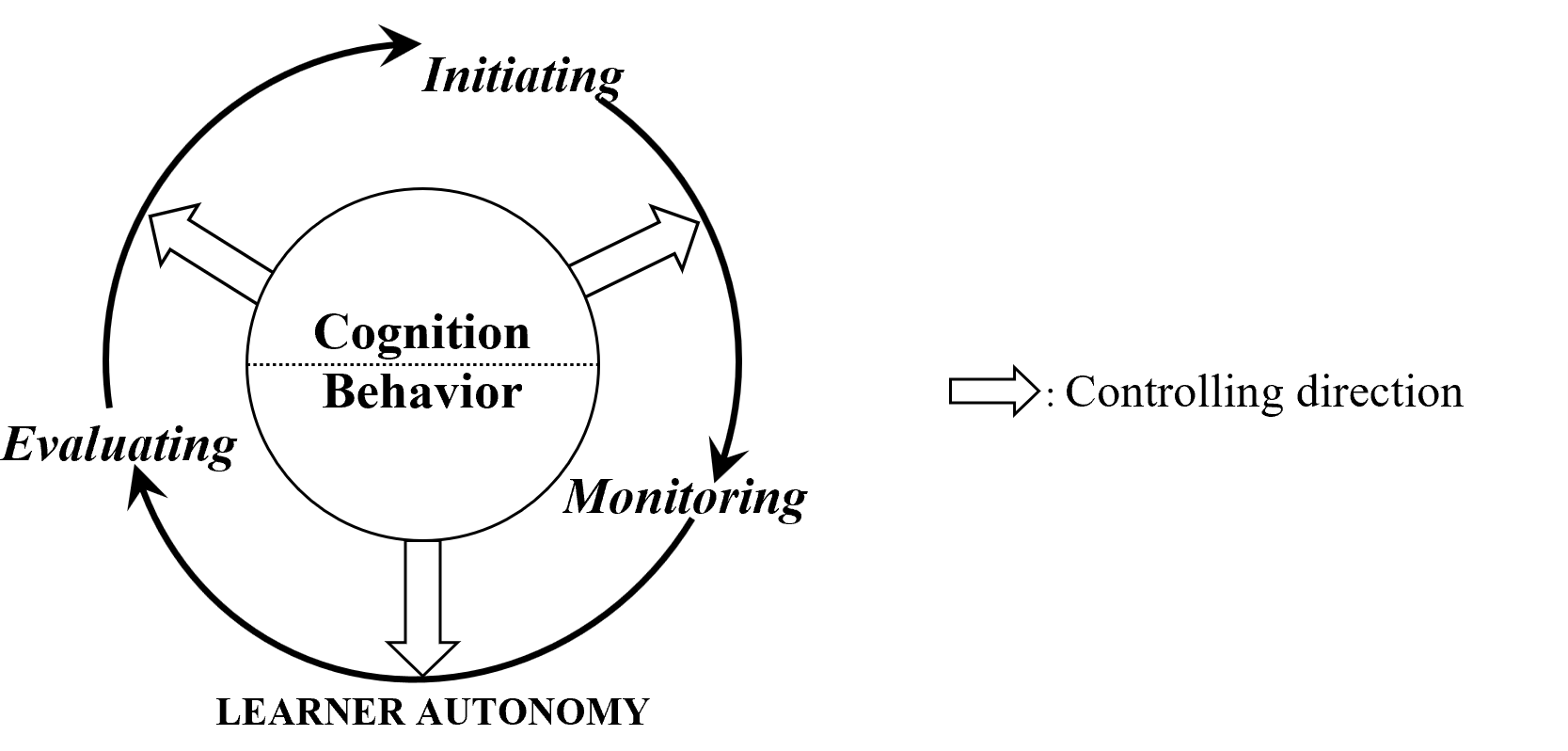
It can be seen that the term dimension is not consistently used in the literature. It is used to refer to either a specific or general aspect of learner autonomy. To overcome this terminology problem, the term attribute is used to refer to all of these general and specific dimensions. These attributes are then categorised to conceptually formulate the construct of learner autonomy. A thematic analysis indicates that these attributes can be grouped into three types of processes, namely initiating, monitoring, and evaluating learning. This categorization matches the proposal by Little (2003). The attribute index of learner autonomy is arranged into three categories as presented in Table 3.
Table 3.. Index of Learner Autonomy Attributes in Three Processes
|
Processes |
Attributes |
Source examples |
|---|---|---|
|
Initiating |
being aware of learning goals and strategies identifying goals and setting goals making plans or work agendas looking for resources |
Aoki (2001) Nguyen (2009) Yang (2007) |
|
Monitoring |
maintaining agendas and keeping track of learning identifying and employing suitable strategies selecting appropriate materials tailoring, customizing and personalizing learning being flexible and regulating learning taking actions or implementing agendas concentrating on learning collaborating and interacting with others expressing opinions and negotiating with peers |
Christopher (2006) Conole, et al. (2008) Gardner (2007; 2009) Lamb (2009) Nguyen (2009) Trinh (2005) Yang (2007) |
|
Evaluating |
reflecting critically evaluating learning outcomes correcting mistakes |
Sinclair (2009) Little (2003) |
Although these three processes seem to be distinct from one another, they actually overlap when being performed. To be able to monitor a learning process successfully, a student may need to evaluate his/her current practices and initiate new learning opportunities. Similarly, an attempt to initiate a learning process may originate from an evaluative purpose. For example, an EFL student approaching two native English speakers can be interpreted as his/her initiating a learning opportunity or evaluating his/her English proficiency, or even both. In addition, the development of one process may be dependent or independent from the development of the others. A student good at monitoring learning processes may also be good at evaluating learning processes, but this is not always necessarily the case. These three processes can also be considered complementary to one another in cyclic order during a course of learning activities.
The interrelated pattern of the three learning processes is therefore reflected in the attribute index, although each process has its own distinct attributes. The initiating learning process involves attributes related to understanding personal learning preferences, setting goals, preparing study plans, and creating learning opportunities. The monitoring learning process includes attributes related to learning engagement and maintenance such as selecting appropriate strategies, modifying learning paths, and negotiating with others. This is probably the longest process, where most of the learning takes place. The evaluating learning process anticipates attributes about assessing learning outcomes such as proofreading an assignment and evaluating a piece of writing. It can be seen that attributes across the three processes may be operated sequentially or simultaneously during a learning act (see Figure 1). For example, students may plan to read one book every two weeks. They then choose some titles that they like and maintain the reading activity. However, after three weeks, they find that reading these books is not very useful and decide to read other titles or change to watching movies.
CONCEPTUAL OVERVIEW OF LEARNER AUTONOMY
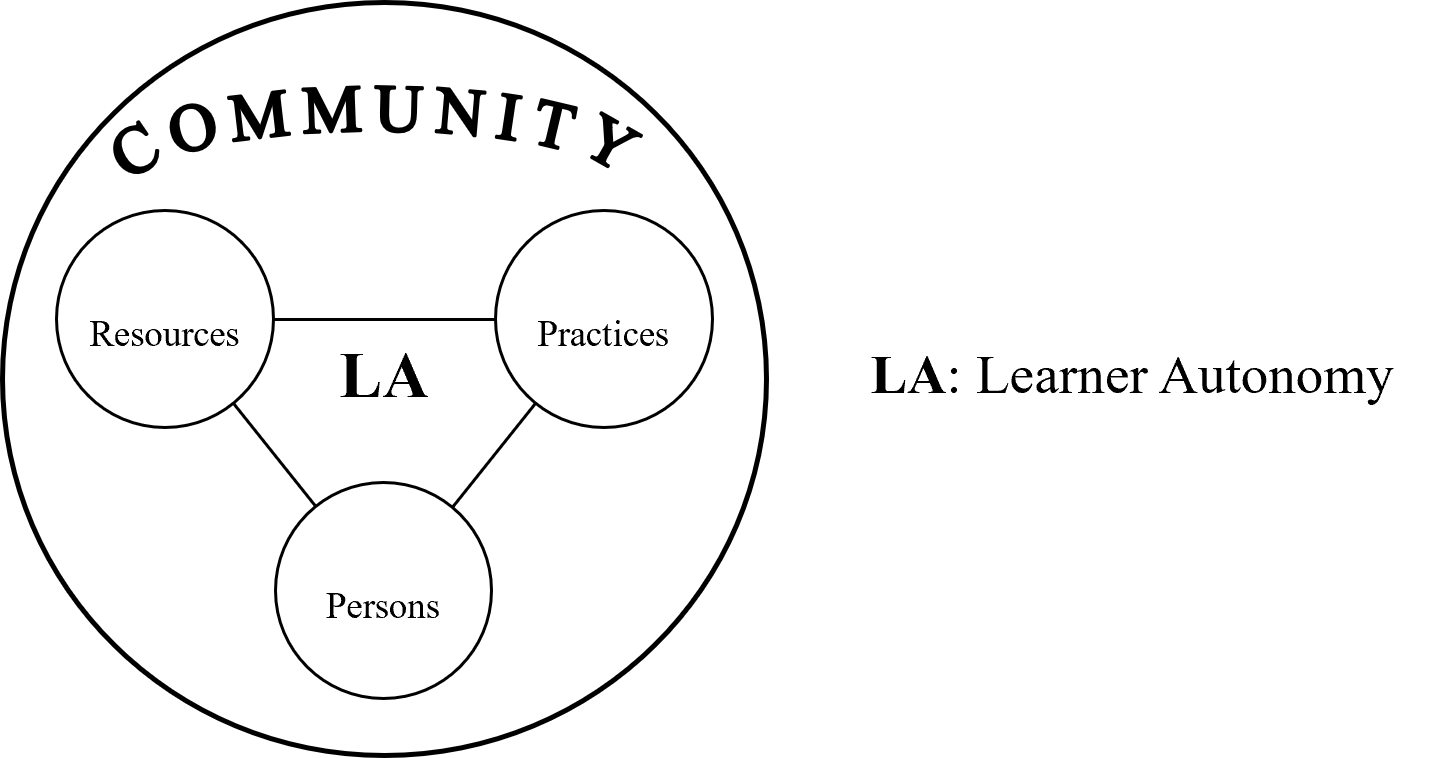
Learner autonomy has been argued to be shaped by attributes from personal psychology, learning environments, interactions between personal psychology and environment, and the desire for access and power. Thus, the current study employs Vygotsky’s notions of socio-cultural theory (Lantolf, 2000; Lantolf & Thorne, 2006) and community of practice (Lave & Wenger, 1991; Wenger, 1999; Wenger, et al., 2002) to understand human behaviours, that is, students’ learner autonomy in particular. This approach positions learners into a local environment whose identities, resources, and practices construct its members’ capacity of learner autonomy (Toohey, 2007). Psychological attributes of learner autonomy are primarily shaped from one’s access to and interaction with the ideologies and desires of the local community. In addition, technical attributes are basically mediated by the local resources. Hence, the performance of learner autonomy is internally generated after one’s multi-directional negotiations with his/her community enablements and constraints (Dang, 2010). These are illustrated in Figure 2.
Interactions and negotiations of a person with his/her community can be one-on-one, immersion or delegation (Wenger, 1999), depending on his/her situation in each activity. The level of an individual’s participation in an activity also mirrors both his/her personal characteristics, constraints, and enablements formed by that contemporary environment. In other words, moving one’s position from a peripheral participant to an insider, from a passive to an active member, and from a spontaneous to a controlling learner in a community requires a lot of facilitative practices from the context. Therefore, learner autonomy is a socially-bound capacity, and its development needs to be examined in relation to other associated factors in the context (Dang, 2010). This theoretical position also properly conforms to the mixed perspective adopted in this research. It helps decrease the probability of individualistic perspective on learner autonomy (Pemberton, et al., 2009). On the one hand, it values the significant impact of personal attributes and independent internalization. On the other hand, it acknowledges external contributions from the context. Therefore, the highest level of learner autonomy should be still described via dialogic negotiations and interactions within the immediate situation. It should not be considered as an ability to work alone solely.
CONCLUSION
Drawing on both theoretical and empirical studies to discuss the construct of learner autonomy, this paper has aimed to propose a unified definition and theoretical position for further research. As learner autonomy is socially-shaped, a combination of socio-cultural theory and community of practice is recommended for any investigation into this construct. It also suggests taking into account contributions from personal and contextual aspects, as well as the interactions between the two. In other words, perceptions of learner autonomy need to be examined in relation to the performance of this capacity. Learner autonomy fostering practice needs to be considered each local context.
References
Aoki, N. (2001). The institutional and psychological context of learner autonomy. AILA Review, 15, 82-89.
Benson, P. (1997). Learner autonomy 5: The role of motivation. System, 25(4), 581-584.
Benson, P. (2001). Teaching and researching autonomy in language learning. London: Longman.
Benson, P. (2006). Autonomy in language teaching and learning. State-of-the-art Article. Language Teaching, 40(1), 21-40.
Benson, P. (2007). Teacher and learner perspectives. Dublin, Ireland: Authentik.
Benson, P. (2009). Making sense of autonomy in language learning. In S. Toogood, R. Pemberton & A. Barfield (Eds.), Maintaining control: Autonomy and language learning (pp. 13-26). Hong Kong: Hong Kong University Press.
Blin, F. (2004). CALL and the development of learner autonomy: Towards an activity-theoretical perspective. ReCALL, 16(02), 377-395.
Boud, D. (1981). Toward student responsibility for learning. In D. Boud (Ed.), Developing student autonomy in learning (pp. 21-37). New York: Nichols Publishing Company.
Boud, D. (Ed.). (1988). Developing student autonomy in learning (2nd ed.). New York: Kogan Page.
Braine, G. (2003). From a teacher-centered to a student-centered approach: A study of peer feedback in Hong Kong writing classes. Journal of Asian Pacific Communication, 13(2), 269-288.
Carson, J. G., & Nelson, G. L. (1996). Chinese students’ perceptions of peer response group interaction. Journal of Second Language Writing, 5(1), 1-9.
Christopher, L. L. (2006). Fostering learner autonomy in a technology-enhanced, inquiry-based foreign language classroom. Foreign Language Annals, 39(1), 71.
Conole, G., Brasher, A., Cross, S., Weller, M., Nixon, S., Clark, P., & Petit, J. (2008). A new methodology for learning design Proceedings of World Conference on Educational Multimedia, Hypermedia and Telecommunications (EDMEDIA), 30 June - 4 July 2008. Vienna.
Cotterall, S. (1995). Readiness for autonomy: Investigating learner beliefs. System, 23(2), 195-205.
Dang, T. T. (2010). Learner autonomy in EFL studies in Vietnam: A discussion from socio-cultural perspective. English Language Teaching, 3(2), 3-9.
Dang, T. T., & Robertson, M. (2010). Impacts of learning management system on learner autonomy in EFL learning. International Education Studies, 3(3), 3-11.
Dearden, R. F. (1972). Autonomy and education. In R. F. Dearden, P. H. Hirst & R. S. Peters (Eds.), Education and the development of reason (pp. 448-465). London: Routledge & Kegan Paul.
Dickinson, L. (1987). Self-instruction in language learning. New York: Cambridge University Press.
Figura, K., & Jarvis, H. (2007). Computer-based materials: A study of learner autonomy and strategies. System, 35(4), 448-468.
Fonseka, E. A. G. (2003). Autonomy in a resource-poor setting: Enhancing the carnivalesque. In D. Palfreyman & R. Smith (Eds.), Learner autonomy across cultures: Language education perspectives (pp. 147-163). New York: Palgrave Macmillan.
Freeman, M. (1999). The language learning activities of students of EFL and French at two universities. Language Learning Journal, 19(1), 80 - 88.
Gardner, D. (2007). Integration and support. Dublin, Ireland: Authentik.
Gitsaki, C. (2005). Course design to promote student autonomy and lifelong learning skills: A Japanese example? Paper presented at the 2nd Independent Learning Association Oceania Conference, Manukau Institute of Technology, Auckland, New Zealand. http://independentlearning.org/ILA/ila05/ila05_papers.htm
Hart, N. (2002). Intra-group autonomy and authentic materials: A different approach to ELT in Japanese colleges and universities. System, 30(1), 33-46.
Healy, D. (1999). Theory and research: Autonomy and language learning. In J. Egbert & E. Hanson-Smith (Eds.), CALL environments: research, practice, and critical issues (pp. 391-402). Alexandria, Va.: Teachers of English to Speakers of Other Languages.
Healy, D. (2007). Theory and research: autonomy and language learning. In J. Egbert & E. Hanson-Smith (Eds.), CALL environments: research, practice, and critical issues (2nd ed., pp. 377-388). Alexandria, Va.: Teachers of English to Speakers of Other Languages.
Heins, B., Duensing, A., Stickler, U., & Batstone, C. (2007). Spoken interaction in online and face-to-face language tutorials. CALL, 20(3), 279 – 295.
Holec, H. (1981). Autonomy in foreign language learning. Oxford: Pergamon.
Holiday, A. (2003). Social autonomy: Addressing the dangers of culturism in TESOL. In D. Palfreyman & R. Smith (Eds.), Learner autonomy across cultures: Language education perspectives (pp. 110-126). New York: Palgrave Macmillan.
Hubbard, P. (2005). A review of subject characteristics in CALL research. Computer Assisted Language Learning, 18(5), 351 - 368.
Hunt, J., Gow, L., & Barnes, P. (1989). Learner self-evaluation and assessment - a tool for autonomy in the language learning classroom. In V. Bickley (Ed.), Language teaching and learning styles within and across cultures (pp. 207-217). Hong Kong: Institute of Language in Education, Education Department.
Hyland, F. (2004). Learning autonomously: Contextualising out-of-class English language learning. Language Awareness, 13(3), 180-202.
Jung, U. (2005). CALL: Past, present and future - A bibliometric approach. ReCALL, 17(1), 4-17.
Kanniah, A., & Krish, P. (2010). Collaborative learning skills used in Weblog. CALL-EJ Online, 11(2). Retrieved from http://callej.org/journal/11-2/kanniah_krish.html
Kessler, G., & Bikowski, D. (2010). Developing collaborative autonomous learning abilities in computer mediated language learning: Attention to meaning among students in Wiki space. Computer Assisted Language Learning, 23(1), 41 - 58.
Koda-Dallow, T., & Hobbs, M. (2005). Personal goal-setting and autonomy in language learning. Paper presented at the 2nd Independent Learning Association Oceania Conference, Manukau Institute of Technology, Auckland, New Zealand. http://independentlearning.org/ILA/ila05/ila05_papers.htm
Kumaravadivelu, B. (2003). Beyond methods: Macrostrategies for language teaching. New Haven: Yale University Press.
La Ganza, W. (2001). Out of sight - not out of mind: Learner autonomy and interrelating in online teaching. Information technonogy, Education and Society, 2(2), 27-46.
La Ganza, W. (2002). Maintaining learner autonomy online: The teacher’s role. In L. Mak, S. Chang, P. Foo, J. Hunter, M. Keung, J. Lee, M. Wa & N. Noakes (Eds.), Meeting the challenges of research and practice. Hong Kong: Hong Kong University of Science and Technology.
Lamb, M. (2004). 'It depends on the students themselves': Independent language learning at an Indonesian state school. Language Culture and Curriculum, 17(3), 229-245.
Lamb, T. (2009). Controlling learning: Learners’ voices and relationships between motivation and learner autonomy. In S. Toogood, R. Pemberton & A. Barfield (Eds.), Maintaining control: Autonomy and language learning (pp. 67-86). Hong Kong: Hong Kong University Press.
Lantolf, J. P. (2000). Sociocultural theory and second language learning. Oxford: Oxford University Press.
Lantolf, J. P., & Thorne, S. L. (2006). Sociocultural theory and the genesis of second language development. Oxford: Oxford University Press.
Lave, J., & Wenger, E. (1991). Situated learning: Legitimate peripheral participation. New York: Cambridge University Press.
Levy, M., & Stockwell, G. (2006). CALL dimensions: Options and issues in computer-assisted language learning. Mahwah, NJ: Lawrence Erlbaum.
Little, D. (1991). Learner autonomy 1: Definitions, issues, and problems. Dublin: Authentik.
Little, D. (2001). Learner autonomy and the challenge of tandem language learning via the internet. In A. Chambers & G. Davies (Eds.), ICT and language learning: A European perspective (pp. 29-38). Lisse: Swets & Zeitlinger Publishers.
Little, D. (2003). Learner autonomy and second/foreign language learning. Guide to Good Practice. Retrieved from http://www.llas.ac.uk/resources/gpg/1409
Littlemore, J. (2001). Learner autonomy, self-instruction and new technologies in language learning: Current theory and practice in higher education in Europe. In A. Chambers & G. Davies (Eds.), ICT and language learning: A European perspective (pp. 39-52). Lisse: Swets & Zeitlinger Publishers.
Littlewood, W. (1996). "Autonomy": An anatomy and a framework. System, 24(4), 427-435.
Littlewood, W. (1999). Defining and developing autonomy in East Asian contexts. Applied Linguistics, 20(1), 71-94.
Locke, E. A., & Latham, G. P. (1990). A theory of goal setting & task performance. Englewood Cliffs, N.J.: Prentice-Hall.
Lockyer, L., Bennett, S., Agostinho, S., & Harper, B. (Eds.). (2008). Handbook of research on learning design and learning objects: Issues, applications and technologies: Ideas Group Publications.
Macaro, E. (1997). Target language, collaborative learning and autonomy. Clevedon: Multilingual Matters.
Macaro, E. (2008). The shifting dimensions of language learner autonomy. In T. Lamb & H. Reinders (Eds.), Learner and teacher autonomy: Concepts, realities, and responses (pp. 47-62). Amsterdam; Philadelphia: John Benjamins.
Maiko, H. (2003). Using computer-mediated communication in second language classrooms. Osaka Keidai ronshu, 54(3), 115-125.
McClure, J. (2001). Developing language skills and learner autonomy in international postgraduates. ELT Journal, 55(2), 142-148.
Miller, L., Hopkins, M., & Tsang, E. (2005). Self-access language learning in Hong Kong secondary schools. Paper presented at the 2nd Independent Learning Association Oceania Conference, Manukau Institute of Technology, Auckland, New Zealand. http://independentlearning.org/ILA/ila05/ila05_papers.htm
Murray, G. (1999). Autonomy and language learning in a simulated environment. System, 27(3), 295-308.
Naizhao, G., & Yanling, Z. (2004). An empirical investigation of learner autonomy in some EFL classes in China. Paper presented at the AARE 2004 Conference, Melbourne. http://www.aare.edu.au/04pap/nai04930.pdf
Nguyen, T. C. L. (2009). Learner autonomy and EFL learning at the tertiary level in Vietnam. Doctoral Thesis. Victoria University of Wellington. Retrieved from http://researcharchive.vuw.ac.nz/handle/10063/1203
Nunan, D. (1997). Designing and adapting materials to encourage learner autonomy. In P. Benson & P. Voller (Eds.), Autonomy and Independence in Language Learning (pp. 192 - 203). Harlow: Longman.
Nunan, D., & Lamb, C. (2001). Managing learning process. In A. Hewings & D. Hall (Eds.), Innovation in English language teaching: A reader (pp. 27-45). London; New York: Routledge in association with Macquarie University and the Open University.
Oxford, R. (2003). Toward a more systematic model of L2 learner autonomy. In D. Palfreyman & R. Smith (Eds.), Learner autonomy across cultures: Language education perspectives (pp. 75-91). New York: Palgrave Macmillan.
Pemberton, R., Toogood, S., & Barfield, A. (Eds.). (2009). Maintaining control: Autonomy and language learning. Hong Kong: Hong Kong University Press.
Pickard, N. (1996). Out-of-class language learning strategies. ELT Journal, 50(2), 150-159.
Pill, T. J. H. (2001). Adult learners' perceptions of out-of-class access to English. Master of Arts in Applied Linguistics, Hong Kong University, Hong Kong. Retrieved from http://sunzi.lib.hku.hk/hkuto/record/B3194517X
Pinkman, K. (2005). Using blogs in the foreign language classroom: Encouraging learner independence. The JALT CALL Journal, 1(1), 12-24.
Ribe, R. (2003). Tramas in the foreign language classroom: autopoietic networks for learner growth. In D. Little, J. Ridley & E.Ushioda (Eds.), Towards autonomy in foreign language learning (pp. 11-28). Dublin: Authentik.
Rundle, C. F. (2007). Teacher approaches to Japanese culture: Implications for student autonomy. Paper presented at the Proceedings of the Independent Learning Association 2007 Japan Conference: Exploring theory, enhancing practice: Autonomy across the disciplines, Kanda University of International Studies, Chiba, Japan. http://independentlearning.org/ILA/ila07/files/ILA2007_034.pdf
Scharle, Á., & Szabo, A. (2000). Learner autonomy: A guide to developing learner responsibility. Cambridge: Cambridge University Press.
Schwienhorst, K. (2003). Neither here nor there? Learner autonomy and intercultural factors in CALL environments. In D. Palfreyman & R. Smith (Eds.), Learner autonomy across cultures: Language education perspectives (pp. 164-179). New York: Palgrave Macmillan.
Schwienhorst, K. (2008a). CALL and autonomy: Settings and context variables in technology-enhanced language environments. Independence, 43, 13-15.
Schwienhorst, K. (2008b). Learner autonomy and CALL environments. New York; London: Routledge.
Sidhu, R. K., & Embi, M. A. B. (2009). Learner autonomy among Malaysian adult learners through asynchronous online discussions. ASEAN Journal of Teaching & Learning in Higher Education, 1(2), 30-34.
Sinclair, B. (2000). Learner autonomy: The next phase. In I. Mcgrath, B. Sinclair & T. Lamb (Eds.), Learner autonomy, teacher autonomy: Future directions (pp. 15-23). London: Longman.
Sinclair, B. (2009). The teacher as learner: Developing autonomy in an interactive learning environment. In R. Pemberton, S. Toogood & A. Barfield (Eds.), Maintaining control: Autonomy and language learning (pp. 175-198). Hong Kong: Hong Kong University Press.
Smith, R. (2001). Group work for autonomy in Asia: Insights from teacher-research. AILA Review, 15, 70-81.
Smith, R. (2003a). Pedagogy for autonomy as (becoming-) appropriate methodology. In D. Palfreyman & R. Smith (Eds.), Learner autonomy across cultures: Language education perspectives (pp. 129-146). New York: Palgrave Macmillan.
Smith, R. (2003b). Teacher education for teacher-learner autonomy. In J. Gollin, G. Ferguson & H. Trappes-Lomax (Eds.), Symposium for Language Teacher Educators: Papers from Three IALS Symposia. Edinburgh: IALS, University of Edinburgh.
Smith, R., & Ushioda, E. (2009). 'Autonomy': under whose control? In R. Pemberton, S. Toogood & A. Barfield (Eds.), Maintaining control: Autonomy and language learning (pp. 241-253). Hong Kong: Hong Kong University Press.
Spratt, M., Humphreys, G., & Chan, V. (2002). Autonomy and motivation: Which comes first? Language Teaching Research, 6(3), 245.
Toohey, K. (2007). Conclusion: Autonomy/Agency through socio-cultural lenses. In A. Barfield & S. H. Brown (Eds.), Reconstructing autonomy in language education: Inquiry and innovation (pp. 231-242). Basingstoke: Palgrave Macmillan.
Trinh, Q. L. (2005). Stimulating learner autonomy in English language education: a curriculum innovation study in a Vietnamese context. PhD Thesis. University of Amsterdam. Retrieved from http://dare.uva.nl/document/102346
Ushioda, E., Smith, R., Mann, S., & Brown, P. (2011). Promoting teacher-learner autonomy through and beyond initial language teacher education. Language Teaching, 44(01), 118-121.
Voller, P. (2005). Teachers, facilitation and autonomy. Paper presented at the 2nd Independent Learning Association Oceania Conference, Manukau Institute of Technology, Auckland, New Zealand. http://independentlearning.org/ILA/ila05/ila05_papers.htm
Voltz, D. (2008). Autonomy. New World Encyclopedia. Retrieved from http://www.newworldencyclopedia.org/entry/Autonomy?oldid=795378
Wallis, R. (2005). Independent learning: What do our students do and why do they do it? Paper presented at the 2nd Independent Learning Association Oceania Conference, Manukau Institute of Technology, Auckland, New Zealand. http://independentlearning.org/ILA/ila05/ila05_papers.htm
Waterhouse, P. (1990). Supported self-study across the curriculum. In I. Gathercole (Ed.), Autonomy in Language Learning: Papers from a Conference Held in Janaury 1990 (pp. 4-6). London: Centre for Information on Language Teaching & Research.
Wells, M. (2007). Collaborative online projects in a global community. In T. Townsend & R. J. Bates (Eds.), Handbook of teacher education: Globalization, standards and professionalism in times of change (pp. 657-674). Dordrecht: Springer.
Wenden, A. L. (1991). Learner strategies for learner autonomy. Hemel Hempstead: Prentice Hall.
Wenger, E. (1999). Communities of practice: Learning, meaning, and identity. Cambridge, MA: Cambridge University Press.
Wenger, E., McDermott, R. A., & Snyder, W. (2002). Cultivating communities of practice: A guide to managing knowledge. Boston: Harvard Business School Press.
Yang, T. (2007). Construction of an inventory of learner autonomy. On CUE, 15(1), 2-9.
Published
Issue
Section
License
Copyright (c) 2026 Tin T. Dang

This work is licensed under a Creative Commons Attribution-NonCommercial-NoDerivatives 4.0 International License.