The investigation of self-directed learning in fostering lifelong learning of undergraduate students in Vietnam
Keywords:
self-directed learning, lifelong learning, undergraduate students, VietnamAbstract
This study investigates the role of self-directed learning (SDL) in fostering lifelong learning (LL) among undergraduate students at a university in Vietnam. The research conceptualises SDL through four core components comprising goal setting, resource utilisation, self-monitoring and self-evaluation. It examines the current levels of SDL in relation to LL among undergraduates at the university and how these vary across gender, age and academic level. A descriptive research design was used with 306 undergraduate students majoring in English studies at the university. Data were collected using a five-point Likert-scale questionnaire covering four SDL components and analysed using frequency, percentage, mean and standard deviation. Students demonstrated a high overall level of SDL. Resource utilisation ranked first, followed by goal setting, self-monitoring and self-evaluation. Male students reported a slightly higher overall mean than female students. By academic level, juniors had the highest overall SDL score, while freshmen had the lowest. The study reveals that undergraduate students generally demonstrate high levels of SDL, particularly in resource utilisation and goal setting. However, they show comparatively lower scores in self-monitoring and self-evaluation. These findings suggest a need for instruction in reflective learning, progress monitoring and feedback use to promote SDL and LL.
INTRODUCTION
SDL, which has been defined as a set of skills that students should possess, requires educators to shift from being dispensers of information to serving as facilitators, motivators and co-learners alongside students (Robinson & Persky, 2020). Tunney and Bell (2011) described SDL as involving the motivation and self-discipline to engage in learning activities that develop skills required for LL. This approach empowers students to make their own decisions, take initiative and assume full responsibility for their personal development and LL.
According to Vietnam’s Education Law (2005), the education system prioritises three primary objectives, including enhancing public knowledge, developing human resources and fostering talent. Over the last three decades, the country’s doi moi (renovation) initiative has facilitated a transition from a planned economy to a more open and market-driven one. One of its priorities is an educational focus on advancing socio-economic growth (Nguyen et al., 2020). Despite growing interest in LL at the university level, its implementation at Vietnamese universities remains limited (Phan, 2019).
In Vietnam, shortcomings in teacher training create difficulties in developing self-directed learning and lifelong learning competencies (Nguyen et al., 2020). These include the following.
- A lack of systematic and high-quality training significantly affects teacher professional development under the new general education curriculum (GEC), particularly in relation to competencies, inquiry, integration and learner-centred approaches (Nguyen et al., 2020).
- An insufficient framework for assessing teacher performance, providing feedback and ensuring accountability undermines educators’ motivation to adopt innovative teaching approaches (Nguyen et al., 2020).
In short, undergraduates face significant internal, external and policy barriers that hinder the adoption of SDL in their LL processes.
This research addresses two questions.
- How is the current state of SDL in fostering LL among undergraduate students at a university in Vietnam?
- How does the current state vary across gender, age and academic level?
Accordingly, this article aims to explore the current state of SDL in fostering LL among undergraduate students at a university in Vietnam, and to determine whether this state differs according to gender, age, and academic level.
The study population comprised undergraduate students at the university. According to 2025 institutional data, approximately 1,500 students were enrolled in the English studies major. For this research, the sample size was determined as 306 students using Krejcie and Morgan’s (1970) sample size table.
LITERATURE REVIEW
Self-Directed Learning and Lifelong Learning
Orn and Charungkiattikul (2023) assert that SDL can cultivate LL attitudes among functional literacy facilitators in five key areas.
- Inquiring mind to learn
- Setting a learning plan
- Learning skills
- Information literacy
- Belief that learning improves professional development.
Delors (1996) explores the “four pillars of education”, which remain a central theoretical foundation of LL.
- Learning to Know, gaining mastery over tools of understanding.
- Learning to Be, achieving self-fulfilment and individual development.
- Learning to Live Together, fostering peace, social cohesion and global citizenship.
- Learning to Do, enhancing capabilities for work and innovative ideas.
Nguyen and Vo (2025) investigate the SDL abilities of students at Nong Lam University in Ho Chi Minh City. Their study focuses on students’ attitudes and proficiencies in several key elements of independent learning. The findings show that students demonstrate a positive commitment to taking responsibility for their learning, reflecting consistent self-accountability.
In short, SDL not only aligns with sustainable development goals but also equips students with essential lifelong skills for personal and professional success in an ever-evolving world. However, Vietnamese institutions must prioritise policy reforms and resource allocation to scale these approaches nationwide.
Goal setting
Latham and Locke (2007) outline four main motivational processes that clarify how goals enhance performance.
- Direction: Goals focus attention toward important tasks.
- Effort: Specific goals boost effort and persistence.
- Persistence: Commitment to goals keeps motivation going over time.
- Strategy: Goals motivate people to create effective task strategies.
Goal setting is the ability to define specific objectives that align with long-term growth, create a structured action plan and break goals into achievable steps to maintain motivation and reach those targets.
Resource utilisation
Chen et al. (2021) present a conceptualisation of learning resource management. They argue that resource management does not simply involve accessing sources but requires a strategic process of selecting, evaluating and deciding whether to continue or discontinue using resources based on their usefulness.
Resource utilisation refers to the ability to identify and access a variety of sources beyond basic needs, assess learning resources and work with others to support and improve the overall learning experience.
Self-monitoring
Recent research has demonstrated the importance of monitoring in higher education. Guo (2022) reveals that self-monitoring is not merely an awareness process but can also contribute to learners’ strategic regulation and academic development. Similarly, Zhu and Doo (2022) highlight a critical need to develop self-monitoring skills because of their close relationship with self-management skills in MOOCs (massive open online courses).
Self-monitoring is the ability to regularly track learning activities, reflect on progress, identify challenges and make adjustments to improve learning effectiveness.
Self-evaluation
In Social Cognitive Theory, Bandura (1986) asserted that self-evaluation is a key component of self-regulation through which people establish objectives, track their progress and evaluate their results. Based on this foundation, Phan (2021) found that systematic self-evaluation fosters learner autonomy in Vietnam.
Self-evaluation is the ability to systematically review one’s strengths, weaknesses, competencies, learning progress and outcomes based on appropriate benchmarks, guidelines and mentors’ feedback to support improvement in present and future learning.
METHODOLOGY
Research instrument
The questionnaire incorporated closed-ended questions to obtain quantitative data. These questions used Likert scales to facilitate straightforward statistical analysis. The questionnaire was distributed online to improve accessibility for a broader and more varied sample of undergraduates at a university in Vietnam and to minimise biases associated with in-person data collection.
The questionnaire contained a total of 30 questions, as follows.
- Part 1: The basic situation of students, including gender, age and academic level.
- Part 2: Questions 1-30 mainly about “Understanding on SDL on LL Competency”. All items used a five-point Likert scale from 1 to 5. The questionnaire used a Likert-type rating scale, with scoring criteria divided into five levels.
- Level 5 means is the strongly agree
- Level 4 means is the agree
- Level 3 means is the neutral
- Level 2 means is the disagree
- Level 1 means is the strongly disagree
Bluman (2018) investigated the class interval width used to define interpretable values for a Likert rating scale.

Substituting the values for a five-point scale gives the following.
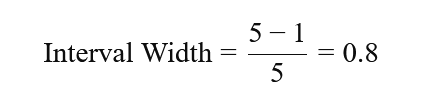
This interval width of 0.8 helps to categorise responses accurately across the scale.
The questionnaire was validated by three lecturers at SIU, with Item-Objective Congruence (IOC) values ranging from 0.67 to 1.00.
The questionnaire was pilot-tested with 30 participants to ensure clarity and reliability. Cronbach’s alpha coefficients ranged from 0.83 to 0.95, indicating good internal consistency.
Population and Sample
According to institutional enrolment data provided by the department for 2025, the target population comprised approximately 1,500 undergraduate students. The required sample size was 306 according to Krejcie and Morgan’s (1970) sample size determination table, and participants were selected using stratified random sampling.
Data collection
A questionnaire survey was conducted from December 2025 to January 2026 among students in the Faculty of Foreign Languages at HUFLIT.
The questionnaire survey was conducted online via Google Forms. The survey participants were selected from distinct academic years to obtain a comprehensive understanding of SDL and LL.
Data and Statistical Analysis
Data from valid questionnaires were entered into the computer. Data collection and analysis in this study were conducted using Google Forms, Microsoft Word and Microsoft Excel.
Descriptive statistical analysis was used to summarise the relevant variables in the surveyed population, including the following measures.
- Frequency
- Percentage
- Mean (x̄)
- Standard Deviation (SD)
Descriptive statistics were used to examine the four SDL components of goal setting, resource utilisation, self-monitoring and self-evaluation across gender, age and academic level.
RESEARCH RESULTS
Overall, the research findings describe the levels of four SDL components related to LL among undergraduate students at a Vietnamese university. Participants reported high levels across all four components. Resource utilisation received the highest mean score, while goal setting, self-monitoring and self-evaluation also achieved high mean scores. The relatively small variation in responses suggested substantial agreement among respondents. The results for each aspect are presented below.
Table 1. Frequency and Percentage of Respondents’ Personal Background Data (n=306)
|
Personal background |
Frequency |
Percentage |
||
|---|---|---|---|---|
|
Gender |
1 |
Male |
130 |
42.48% |
|
2 |
Female |
176 |
57.52% |
|
|
Total |
306 |
100.00% |
||
|
Age |
1 |
Less than 18 years old |
20 |
6.54% |
|
2 |
18-20 years old |
191 |
62.42% |
|
|
3 |
21-23 years old |
30 |
9.80% |
|
|
4 |
More than 23 years old |
65 |
21.24% |
|
|
Total |
306 |
100.00% |
||
|
Academic level |
1 |
Freshman (1st year) |
170 |
55.55% |
|
2 |
Sophomore (2nd year) |
20 |
6.54% |
|
|
3 |
Junior (3rd year) |
21 |
6.86% |
|
|
4 |
Senior (4th year) |
95 |
31.05% |
|
|
Total |
306 |
100.00% |
Table 1 shows that more than half of the respondents were female (57.52%), while males accounted for 42.48%. Regarding age, those aged 18-20 years represented the largest group at 62.42%, whereas respondents younger than 18 years constituted the smallest group (6.54%). In terms of academic level, freshmen represented the highest proportion at 55.55%, while sophomores represented the lowest at 6.54%.
Table 2. Mean, Standard Deviation, and Rank in Total (n=306)
|
No |
Components |
x̄ |
SD |
Rank |
|---|---|---|---|---|
|
1 |
Goal setting |
4.12 |
0.88 |
2 |
|
2 |
Resource Utilization |
4.24 |
0.89 |
1 |
|
3 |
Self-Monitoring |
4.06 |
0.86 |
3 |
|
4 |
Self-Evaluation |
4.03 |
0.93 |
4 |
|
Total |
4.11 |
0.90 |
||
Table 2 shows the overall results for SDL components on LL competency among undergraduate students overall. Participants reported high levels across all four components. Resource utilisation obtained the highest mean score ( = 4.24, SD = 0.89). Goal setting (= 4.12, SD = 0.88), self-monitoring (= 4.06, SD = 0.86), and self-evaluation (= 4.03, SD = 0.93) also achieved high mean scores. The SD values, all below 1.0, indicated relatively limited variation in responses and a substantial level of agreement among respondents. Overall, the data showed consistently high scores across all four areas, with only modest differences in response variability.
Table 3. Mean, Standard Deviation, and Rank by Gender (n=306)
|
No |
Components |
Gender |
|||||
|---|---|---|---|---|---|---|---|
|
Male |
Female |
||||||
|
x̄ |
SD |
Rank |
x̄ |
SD |
Rank |
||
|
1 |
Goal setting |
4.14 |
0.92 |
2 |
4.10 |
0.86 |
2 |
|
2 |
Resource Utilization |
4.23 |
0.98 |
1 |
4.25 |
0.81 |
1 |
|
3 |
Self-Monitoring |
4.10 |
0.91 |
4 |
4.03 |
0.82 |
3 |
|
4 |
Self-Evaluation |
4.14 |
0.99 |
3 |
3.95 |
0.88 |
4 |
|
Total |
4.15 |
0.95 |
4.08 |
0.84 |
|||
Table 3 revealed some gender differences in SDL components. Male students showed a slightly higher mean overall score (= 4.15, SD = 0.95) compared with females (= 4.08, SD = 0.84). At the component level, Resource Utilisation ranked first for both genders, whereas females scored slightly higher than males in this aspect (= 4.25). However, males scored marginally higher in the rest of components, including Goal Setting (= 4.14), Self-Monitoring (= 4.10), and Self-Evaluation (= 4.14). In terms of the difference in variability, female students showed lower SD values across all components (0.81-0.88) than male students (0.91-0.99), indicating that female responses were more consistent. In summary, the gender findings indicate more similarities than differences, with both groups demonstrating high self-directed learning competency and a shared strength in resource utilisation.
Table 4. Mean, Standard Deviation, and Rank by Age Groups (n=306)
|
No |
Components |
Age |
|||||||||||
|---|---|---|---|---|---|---|---|---|---|---|---|---|---|
|
Less than 18 years old |
18-20 years old |
21-23 years old |
More than 23 years old |
||||||||||
|
x̄ |
SD |
R |
x̄ |
SD |
R |
x̄ |
SD |
R |
x̄ |
SD |
R |
||
|
1 |
Goal setting |
4.57 |
0.73 |
3 |
4.07 |
0.94 |
2 |
3.76 |
0.69 |
4 |
4.27 |
0.75 |
1 |
|
2 |
Resource Utilization |
4.21 |
0.78 |
4 |
4.26 |
0.95 |
1 |
4.14 |
0.71 |
2 |
4.24 |
0.79 |
2 |
|
3 |
Self-Monitoring |
4.81 |
0.39 |
2 |
4.00 |
0.87 |
3 |
4.25 |
0.83 |
1 |
3.92 |
0.81 |
4 |
|
4 |
Self-Evaluation |
5.0 |
0.00 |
1 |
3.96 |
0.97 |
4 |
4.04 |
0.61 |
3 |
3.93 |
0.92 |
3 |
|
Total |
4.65 |
0.47 |
4.07 |
0.93 |
4.05 |
0.71 |
4.09 |
0.82 |
|||||
Table 4 highlighted notable differences in self-directed abilities related to LL among four age groups. Students younger than 18 years achieved the highest overall score (= 4.65, SD = 0.47), which was substantially higher than the other groups. Their scores were exceptionally high in Self-Evaluation (= 5.00) and Self-Monitoring (= 4.81), indicating very strong confidence in monitoring behaviours within this subgroup. The very low SD values suggested highly homogeneous responses; however, this finding should be interpreted cautiously because the subgroup contained only 20 students.
Students aged 18-20 years obtained an overall mean of 4.07 (SD = 0.93). Their highest component was Resource Utilisation (= 4.26), while they demonstrated more moderate performance in the other components.
Students aged 21-23 years reported the lowest overall score (= 4.05, SD = 0.71). This group showed comparatively weaker Goal Setting (= 3.76) but relatively stronger Self-Monitoring (= 4.25), suggesting that they were more capable of monitoring ongoing learning activities than of establishing long-term learning goals.
Students older than 23 years achieved an overall mean of 4.09 (SD = 0.82) and demonstrated consistently strong scores in Goal Setting ( = 4.27) and Resource Utilisation ( = 4.24). This pattern reflects stronger strategic and goal-oriented learning behaviours.
In conclusion, the age findings suggest that SDL is not strictly linear across age groups and that different age groups may exhibit strengths in different SDL components.
Table 5. Mean, Standard Deviation, and Rank by Academic Levels (n=306)
|
No |
Components |
Academic level |
|||||||||||
|---|---|---|---|---|---|---|---|---|---|---|---|---|---|
|
Freshman (1st year) |
Sophomore (2nd year) |
Junior (3rd year) |
Senior (4th year) |
||||||||||
|
x̄ |
SD |
R |
x̄ |
SD |
R |
x̄ |
SD |
R |
x̄ |
SD |
R |
||
|
1 |
Goal setting |
3.99 |
0.95 |
2 |
4.64 |
0.72 |
2 |
4.66 |
0.48 |
3 |
4.11 |
0.77 |
2 |
|
2 |
Resource Utilization |
4.11 |
0.98 |
1 |
5.00 |
0.00 |
1 |
4.73 |
0.45 |
1 |
4.21 |
0.76 |
1 |
|
3 |
Self-Monitoring |
3.96 |
0.90 |
4 |
4.44 |
0.50 |
3 |
4.70 |
0.46 |
2 |
4.02 |
0.83 |
3 |
|
4 |
Self-Evaluation |
3.98 |
0.99 |
3 |
4.13 |
1.00 |
4 |
4.64 |
0.48 |
4 |
3.97 |
0.84 |
4 |
|
Total |
4.01 |
0.95 |
4.55 |
0.55 |
4.68 |
0.47 |
4.08 |
0.80 |
|||||
Table 5 revealed notable variations in SDL components among different academic years. Juniors obtained the highest overall score ( = 4.68, SD = 0.47), which was followed by sophomores ( = 4.55, SD = 0.55), seniors ( = 4.08, SD = 0.80), and freshmen ( = 4.01, SD = 0.95).
Juniors reported particularly high scores in Resource Utilisation (= 4.73), Self-Monitoring (= 4.70), and Self-Evaluation (= 4.64), which indicated advanced learning behaviours and strong reflective capacity. Interestingly, seniors scored lower than juniors despite having more years of study.
Sophomores also demonstrated very strong performance, including a mean in Resource Utilisation (= 5.00). Although this perfect score may reflect the small subgroup size (n = 20), it still suggests positive perceptions of resource use among these students.
Freshmen consistently reported the lowest scores across all components, especially Self-Monitoring (= 3.96) and Self-Evaluation (= 3.98). Their higher SD values indicated greater variability and suggested that many first-year students were still developing independent learning skills.
Overall, the academic-level results show variation in SDL across university study, with the strongest overall scores observed among sophomores and juniors rather than a strictly progressive pattern across academic years.
DISCUSSION
Overall, the findings showed high levels across all SDL components related to LL among undergraduate students at a Vietnamese university. This result aligns with Nguyen and Phan (2021), who emphasise that SDL readiness among students is high despite variation across academic years.
The highest score for Resource Utilisation supports the findings of Nuzuludin et al. (2025), who affirm that digital learning environments encourage students to seek information independently. Han (2025) also found that students with stronger SDL actively engaged with digital learning resources and supplementary materials. In the present study, Resource Utilisation ranked first across all demographic groups, suggesting that access to and use of learning resources is a common strength among foreign language students.
Regarding gender, the differences were relatively modest. Male students demonstrated slightly stronger performance in Goal Setting, Self-Monitoring and Self-Evaluation, whereas female students showed a marginal advantage in Resource Utilisation. Previous studies have reported mixed findings regarding gender and SDL. Dang et al. (2024) found no substantial gender difference in overall SDL readiness among Vietnamese undergraduates, whereas other studies suggested that female students tended to demonstrate stronger planning and goal setting (Özsoy-Güneş et al., 2014). Therefore, the current findings suggest that gender differences were more apparent in specific SDL components than in overall SDL competence.
The age-group analysis revealed that students younger than 18 years reported the highest overall SDL. This result should be interpreted cautiously because of the relatively small sample size (n = 20). The very high Self-Evaluation score suggests homogeneous responses within this subgroup. In contrast, students older than 23 years showed consistently strong scores in Goal Setting and Resource Utilisation. This pattern may be consistent with arguments that some aspects of learning autonomy develop with maturity and educational experience (Dang et al., 2021).
Across academic levels, the clearest differences were observed between freshmen and students in the middle years. Juniors and sophomores demonstrated substantially higher SDL than freshmen and seniors. This pattern suggests that SDL may strengthen after students adapt to university learning demands, although the lower scores among seniors indicate that the pattern is not strictly progressive. While freshmen may rely more heavily on teacher guidance and structured learning environments, students in the middle years may become more confident in independent study. These findings are consistent with Hutasuhut et al. (2023), who emphasised the importance of guided learning support during the first year of university. The slightly lower scores among seniors compared with juniors may reflect changing academic priorities during the final year, such as internships, graduation projects and employment preparation.
In conclusion, the results indicate that SDL among foreign language undergraduates is generally well developed, especially in resource utilisation and goal setting. However, students may need more support in reflective learning practices and the effective use of feedback for LL. This interpretation is consistent with Han (2025), who emphasised that sustainable LL requires not only access to resources but also strong self-monitoring and reflective evaluation skills.
CONCLUSION
This study investigated SDL among 306 foreign language undergraduates and found a high overall level of SDL ( = 4.11, SD = 0.90). While Resource Utilisation emerged as the strongest component, Self-Evaluation was the weakest. Male students reported slightly higher overall SDL than female students. Juniors demonstrated the strongest SDL among academic levels, whereas freshmen showed the lowest scores.
The findings suggest that universities should continue strengthening students’ reflective learning abilities, feedback utilisation and self-evaluation practices. Additional support should be provided to freshmen during their transition to higher education, while senior students may benefit from interventions that sustain LL during internship and career preparation periods. The study contributes empirical evidence on SDL in Vietnamese higher education and highlights variation in SDL across demographic and academic groups.
This research provides insights into SDL and LL in higher education that may contribute to the development of academic administration. However, the study has several limitations because it was conducted in a single institutional context and did not examine how SDL develops or changes across different academic stages and learning experiences. Additionally, the study relied primarily on self-reported questionnaire data, which may not fully reflect students’ actual learning behaviours. Moreover, the demographic groups were unequal in size, which may reduce the stability and generalisability of subgroup estimates.
Based on the findings and limitations of this research, further studies are recommended to deepen insights into SDL and LL within university settings, including the following.
- The relationship between SDL and academic pressure among university students.
- The effectiveness of instructional interventions designed to enhance SDL.
- The role of technology and digital learning tools in supporting SDL.
ACKNOWLEDGEMENTS
The author would like to express sincere gratitude to students at the research site and lecturers at Shinawatra University (SIU) for their academic support and guidance throughout this research. Special thanks are also extended to all participants who contributed valuable data to the study and to Dr. Theerapong Budsarakoon, Asst. Prof. Dr. Samrerng Onsampant, Assoc. Prof. Dr. Dowroong Watcharinrat and Dr.Vinutthaput Phophet for their valuable guidance and encouragement throughout the research process.
DECLARATION
Ethics Approval and Informed Consent
Formal ethical approval was not obtained for this study. Before completing the questionnaire, participants were informed of the purpose of the research, and participation was voluntary. The study was conducted with due consideration for participant confidentiality and the responsible handling of the collected data.
AI Tool Use
During the preparation of this manuscript, the author used ChatGPT (OpenAI) to assist with language clarity, grammar, and the organization of author-generated text. The author reviewed, edited, and verified the AI-assisted output and takes full responsibility for the accuracy, originality, and integrity of the manuscript.
Funding
This research received no external funding.
Conflicts of Interest
The author declares no conflicts of interest.
Data Availability
The data supporting the findings of this study are available from the corresponding author upon reasonable request, subject to applicable privacy, confidentiality, and ethical requirements.
Author Contributions
The sole author was responsible for the conceptualization, research design, analysis, interpretation, and preparation of the manuscript and accepts full responsibility for the work.
References
Bandura, A. (1986). Social foundations of thought and action: A social cognitive theory. Prentice-Hall.
Bluman, A. G. (2018). Elementary statistics: A step by step approach (10th ed.). McGraw-Hill Education
Chen, P., Ong, D. C., Ng, J. C., & Coppola, B. P. (2021). Explore, exploit, and prune in the classroom: Strategic resource management behaviors predict performance. AERA Open, 7, 1-14. https://doi.org/10.1177/2332858420986180
Dang, T. T. T., Le, T. h., & Vu, P. L. (2024). Self-directed learning readiness among undergraduate students. Journal of Educational and Social Research, 14(5), 233-249. https://doi.org/10.36941/jesr-2024-0135
Dang, T. T. T., Tang, T. T., & Trinh, V. M. (2021). Review of self-directed learning readiness assessments among undergraduate students in the world and lessons learnt for Vietnam. VNU Journal of Science: Education Research, 37(2), 49-60. https://doi.org/10.25073/2588-1159/vnuer.4524
Delors, J. (1996). Learning: The treasure within: Report to UNESCO of the International Commission on Education for the Twenty-first Century. UNESCO.
Education Law, No. 38/2005/QH11 (2005). https://vbpl.vn/TW/Pages/vbpqen-toanvan.aspx?ItemID=6918
Guo, L. (2022). The effects of self-monitoring on strategy use and academic performance: A meta-analysis. International Journal of Educational Research, 112, 101939. https://doi.org/10.1016/j.ijer.2022.101939
Han, F. (2025). Sustainable lifelong learning competence: Understanding university students’ self-regulated learning in flipped classrooms by combining questionnaire and learning analytics data. Sustainability, 17(21), 1-14. https://doi.org/10.3390/su17219495
Hutasuhut, I. J., Abu Bakar, M. A., Abdul Ghani, K., & Bilong, D. (2023). Fostering self-directed learning in higher education: The efficacy of guided learning approach among first-year university students in Malaysia. Journal of Cognitive Sciences and Human Development, 9(1), 221-235. https://doi.org/10.33736/jcshd.5339.2023
Krejcie, R. V., & Morgan, D. W. (1970). Determining sample size for research activities. Educational and Psychological Measurement, 30(3), 607-610. https://doi.org/10.1177/001316447003000308
Latham, G. P., & Locke, E. A. (2007). New developments in and directions for goal-setting research. European Psychologist, 12(4), 290-300. https://doi.org/10.1027/1016-9040.12.4.290
Nguyen, T. K. A., & Vo, V. V. (2025). Self-directed learning skills of undergraduate students: A study at Nong Lam University - Ho Chi Minh City, Vietnam. Vinh University Journal of Science, 54(1C), 5-22. https://doi.org/10.56824/vujs.2024c149c
Nguyen, T. V., & Phan, T. N. D. (2021). Influences of readiness for self-directed learning on students’ self-directed learning at Vietnamese university. Journal of Studies in Education, 11(3), 73-83. https://doi.org/10.5296/jse.v11i3.18727
Nguyen, V. H., Nguyen, V. B. H., Vu, T. M. H., Hoang, T. K. H., & Nguyen, T. M. N. (2020). Vietnamese education system and teacher training: Focusing on science education. Asia-Pacific Science Education, 6(1), 179-206. https://doi.org/10.1163/23641177-BJA10001
Nuzuludin, E., Siregar, E., & Winarsih, M. (2025). A systematic literature review: Self-paced learning as a catalyst for competency development in digital era education. Proceeding of International Seminar on Humanity, Education, and Language, 1(1), 371-382. https://doi.org/10.21009/ishel.v1i1.57378
Orn, L., & Charungkiattikul, S. (2023). Effects of self-directed learning on lifelong learning attitudes of functional literacy facilitators. Journal of Roi Kaensarn Academi, 8(11), 560-569. https://so02.tci-thaijo.org/index.php/JRKSA/article/view/264002
Özsoy-Güneş, Z., Güneş, İ., & Kırbaşlar, M. (2014). Investigation of the Relationships between Educational Internet Use Self-efficacy Beliefs and Self-regulated Learning Skills. Procedia - Social and Behavioral Sciences, 152, 708-713. https://doi.org/10.1016/j.sbspro.2014.09.308
Phan, T. T. K. (2019). Critical theory and the implementation of lifelong learning in Vietnam. Ho Chi Minh City Open University Journal of Science - Social Sciences, 9(2), 17-30. https://doi.org/10.46223/HCMCOUJS.soci.en.9.2.258.2019
Phan, T. T. T. (2021). Self-assessment and Language Learner Autonomy: An Exploratory Study in a Vietnamese University. Vietnam Journal of Education, 5(3), 72-83. https://doi.org/10.52296/vje.2021.88
Robinson, J. D., & Persky, A. M. (2020). Developing self-directed learners. American Journal of Pharmaceutical Education, 84(3), 1-5. https://doi.org/10.5688/ajpe847512
Tunney, M. M., & Bell, H. M. (2011). Self-directed learning: Preparing students for lifelong learning. Pharmacy Education, 11(1), 12-15.
Zhu, M., & Doo, M. Y. (2022). The relationship among motivation, self-monitoring, self-management, and learning strategies of MOOC learners. Journal of Computing in Higher Education, 34, 321-342. https://doi.org/10.1007/s12528-021-09301-2
Downloads
Published
Data Availability Statement
The data supporting the findings of this study are available from the corresponding author upon reasonable request.