Applying distributed learning method to enhance vocabulary acquisition among second-year English students at Danang University of Foreign Language Studies
DOI:
https://doi.org/10.65956/procia.2026.103Keywords:
vocabulary acquisition, Distributed Learning Method, vocabulary instruction, vocabulary test, second-year English studentsAbstract
With the growth of global Englishes, the demand for teaching and learning English is higher than ever. Learners have made significant efforts to develop proficiency in English language skills and knowledge. Vocabulary plays an essential role in effective use of English in both oral and written communication (Zeng et al., 2025). In both the language classroom and English-Medium Education (EME) contexts, mastery of academic vocabulary is particularly crucial for comprehending the learning content and performing academic tasks. This study focuses on the lexical aspect and investigates the effectiveness of using the Distributed Learning Method, characterized by spacing study sessions over time, as a strategy to enhance vocabulary for English learners. The research employed a pre-experimental design with a sample of 24 second-year students at the Faculty of English, University of Foreign Language Studies - University of Danang (UFLS-UD). The participants engaged in an intervention in which they learned a list of academic English words through distributed vocabulary instruction over a scheduled period. To assess the method’s impact, students completed a pre-test and a post-test that measure their vocabulary knowledge. The findings revealed a significant improvement in post-test scores, indicating that the Distributed Learning Method substantially enhanced students’ vocabulary acquisition. These results highlight the potential of this method as an effective strategy for vocabulary development. Whereas further research is needed to confirm its impact with a larger sample and/or across broader contexts, this study offers practical suggestions for integrating this method into English language teaching and English-Medium Education more broadly.
INTRODUCTION
Currently used widely by millions of speakers all over the world, English has been considered an important medium of communication and, therefore, of instruction in the contemporary global context. Learning such a medium language as English aids in removing barriers associated with different cultures, customs, and habits. To facilitate students’ integration into this globalised world, numerous Vietnamese universities have required that graduates-to-be satisfy their English proficiency requirements. Consequently, students have to take an English standardised test, either an international exam (e.g. IELTS) or the nationally localised VSTEP. This situation creates a demand for adequate academic English learning among students.
Vocabulary plays a great role in learners’ language acquisition (Cameron, 2001). Limited vocabulary can hinder effective communication (Alqahtani, 2015). Vocabulary is also regarded as a basis for developing receptive and productive language skills (González-Fernández & Schmitt, 2017; Namaziandost & Nasri, 2019; Zeng et al., 2025). However, many language learners struggle with retaining and recalling vocabulary items as time passes (Bjork & Kroll, 2015). Therefore, effective lexical instructional methods have always been of great importance.
Distributed Method, or Spaced Repetition, has been widely recognised as a promising approach to enhancing vocabulary acquisition (Middleton et al., 2016). Following this method, learning sessions are spaced out over time, improving retrieval and retention (Hamdan & Ahmed, 2018). The method allows learners to improve not only their long-term retention but also their use of vocabulary (Lafleur, 2020). Additionally, Distributed Method can inform instructional strategies and help students build a strong vocabulary repertoire (Webb et al., 2020).
At the Faculty of English, University of Foreign Language Studies - University of Danang (UFLS-UD) second-year students need to enrol themselves in intermediate English skill courses where they have to actively boost their academic vocabulary. Many, however, find it challenging to internalize and expand their lexis since they lack effective learning methods. Therefore, the current study aims to investigate whether Distributed Method can help improve vocabulary learning among these second-year students. This research aim is specified as two research questions:
1. To what extent can Distributed Method improve the second-year students’ vocabulary learning?
2. What are the students’ perceptions of using Distributed Method to improve their vocabulary?
LITERATURE REVIEW
Distributed Method
Through his experiments on learning words of nonsense syllables, Ebbinghaus (1885) discovered the forgetting curve, which depicts how memory declines over time unless the learner engages in spaced repetition (Figure 1).
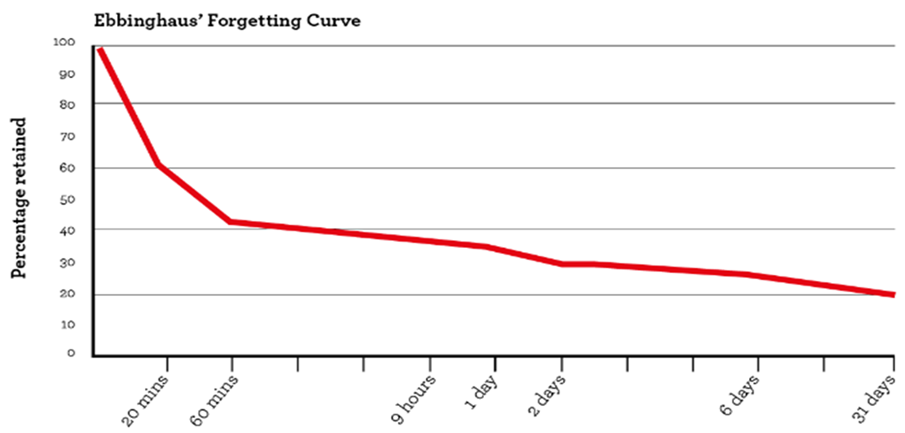
Distributed Method is a psychology-based learning strategy rooted in the idea that spacing out learning sessions over time enhances retention and learning outcomes (Ebbinghaus, 1885). The method improves memory by having the learner go over and recollect materials at proper intervals until they are understood sufficiently (Teninbaum, 2016). Nakata et al. (2021) shared the same idea, claiming revisiting materials at progressively longer intervals improves long-term retention. Through his experiments on learning words of nonsense syllables, Ebbinghaus (1885) discovered the forgetting curve, which depicts how memory declines over time unless the learner engages in spaced repetition (Figure 1). Additionally, he noted relearning is easier and faster than initial learning, and each subsequent relearning session extends the time it takes to forget the learned material. Figure 2 illustrates the retention curve - how memory retention improves with spaced repetition by showing a reduced rate of forgetting over time. This means people remember information for extended periods if they periodically review what they have learnt.
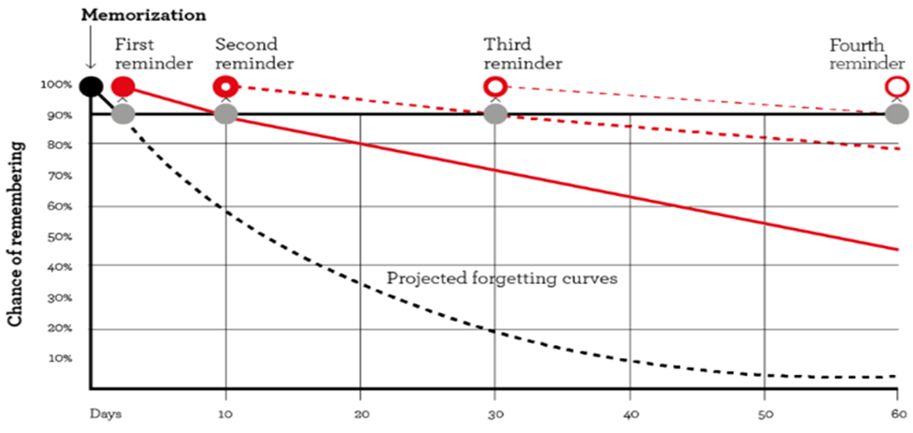
Distributed Method has a wide range of applications in language learning and education. Learners can strengthen their comprehension and application of grammar principles by methodically going over and practicing them over time (Bahrick & Hall, 2005). The method is equally useful in improving phonetic accuracy and pronunciation (Lee et al., 2020). Today, many language learning applications are designed around the effects of the Distributed Method (e.g. review sessions scheduled following the forgetting curve) (Karpicke & Roediger, 2008). The method use typically consists of four steps:
1. Initial mastery: Students are exposed to the learning materials (e.g. lectures, textbooks, or learning activities), achieving a baseline understanding.
2. Spacing: An amount of time - hours to weeks depending on the desired interval - passes before the next session, allowing some forgetting to occur and creating certain challenges during the subsequent retrieval practice.
3. Retrieval: Students actively engage in information recall with quizzes, review questions, or discussions, solidifying the knowledge in long-term memory.
4. Repetition: The steps are repeated over several sessions, each including a combination of new material and learned information review. The spacing intervals are maintained. Through repetition, students build upon existing knowledge and deepen their understanding.
Vocabulary Learning
Components of English vocabulary
English vocabulary includes word meaning, spelling, pronunciation, form, usage, and word associations (Denning et al., 2007). Nation (2013) proposed a more elaborate analysis of what learning a word involves. He believes an item should be mastered in three dimensions, namely form, meaning and use, each of which is divided into smaller dimensions examined in two knowledge categories, i.e., reception and production.
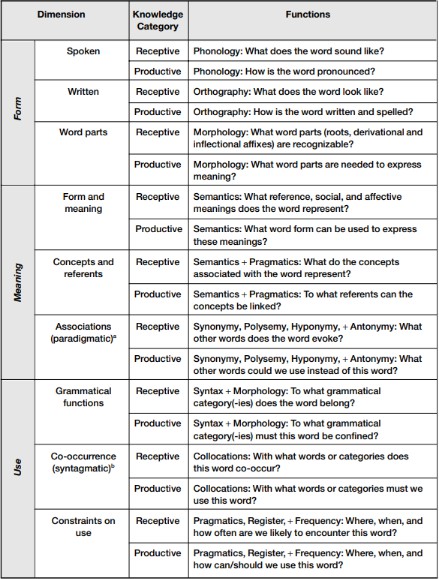
The two categories are also referred to as receptive vocabulary and productive vocabulary (Alqahtani, 2015). The former involves words students are unable to produce yet can recognize and understand when used in context; the latter refers to items students can effectively utilize in both writing and speaking.
Vocabulary acquisition
Vocabulary acquisition is an incremental process that involves having exposure to words in meaningful contexts, noticing their form and meaning, and actively engaging in various vocabulary learning strategies to internalize and retain the words in long-term memory (Groot, 2000). Also, vocabulary acquisition involves not only the recognition and understanding of words but also the ability to produce them appropriately in various contexts (Schmitt, 2000). Sharing a similar idea, Brun-Mercer & Zimmerman (2015) added the learning process occurs when learners repeatedly encounter known words and consciously attempt to use them in authentic communication.
Based on the discussed perspectives concerning vocabulary elements and acquisition, successful learning involves several key factors. First, learners need exposure to new words in meaningful contexts, such as through reading, listening, or engaging in conversations. This helps them develop a deeper understanding of word meaning and usage. Additionally, repeated encounters with words are crucial. Through multiple exposures, learners reinforce their memory and understanding of the words, increasing the likelihood of retention. Internalizing word knowledge is equally important, including understanding meaning, form, and usage. Learners should strive to grasp the definition, grammatical properties, and appropriate usage of words. However, in order to acquire words successfully, learners are expected to be able to retain vocabulary over time, which highlights the necessity of regular review and practice. Finally, based on their understanding of the words learned, learners should be able to appropriately use them to communicate, either in spoken or written form.
The presented discussions of vocabulary learning clearly highlight the benefits offered by Distributed Method, suggesting that the method can be used to support students’ lexical learning activities and to help lay the theoretical foundation for measuring acquired vocabulary.
Improvement indicators
Based on what learning vocabulary involves, many researchers have shared how to assess whether a learner has successfully learned vocabulary or whether one’s lexicon has been improved. It is important that learners exhibit increased recognition and recall of learned words. (Chamot & O’Malley, 1986). Having improved vocabulary, students could use words accurately in a variety of situations through understanding the subtleties and implications connected to various lexical choices. This perspective is also shared by Bai (2018), who agreed students with improved lexis were able to use their word knowledge in writing essays and in other language-related activities.
Research has shown that two overarching elements of word usage are accuracy and retention (Nation, 2013; Schmitt, 2008 Webb, 2005). The former is defined as the ability to choose and employ words correctly in context, assuring precision in language creation (Bogaards & Laufer, 2004). Researchers have attempted to measure accuracy in word usage with the Vocabulary Levels Test (Nation, 1983; Nation, 1990) and the Vocabulary Size Test (Nation & Beglar, 2007), which assess test-takers’ vocabulary size and controlled productive ability. The studies showed the tests were effective in measuring learners’ ability to accurately produce words in written form and to use words appropriately in sentences. The results also highlighted the importance of controlled productive ability as an aspect of vocabulary accuracy.
Teng (2023) defined retention as the ability of learners to ‘keep’ and recall vocabulary items over time. Research by Bahrick et al. (1993) measured learners’ retention with vocabulary recall tests and recognition tasks, concluding regular review sessions at spaced intervals significantly increased retention compared to massed learning. The findings, therefore, suggest promising applications of similar techniques, including Distributed Method, in enhancing learners’ long-term retention of words. This suggestion was confirmed in a study by Cepeda et al. (2006) where the recall test results showed better retention among participants learning vocabulary through spaced repetition over time.
Measurement
As mentioned above, the Vocabulary Size Test (VST), originally constructed by Laufer and Nation in 1999, is a tool employed to measure the accuracy of learner vocabulary use and can diagnose vocabulary gaps for improvement. The test has since been developed by other researchers in the field, including the following task types:
- Multiple-choice: Learners select the correct meaning/definition from the given options. (Hill & Laufer, 2003; Meara, 2005)
- Yes/No questions: Learners indicate whether they know the meaning of each word by selecting ‘yes’/’no.’ (Hill & Laufer, 2003)
- Word Matching: Learners match words with their correct meaning/definitions. (Folse, 2006)
- Sentence Completion: Learners choose the most appropriate word from a word list to complete given sentences. (Folse, 2006)
The Vocabulary Recall Test (VRT) is a tool measuring learners’ ability to remember and produce vocabulary knowledge from memory, which helps identify their strengths and weaknesses in vocabulary recall, track progress, and provide feedback on instruction (Goldstein et al., 2017). The task types used in the VRT for retention measurement include:
- Word writing: Learners write down the word matching the given meaning/definition. (Laufer & Goldstein, 2004; Webb & Nation, 2017)
- Definition writing: Learners write down the definition or explanation of the use word accurately and retarget word. (Webb & Nation, 2017)
- Sentence writing: Learners write sentences that illustrate correct word usage. (Laufer & Goldstein, 2004; Webb & Nation, 2017)
- Gap-fill exercises: Learners fill in gaps with appropriate words. (Laufer & Goldstein, 2004; Webb & Nation, 2017)
- Synonym/Antonym matching: Learners match words with corresponding synonyms or antonyms given in the lists. (Folse, 2008)
The presented task types, aimed to assess learners’ ability to use words accurately and retain them, inform the design of the data collection tool used in the current study.
RESEARCH METHODOLOGY
Participants
The research population comprised all the second-year students at the Faculty of English, UFLS-UD because they are taking English skills Level-B (CEFR) courses this semester and will advance to Level-C courses next semester. At this level, the students start to be exposed to much more academic vocabulary in their study program. Therefore, it is expected they can learn to use Distributed Method and apply it effectively in learning new words, thus supporting their learning strategies for other courses.
The study sample consisted of 24 second-year English majors, all native Vietnamese speakers with no experience living in an English-speaking country. Participants were recruited through convenience sampling from intact classes, and all took part on a voluntary basis with informed consent.
Research Design
The current study adopts a mixed-methods design. Specifically, the vocabulary tests were used to collect quantitative data (students’ test scores) to answer the first research question. A survey with closed and open-ended questions was then employed to explore students’ perceptions and experiences with the Distributed Method. These data were analysed quantitatively and qualitatively using content analysis and theme coding to answer the second research question.
Data Collection
Methods
In order to measure the effectiveness of using the Distributed Method for learning English vocabulary, the research participants were engaged in an experiment. Since the students might have used different techniques in learning vocabulary, the current study did not aim to compare the method with others; it only aimed to determine the possible effects of the Distributed Method on the students’ vocabulary acquisition. For this reason, this study adopted the pre-experimental design, which allows an experiment on the same group of participants (Turner, 2014).
Before participating in the experiment, the students completed a vocabulary test (the ‘pre-test’). Then they were engaged in an introductory session that introduced Ebbinghaus’s Forgetting Curve and gave instruction on how to learn vocabulary with the Distributed Method. Next, they learned the English vocabulary provided in the ‘learning materials,’ which were described in the next section, within two weeks. The participants studied two lexical topics per week, with each topic reviewed over a three-day cycle, followed by a short review quiz. At the end of the experiment, they redid the vocabulary test (the ‘post-test’). The same test was employed to maintain reliability of the data collection tool.
The participants were also asked to complete an online survey that explored their beliefs, attitudes, and opinions regarding the effectiveness, usefulness, engagement, and satisfaction with the Distributed Method. Their responses helped uncover specific aspects of the method they found helpful, difficulties encountered, and potential modifications that could enhance their learning experience.
Materials
Learning materials. The learning materials used for the experiment consist of four units (Environment, History, Globalization & Urbanization, and Healthcare & Lifestyle), each introducing a topical vocabulary list of 15 words and related elements (including word forms, collocations, synonyms, and antonyms) ranging from B1 to C2 levels (CEFR) (sourced from Cambridge or Oxford dictionaries, or vocabulary analysis website cefrlevels.com).
Vocabulary test
The vocabulary test (see Appendix) includes the task types and follows the test format of the Vocabulary Size Test and Vocabulary Recall Test. Such format measures vocabulary knowledge in terms of both reception and production. The receptive component includes tasks like multiple-choice questions and word matching, assessing the participants’ ability to understand vocabulary in context. The productive tasks, like sentence writing, evaluate the ability to actively use and produce vocabulary. By combining both dimensions, the test provides a comprehensive evaluation of the participants’ vocabulary acquisition (Newton & Nation, 2020).
Questionnaire. The questionnaire was created using Google Forms, including: (1) demographic questions; (2) Likert-scale questions related to the learners’ perceptions of the use of Distributed Method; and (3) open-ended questions to collect qualitative opinions related to section 2.
Procedure
- Introduction: Participants were informed of the research aim and data collection procedure.
- Pre-testing: Participants completed the pre-test online (they mostly had different study schedules at that time).
- Introduction to Distributed Method: Participants were given detailed guidance about the Method and assigned the learning materials.
- Vocabulary learning:
- Participants studied the four units following a distributed schedule. Each unit was introduced and reviewed over a three-day cycle to reinforce retention and recall through an online quiz and a mini-test.
- Post-testing: Participants completed the post-test online on the day following the completion of the last mini-test.
Data Analysis
To answer the first research question, both the pre-test and post-test papers were marked to record the scores the students obtained for their overall performance, and for their receptive and productive knowledge categories of vocabulary. To analyse the effectiveness of the Distributed Method in improving vocabulary learning, the pre-test scores and post-test scores were compared. The Wilcoxon signed-rank test was employed to determine whether there would be a significant difference between the two sets of data. The significance level was set at α = .01 for all statistical analyses.
To answer the second research question, the survey responses were analysed quantitatively and qualitatively for Likert-scale questions and open-ended questions, respectively. The results provided an understanding of the students’ overall perceptions concerning the perceived usefulness, effectiveness, and satisfaction with the Distributed Method.
Reliability and Validity
The study drew on established sources in designing the data collection materials and instruments. First, the Distributed Method was examined based on solid literature from previous studies. Second, both the instruments in use, the vocabulary test and the questionnaire, were piloted with two students from the research population to make necessary improvements. The test was built upon existing prestigious vocabulary knowledge tests and recall tests (discussed in the literature review), measuring learners’ vocabulary in both receptive and productive aspects. These practices strengthen the reliability of the findings by evaluating vocabulary proficiency from multiple dimensions. Even the information on the test items (i.e., the word knowledge) was looked up in the renowned Cambridge Dictionary and checked with the CEFR-levels website to guarantee the accuracy of the data collected. Finally, the data went through statistical analyses with R, enhancing the reliability of the research methods for rigorous conclusions.
FINDINGS AND DISCUSSIONS
The Effectiveness of the Distributed Method on Second- Year Students’ Vocabulary Learning
Students’ overall performance of the vocabulary test
The results of the 2 students show the obtained p-value is 0.00001846, which is significantly smaller than α=.01, suggesting there is a significant difference between the pre-test and post-test scores of the participants. It can therefore be concluded the Distributed Method had a positive impact on their vocabulary learning. This indicates that the method can be effective in improving vocabulary skills, including the ability to retain and use words.
Detailed analysis of the students’ test papers also confirmed the statistical results. In their pre-test, a number of individuals made errors or indicated they were unfamiliar with many words by selecting “I don’t know,” scoring 46-66 out of 100 points. However, the post-test scores recorded show over 80% of the participants achieved the maximum score (100/100). The remaining participants also achieved high scores (above 80 points) but did not answer all multiple-choice items correctly, indicating incomplete acquisition of the target vocabulary.
Students’ performance in terms of receptive vocabulary
More detailed data on the students’ vocabulary reception and production also indicate clearly the effect of the Distributed Method on vocabulary learning. As shown in Table 1, the Wilcoxon Signed Rank test indicated statistically significant improvements in both receptive and productive vocabulary (both with V = 0, p < .001, α = .01). It is therefore interpreted that the Distributed Method was effective in improving the learner’s vocabulary in terms of both receptive and productive aspects.
Table 1. Wilcoxon Signed Rank Test Results of Improvements in Vocabulary Learning
|
N |
V |
p-values |
|
|---|---|---|---|
|
Receptive vocabulary |
24 |
0 |
1.85 × 10⁻⁵ |
|
Productive vocabulary |
24 |
0 |
1.02 × 10⁻⁵ |
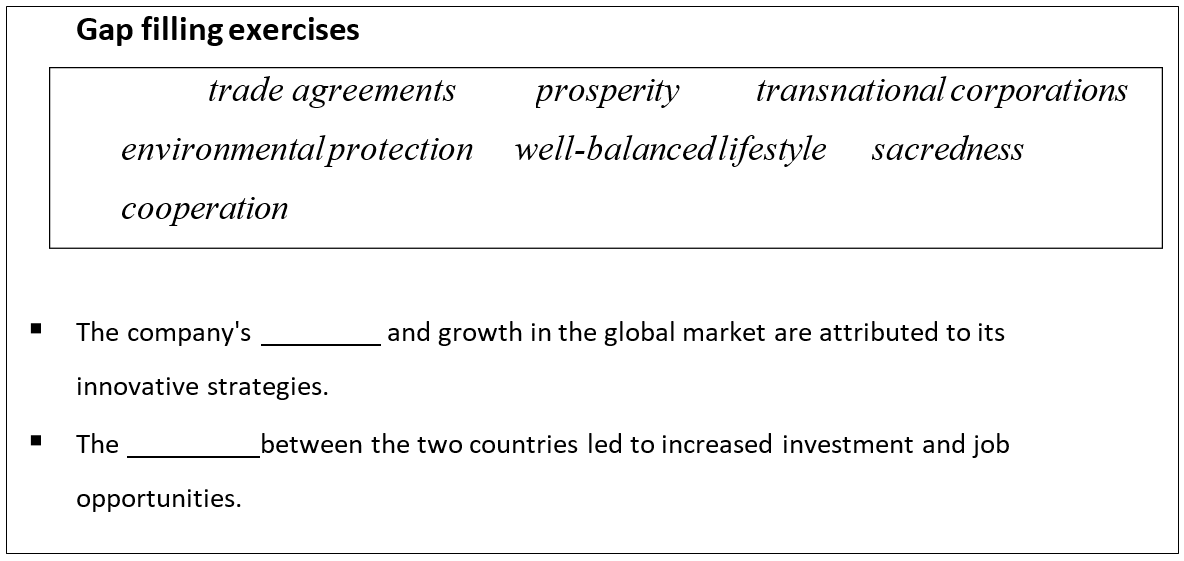
All the participants made improvements in the receptive dimension, which involves such test tasks as multiple-choice questions or matching that measure the students’ vocabulary recognition. Compared to the maximum score assigned to the receptive test tasks, 83, the students scored 43 - 60 in the pre-test, whereas in the post-test, their scores rose to the range from 76 to 83. The difference between the pre-test and post-test scores varied between 23 and 40, suggesting varying degrees of enhancement in their receptive abilities of the learned words. The improvement in the students’ receptive vocabulary was clearly observed in their specific responses to the test questions. For example, in response to the gap-fill questions shown in Figure 4, a test-taker filled in the gaps with ‘sacredness’ and ‘prosperity’ in the pre-test, respectively, and then correctly used ‘prosperity’ and ‘cooperation’ in the post-test.
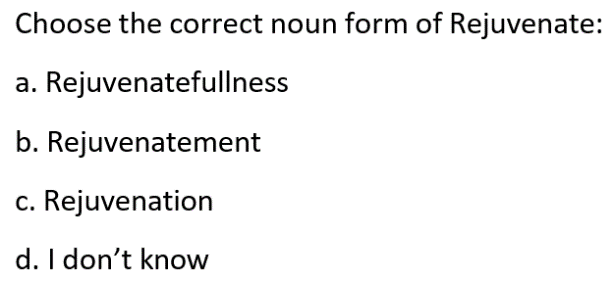
As for the test item shown in Figure 5, another student chose ‘I don’t know’ in the pre-test but then selected the correct answer (option C) in the post-test.
Students’ performance in terms of productive vocabulary
In the productive dimension, the students were asked to write sentences using an accurate collocation of the given word. With the maximum score given to this part as 17, the participants scored only between 3 and 6 in the pre-test, which then all increased to 17 in the post-test. Generally, all the students indicated a consistent and notable improvement in production skills.
Specific responses by the participants were looked at carefully for an accurate assessment of the progress achieved. For instance, in an attempt to respond to the test item with the word “prone,” several participants wrote in their pre-test responses:
(1a) My sister prones use social media too much.
(2a) Some people who usually eat junk food, prone to obesity.
The item above requires the students’ productive knowledge of “prone” to be able to produce grammatical and valid use of the word, according to the pragmatic use by Nation (2013). Obviously, both learners constructed erroneous sentences with “prone” in the pre-test but showed improvement in their post-test:
(1b) I am prone to surfing the Internet in spare time.
(2b) If students play games too much, they will be prone to suffering from vision problems.
Second-Year Students’ Perceptions towards Distributed Method Use to Improve their Vocabulary
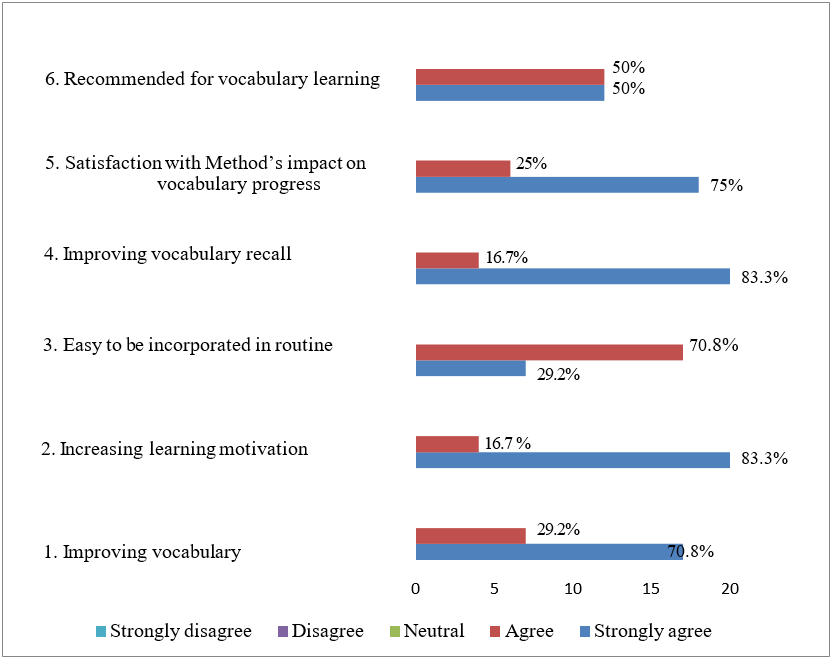
The participants’ responses show they mostly admitted the effectiveness of Distributed Method in learning English vocabulary. Figure 6 shows that all the participants hold a positive view and many of them indicated “strongly agree” for the surveyed statements regarding the impact of the method on their vocabulary knowledge. Specifically, all the participants, among whom nearly 80% selected the highest level of agreement, thought Distributed Method helped improve their vocabulary. A similar pattern repeated for the ideas that the method enhanced learner motivation, improved vocabulary recall, and brought about satisfactory progress. When asked whether they found it easy to incorporate the method into their learning routine, about 30% strongly agreed but all the participants showed their support concerning this issue. This might explain why some participants were less willing to recommend the Distributed Method for vocabulary learning.
To collect qualitative information from the learners, the study also examined students’ responses to the open-ended questions. Related to what specific aspects of the Distributed Method they found the most beneficial for vocabulary acquisition, they consistently emphasized that spaced repetition stands out as a key advantage. They mentioned the method helped reinforce learning, promote regular exposure to the words, and facilitate the recall and addition of new vocabulary to long-term memory.
Moving on to the challenges or difficulties encountered with the Distributed Method, participants mentioned a few common obstacles. The most prevalent challenge reported was maintaining consistency and discipline throughout regular study sessions spaced over time. Additionally, despite receiving initial instruction on how to use the method at the beginning of the intervention, the majority of participants reported difficulty managing their time between reviewing previously learned words and introducing new vocabulary. They also indicated resisting the urge to move on to new words without fully mastering previously learned items during self-study with the method was challenging.
Surveyed on the overall satisfaction with Distributed Method, participants reported the systematic use of spaced repetition combined with active recall enhanced their vocabulary retention and recall abilities. They also perceived an expansion of their lexical repertoire, which contributed to improvements in language skills and communication effectiveness. Furthermore, the method reportedly caters to individual learning preferences, particularly through its multimodal features. For instance, one participant explained the method allowed them to study vocabulary “in spaced sessions” using “online quizzes and illustrative videos,” which suited their learning style by enabling them to “not only read but also listen and do interactive exercises,” thereby helping them “remember words longer.”
Regarding suggestions for improving the use of the Distributed Method in learning vocabulary, participants proposed incorporating diverse learning resources, including multimedia materials, real-life contexts, and authentic sources such as articles or podcasts. They believed these additions would make the learning process more engaging and dynamic, thereby supporting deeper understanding and retention. Participants also emphasized setting specific learning goals and monitoring progress, which was perceived as a way to enhance motivation and provide a sense of achievement. One participant noted that observing steady improvement in test scores “made me feel very satisfied and gave me a sense of accomplishment,” which encouraged continued use of the method beyond vocabulary learning. However, such technological and multimedia integration should remain process-oriented because unguided digital use may encourage learners to seek quick outputs rather than engage in reflection, analysis, and authentic learning (Dang, 2025).
CONCLUSION
This study investigated the effectiveness of the Distributed Method in improving vocabulary learning among second-year students at the Faculty of English, UFLS-UD. Additionally, it explored students’ perceptions of using the Distributed Method for vocabulary improvement. The research then sought to provide valuable insights into effective vocabulary learning and teaching.
The data analysis revealed significant findings. Firstly, Distributed Method had a very positive impact on the students’ vocabulary learning. The statistical analyses provided robust evidence that the method effectively improved the participants’ vocabulary learning, including the ability to retain and utilize words. Also, their word knowledge in both receptive and productive categories grew considerably. Secondly, the survey responses indicated most of the students held a favourable attitude towards the use of Distributed Method in learning vocabulary.
The summarized findings lead to the following pedagogical implications. Firstly, Distributed Method is an effective way that can be used both as a self-learning strategy and in the language class to boost students’ lexical repertoire. Secondly, during spacing periods, teachers can replace traditional paper tests with more interactive technologies (e.g. online quizzes, multimedia materials, etc.) for ongoing assessment to boost student interest and engagement. Thirdly, ongoing assessments can incorporate local cultural references and learning content that contextualises vocabulary and makes it relevant to Vietnamese learners, improving learner motivation and participation. This recommendation is also supported by evidence that online formative assessment can improve EFL learners’ writing achievement through self-assessment, peer assessment, and teacher feedback, suggesting that technology-based assessment is most useful when it actively structures learner reflection and revision (Ho & Dang, 2019).
Although the study revealed promising results for the use of the Distributed Method in English vocabulary learning and instruction, it still had several limitations, including a small sample size due to time constraint, potential issues with vocabulary test administration, and research validity threats with the same vocabulary test used as both pre-test and post-test. These problems can be taken into consideration in further research on the same or similar topics.
References
Alqahtani, M. (2015). The importance of vocabulary in language learning and how to be taught. International Journal of Teaching and Education, 3(3), 21-34. https://doi.org/10.52950/TE.2015.3.3.002 DOI: https://doi.org/10.20472/TE.2015.3.3.002
Bahrick, H. P., & Hall, L. K. (2005). The importance of retrieval failures to long-term retention: A metacognitive explanation of the spacing effect. Journal of Memory and Language, 52(4), 566-577. https://doi.org/10.1016/j.jml.2005.01.012
Bahrick, H. P., Bahrick, L. E., Bahrick, A. S., & Bahrick, P. E. (1993). Maintenance of foreign language vocabulary and the spacing effect. Psychological Science, 4, 316–-321. https://doi.org/10.1111/j.1467-9280.1993.tb00571.x
Bai, Z. (2018). An analysis of English vocabulary learning strategies. Journal of Language Teaching and Research, 9(4), 849-855. https://doi.org/10.17507/jltr.0904.24
Bjork, R., & Kroll, J. (2015). Desirable difficulties in vocabulary learning. The American Journal of Psychology, 128(2), 241-252. https://doi.org/10.5406/amerjpsyc.128.2.0241
Bogaards, P., & Laufer, B. (Eds.). (2004). Vocabulary in a second language: Selection, acquisition, and testing (Vol. 10). John Benjamins Publishing. DOI: https://doi.org/10.1075/lllt.10
Brun-Mercer, N., & Zimmerman, C. B. (2015). Fostering academic vocabulary use in writing. CATESOL Journal, 27(1), 131-148. DOI: https://doi.org/10.5070/B5.36088
Cameron, L. (2001). Teaching languages to young learners. Cambridge University Press. DOI: https://doi.org/10.1017/CBO9780511733109
Cepeda, N. J., Pashler, H., Vul, E., Wixted, J. T., & Rohrer, D. (2006). Distributed practice in verbal recall tasks: A review and quantitative synthesis. Psychological Bulletin, 132(3), 354-380. https://doi.org/10.1037/0033-2909.132.3.354
Chamot, A. U., & O'’Malley, J. M. (1986). A cognitive academic language learning approach: An ESL content-based curriculum. National Clearinghouse for Bilingual Education.
Dang, T. T. (2025). AI tools for language learners: The promotion of learning independence or reliance. In V. P. H. Pham, A. Lian, A. Lian, & J. White (Eds.), Empowering educators: Integrating AI tools for personalized language instruction, (pp. 263-280). Springer Nature. https://doi.org/10.1007/978-3-032-01348-4_11
Denning, K. M., Kessler, B., & Leben, W. R. (2007). English vocabulary elements. Oxford University Press. DOI: https://doi.org/10.1093/oso/9780195168020.001.0001
Ebbinghaus, H. (1885). Über das gedächtnis: untersuchungen zur experimentellen psychologie [On memory: Studies in experimental psychology]. Duncker & Humblot.
Folse, K. S. (2006). The effect of type of written exercise on L2 vocabulary retention. TESOL Quarterly, 40(2), 273-293. https://doi.org/10.2307/40264523
Folse, K. S. (2008). Six vocabulary activities for the English language classroom. English Teaching Forum, 46(3), 12-21. https://files.eric.ed.gov/fulltext/EJ1096288.pdf
Goldstein, H., Ziolkowski, R. A., Bojczyk, K. E., Marty, A., Schneider, N., Harpring, J., & Haring, C. D. (2017). Academic vocabulary learning in first through third grade in low-income schools: Effects of automated supplemental instruction. Journal of Speech, Language, and Hearing Research, 60(11), 3237-3258. https://doi.org/10.1044/2017_JSLHR-L-17-0100
González-Fernández, B., & Schmitt, N. (2017). Vocabulary acquisition. In S. Loewen & M. Sato (Eds.), The Routledge handbook of instructed second language acquisition (pp. 280-298). Routledge. DOI: https://doi.org/10.4324/9781315676968-16
Groot, M. (2000). Computer assisted second language vocabulary acquisition. Language Learning and Technology, 4(1), 60-81. https://doi.org/10.64152/10125/25087
Hamdan, A., & Ahmed, S. (2018). Effective methods for teaching English vocabulary to Saudi female students. Journal of Education and Learning, 12(1), 118-125. https://doi.org/10.11591/edulearn.v12i1.9125
Hill, M., & Laufer, B. (2003). Type of task, time-on-task and electronic dictionaries in incidental vocabulary acquisition. International Review of Applied Linguistics in Language Teaching, 41(2), 87-106. https://doi.org/10.1515/iral.2003.007
Ho, N. B., & Dang, T. T. (2019). Impacts of online formative assessment on EFL students’ writing achievement. Journal of Science Ho Chi Minh City Open University, 9(1), 55-69. https://doi.org/10.46223/HCMCOUJS.soci.en.9.1.271.2019
Karpicke, J. D., & Roediger III, H. L. (2008). The critical importance of retrieval for learning. Science, 319(5865), 966-968. https://doi.org/10.1126/science.1152408
Lafleur, L. (2020). The indirect spaced repetition concept. Vocabulary Learning and Instruction, 9(2), 9-16. https://doi.org/10.7820/vli.v09.2.lafleur
Laufer, B., & Goldstein, Z. (2004). Testing vocabulary knowledge: Size, strength, and computer adaptiveness. Language Learning, 54(3), 399-436. https://doi.org/10.1111/j.0023-8333.2004.00260.x
Laufer, B., & Nation, P. (1999). A vocabulary-size test of controlled productive ability. Language Testing, 16(1), 33-51. https://www.lextutor.ca/tests/laufer_nation_1999.pdf DOI: https://doi.org/10.1177/026553229901600103
Lee, B., Plonsky, L., & Saito, K. (2020). The effects of perception-vs. production-based pronunciation instruction. System, 88, 1-13. https://doi.org/10.1016/j.system.2019.102185
Meara, P. (2005). Designing vocabulary tests for English, Spanish and other languages. In C. J. Doughty & M. H. Long (Eds.), The handbook of second language acquisition (pp. 271-285). Blackwell Publishing. DOI: https://doi.org/10.1075/pbns.140.19mea
Middleton, E. L., Schwartz, M. F., Rawson, K. A., Traut, H., & Verkuilen, J. (2016). Towards a theory of learning for naming rehabilitation: Retrieval practice and spacing effects. Journal of Speech, Language, and Hearing Research, 59(5), 1111-1122. https://doi.org/10.1044/2016_JSLHR-L-15-0303
Nakata, T., Tada, S., McLean, S., & Kim, Y. A. (2021). Effects of distributed retrieval practice over a semester: Cumulative tests as a way to facilitate second language vocabulary learning. TESOL Quarterly, 55(1), 248-270. https://doi.org/10.1002/tesq.596
Namaziandost, E., & Nasri, M. (2019). The impact of social media on EFL learners’ speaking skill: A survey study involving EFL teachers and students. Journal of Applied Linguistics and Language Research, 6(3), 199-215. https://www.jallr.com/index.php/JALLR/article/view/1031
Nation, I. S. P. (1983). Testing and teaching vocabulary. Guidelines, 5(1), 12-25. https://www.wgtn.ac.nz/lals/resources/paul-nations-resources/paul-nations-publications/publications/documents/1983-Testing-and-teaching.pdf
Nation, I. S. P. (1990). Teaching and learning vocabulary. Newbury House.
Nation, I. S. P. (2013). Learning vocabulary in another language. Cambridge University Press. DOI: https://doi.org/10.1017/CBO9781139858656
Nation, P., & Beglar, D. (2007). A vocabulary size test. The Language Teacher, 31(7), 9-13. https://doi.org/10.26686/wgtn.12552197
Newton, J. M., & Nation, I. S. P. (2020). Teaching ESL/EFL listening and speaking (2nd ed.). Routledge. DOI: https://doi.org/10.4324/9780429203114
Schmitt, N. (2000). Vocabulary in language teaching. Cambridge University Press.
Schmitt, N. (2008). Review article: Instructed second language vocabulary learning. Language Teaching Research, 12(3), 329-363. https://doi.org/10.1177/1362168808089921
Teninbaum, G. H. (2016). Spaced repetition: A method for learning more law in less time. Journal of High Technology Law, 17, 273-305.
Teng, M. F. (2023). The effectiveness of multimedia input on vocabulary learning and retention. Innovation in Language Learning and Teaching, 17(3), 738-754. https://doi.org/10.1080/17501229.2022.2131791
Turner, J. (2014). Using statistics in small-scale language education research: Focus on non-parametric data. Routledge. DOI: https://doi.org/10.4324/9780203526927
Webb, S. (2005). Receptive and productive vocabulary learning: The effects of reading and writing on word knowledge. Studies in Second Language Acquisition, 27(1), 33-52. https://doi.org/10.1017/S0272263105050023
Webb, S., & Nation, P. (2017). How vocabulary is learned. Oxford University Press. DOI: https://doi.org/10.25170/ijelt.v12i1.1458
Webb, S., Yanagisawa, A., & Uchihara, T. (2020). How effective are intentional vocabulary-learning activities? A meta-analysis. The Modern Language Journal, 104(4), 715-738. https://doi.org/10.1111/modl.12671
Zeng, Y., Kuo, L.-J., Chen, L., Lin, J.-A., & Shen, H. (2025). Vocabulary instruction for English learners: A systematic review - Connecting theories, research, and practices. Education Sciences, 15(3), 262. https://doi.org/10.3390/educsci15030262
Downloads
Published
Data Availability Statement
N/A
Issue
Section
License
Copyright (c) 2026 Nguyen Ngoc Nhat Minh, Nguyen Phan Thuc Ngan

This work is licensed under a Creative Commons Attribution-NonCommercial-NoDerivatives 4.0 International License.