
Exploring first-year English majors’ practices of extensive listening: A descriptive study
DOI:
https://doi.org/10.65956/procia.2026.130Keywords:
listening skills, extensive listening, practicesAbstract
Listening is widely acknowledged as a foundational component of language learning and contributes significantly to overall language proficiency. Various instructional approaches have been introduced to help learners strengthen their listening competence, among which Extensive Listening has attracted increasing attention. Extensive Listening exposes learners to substantial amounts of comprehensible and engaging input through repeated, meaningful listening practice. Understanding how first-year English majors engage with Extensive Listening is particularly important because they are transitioning to more autonomous learning at university while often facing listening difficulties and limited guidance beyond the classroom. This study investigates first-year English majors’ practices of Extensive Listening, focusing on their materials, listening frequency, strategies, and reported challenges. A mixed-methods design was employed, incorporating a post-intervention questionnaire administered to 128 participants and follow-up interviews with 12 students. The findings indicate that students commonly selected listening materials based on personal interest or language level, with digital platforms such as YouTube and podcasts widely used. Many students reported practising listening several times per week and using strategies such as note-taking, subtitles, shadowing, pausing, and repeated listening to support comprehension. However, students also reported difficulties in finding suitable materials, understanding fast speech, managing time, and maintaining motivation. The study concludes that although students actively engage in Extensive Listening, structured pedagogical support remains important. These findings offer practical implications for EFL educators seeking to integrate Extensive Listening into early university curricula.
INTRODUCTION
Listening is widely recognised as a fundamental component of second language acquisition and communicative competence. As a primary source of linguistic input, it plays a crucial role in facilitating vocabulary acquisition, grammatical awareness, and pronunciation development (Field, 2008; Rost, 2011). Effective listening instruction not only strengthens comprehension but also enhances learners’ ability to use the target language fluently and confidently in contexts outside the classroom. Despite its importance, listening has often been regarded as a passive skill in English language teaching, receiving less attention than speaking or writing in classroom instruction (Renandya & Farrell, 2011).
In recent years, Extensive Listening (EL) has gained prominence as a learner-centred approach that encourages students to listen widely and frequently to materials of their own choice. Defined as “listening to large amounts of comprehensible and enjoyable input” (Renandya & Farrell, 2011, p. 56), EL emphasises exposure, motivation, and autonomy rather than form-focused comprehension tasks. Previous studies have shown that sustained engagement in EL can enhance listening fluency, vocabulary growth, and learner confidence. Moreover, EL allows learners to engage with authentic spoken language, such as podcasts, YouTube videos, and audiobooks, thereby bridging the gap between classroom instruction and real-world communication.
Although a growing body of research affirms the benefits of EL, most existing studies have been conducted in foreign contexts such as Indonesia (Nugroho, 2020; Rusmiati et al., 2024; Ulfa, 2019) and Japan (Chang & Millett, 2014), focusing primarily on the integration of EL programmes or learners’ perceptions. In the Vietnamese context, research on EL remains scarce, and few studies have specifically investigated how students practise EL outside the classroom. Vo (2013) examined the use of digital resources for listening practice among Vietnamese learners but paid little attention to the systematic application of EL principles. Consequently, there remains a lack of empirical evidence on how first-year English majors, particularly those at regional universities, engage in EL activities and what challenges they face when applying this approach independently.
To address this gap, the present study focuses on the actual practices of EL among first-year English majors at a public university in central Vietnam. It aims to examine how students implement EL to improve their listening skills, including their use of materials, strategies, and listening routines. By exploring students’ engagement with EL, this research provides insights into how autonomous listening practices contribute to language development in the Vietnamese EFL context. The study also offers implications for teachers and curriculum designers seeking to integrate EL more effectively into language programs.
LITERATURE REVIEW
Language Acquisition and the Role of Input
Second language acquisition (SLA) research has long highlighted the importance of input in developing communicative competence. Krashen’s Input Hypothesis (1982), which posits that acquisition occurs through exposure to comprehensible input (i+1), provides a useful foundation for understanding how learners benefit from listening. However, input alone does not guarantee effective learning. Recent research has emphasised that learners’ engagement with input, particularly through listening strategies and self-regulation, plays a crucial role in determining learning outcomes (Goh & Vandergrift, 2012; Vandergrift, 2007).
In the context of listening, strategies such as pausing, replaying, note-taking, and using captions or subtitles are essential for supporting comprehension, especially for lower-proficiency learners. These strategies help learners manage cognitive load, monitor understanding, and compensate for gaps in linguistic knowledge. At the same time, the ability to select appropriate materials based on interest and difficulty level has been identified as a key component of successful listening development, as it ensures that input remains both comprehensible and motivating.
EL builds on the principle of exposure to input, but it also relies heavily on learners’ capacity to regulate their own learning. In out-of-class contexts, learners must independently choose materials, apply strategies, and maintain engagement over time. This highlights the importance of self-regulated learning, where learners actively control their goals, strategies, and behaviours (Vandergrift, 2007). Without such regulation, exposure to input may remain passive and yield limited benefits.
For first-year English majors, who are transitioning from teacher-directed instruction to more autonomous learning environments, these factors become particularly significant. Their listening development depends not only on the availability of input but also on how effectively they manage listening strategies, control task difficulty, and sustain motivation. Therefore, this study draws on both input-based and strategy-based perspectives to examine how learners engage with EL in practice, focusing specifically on their use of materials, strategies, and self-regulatory behaviours.
Extensive Listening
Renandya and Farrell (2011) define EL as “all types of listening activities that allow learners to receive a lot of comprehensible and enjoyable listening input” (p. 56). EL aims to cultivate fluency, confidence, and motivation by allowing learners to choose materials aligned with their interests and proficiency levels. This approach is underpinned by Krashen’s (1982) Input Hypothesis, which posits that language acquisition occurs when learners are exposed to input slightly above their current competence (i+1). Through such exposure, learners naturally acquire vocabulary, grammatical structures, and pronunciation patterns without the pressure of explicit instruction.
EL contributes to both cognitive and affective development. Cognitively, repeated listening facilitates automaticity, enhances comprehension, and promotes vocabulary retention (Chang & Millett, 2014). Affectively, it supports learner autonomy and intrinsic motivation, as learners take ownership of material selection and pacing (Vandergrift, 2007). By shifting focus from accuracy to meaning, EL provides a low-anxiety environment conducive to language acquisition. These principles align with the broader goals of communicative language teaching, which emphasise meaningful interaction and learner engagement.
Recent advances in technology have significantly expanded the potential of EL. Digital platforms such as YouTube, Spotify, and podcasts, as well as streaming services and mobile apps, provide unprecedented access to authentic materials (Ivone & Renandya, 2019). Such accessibility enables learners to practise listening in diverse real-world contexts and integrate it into their daily routines. However, as Goh and Vandergrift (2012) note, successful implementation depends on learners’ ability to select suitable materials and employ strategies to process input effectively. Without structured guidance, learners may engage passively, relying heavily on subtitles or entertainment-focused materials that limit linguistic benefit.
In essence, EL combines the principles of comprehensible input, learner autonomy, and motivational engagement, making it a powerful tool for promoting authentic language exposure both inside and outside the classroom. Yet, its success depends on how well learners are trained to apply self-regulated strategies and how teachers scaffold the process to ensure purposeful learning.
The present study adopts Renandya and Farrell’s (2011) definition of EL because it emphasizes both quantity and enjoyment of listening input, two aspects particularly relevant to university students who are developing independent learning habits. Furthermore, the study investigates students’ practices of EL, rather than its direct effect on test performance, to understand how learners at the early tertiary level engage with this approach in real contexts. This focus responds to a gap in Vietnamese EFL research, where EL has been discussed conceptually but seldom examined in terms of actual learner practices.
Previous Related Studies
Previous research on EL has consistently highlighted its potential to support language development. However, a closer synthesis suggests that learners’ engagement with EL can be understood through several key dimensions, including material selection, time-on-task, strategy use, and barriers to implementation.
First, studies have shown that the type of materials learners select plays a crucial role in shaping learning outcomes. Chang and Millett (2014) demonstrated that graded audio texts improved comprehension and listening speed, while Borges Ucán (2010) found that authentic materials supported vocabulary development and strategy use. These findings suggest that both the level and nature of input influence how learners process listening. However, most studies have focused on structured or guided contexts, leaving unclear how learners independently select materials when engaging in EL.
Second, time-on-task has been identified as an important factor in EL effectiveness. Waring (2010) emphasised that large-scale exposure contributes to automaticity in word recognition, highlighting the importance of sustained engagement. Nevertheless, research has also noted that learners often struggle to maintain consistent listening routines (Rusmiati et al., 2024), indicating that frequency and regularity of practice remain variable, particularly in less structured environments.
Third, a growing body of research has examined the role of strategy use in EL. Ivone and Renandya (2019) and Gavenila et al. (2021) found that learners actively regulate their listening through strategies such as selecting materials, using support tools, and managing comprehension, which contributes to both motivation and self-regulation. These findings suggest that EL is not merely exposure-based but involves active learner engagement. However, few studies have examined how such strategies are actually used by novice learners in real learning contexts.
Finally, several studies have identified barriers that affect learners’ engagement with EL. Yurko and Styfanyshyn (2020) reported difficulties with fast speech and unfamiliar accents, while Rusmiati et al. (2024) highlighted issues related to fatigue and inconsistency. In addition, the difficulty of finding appropriate materials and the lack of guidance have been noted as challenges that may influence how learners approach EL.
Taken together, previous studies suggest that EL engagement is shaped by a combination of material selection, time-on-task, strategy use, and contextual barriers. However, most existing research has focused on learners who are already familiar with EL or has examined these factors in isolation. There remains limited understanding of how novice learners, particularly first-year university students, integrate these aspects in their actual practices. In the Vietnamese context, research is especially scarce, with Vo (2013) focusing primarily on high school settings.
Given this gap, a descriptive design is appropriate to capture how learners engage with EL in practice, including the materials they select, the frequency of their listening, the strategies they use, and the challenges they encounter. By examining these dimensions together, the present study aims to provide a more comprehensive account of students’ practices in EL within a specific educational context.
Research Questions
To fulfil the purpose of the study, the survey sought to answer the following research questions:
- What tools, resources, and strategies do students use to practise EL?
- What challenges do they encounter when engaging in EL practices?
METHODS
Pedagogical Setting and Participants
The study was conducted in the English Language program at a university in central Vietnam. This program aims to help students develop comprehensive English proficiency and communicative competence for academic and professional contexts. Listening is taught as a core component throughout the first year; however, classroom instruction mainly focuses on intensive practice with limited time for extended exposure to authentic materials. To compensate for these constraints, students are encouraged to engage in EL outside class to enhance their comprehension and fluency.
A total of 128 first-year English majors voluntarily participated in this study. They had studied English formally for an average of seven to eight years before entering university, and most reported an English proficiency level corresponding to CEFR A1-A2. All participants were taking general English courses at the time of the study. The participants were selected through convenience sampling because they were accessible to the researchers.
To gain deeper insights into their EL experiences, 12 students were later invited to participate in semi-structured interviews. The inclusion of both survey and interview participants enabled the researcher to gather complementary data sources and provide a richer understanding of students’ listening practices, challenges, and strategies.
Design of the Study
This research employed a descriptive design with a mixed-methods approach, combining a questionnaire with follow-up semi-structured interviews. Descriptive research is particularly suitable for examining current practices, as it seeks to provide an accurate account of behaviours, conditions, or phenomena without experimental manipulation (Creswell, 2012). In the present study, the design was used to examine students’ practices of EL as reported after participation in an eight-week EL program.
The questionnaire enabled the collection of quantitative data from a large group of students, thereby identifying common patterns in EL practices. Follow-up interviews with a smaller subsample were used to provide explanatory qualitative insights into students’ material selection, strategies, and challenges that could not be fully captured through questionnaire responses alone. This combination of quantitative breadth and qualitative support provided a fuller understanding of learners’ EL practices, consistent with mixed-methods approaches in applied linguistics (Dörnyei, 2007).
Data Collection and Analysis
Data were collected through an online questionnaire administered via Google Forms after students had completed an eight-week EL programme. Accordingly, the practices reported in this study should be understood as program-mediated practices shaped by the weekly EL tasks. Each week, they selected an English-language audio or video clip, such as a podcast, song, or news report, of at least one minute in length and submitted a short reflection via Google Classroom. Their reports included the material link, a brief summary, reasons for selection, and what they had learned. This structure supported regular listening and provided a basis for observing students’ practices over time.
Following the programme, students completed a post-intervention questionnaire administered via Google Forms. The questionnaire was designed to examine their practices, including material selection, listening frequency, strategy use, and challenges. Students were given one week to complete the survey at their convenience.
The questionnaire consisted of 15 items divided into two main parts, (I) General Information and (II) Practices of EL. A summary of the questionnaire content is presented in Table 1.
Table 1. Summary of Questions Exploring Students’ Practices of EL
|
Part |
Question(s) |
Question Type |
Purpose |
|---|---|---|---|
|
I. General Information |
1-4 |
Multiple choice |
Collect demographic data. |
|
II. Practices of EL |
5 |
Checkbox |
Identify resources used for EL. |
|
6-13 |
Multiple choice & Checkbox |
Explore techniques, comprehension, post-listening activities and review practices. |
|
|
14-15 |
Checkbox |
Investigate difficulties and coping strategies. |
Survey responses were analysed descriptively by counting frequencies and calculating percentages to summarise key trends. To enrich the findings, semi-structured interviews were conducted with 12 volunteer participants via Google Meet as short, targeted explanatory follow-ups. Each interview lasted approximately 5-7 minutes and focused on specific follow-up topics, including students’ engagement with listening materials, the challenges they encountered, and the strategies they used during EL practices. Interviews were conducted in basic English and transcribed with participants’ consent. The transcripts were then coded using categories aligned with the research questions, namely listening materials and resources, reported challenges, and coping strategies. To enhance the credibility of the qualitative analysis, researcher triangulation was applied during the coding process, in which the two researchers reviewed and compared the coding decisions before agreeing on the final themes (Braun & Clarke, 2006). Recurring patterns and illustrative responses were then identified to complement and clarify the survey findings.
FINDINGS
This section presents the major findings of the study on first-year English majors’ practices of EL. Data were gathered through a post-intervention questionnaire completed by 128 participants and are organized according to the key themes of listening materials and frequency, criteria for material selection, listening techniques, post-listening activities, challenges, and coping strategies. Figure 1 displays the types of listening materials students regularly use during their EL sessions.
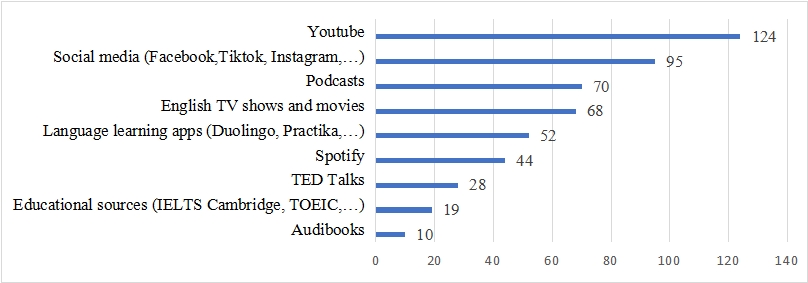
As shown in Figure 1, students made use of a wide variety of digital tools and resources for EL. Among the materials reported, YouTube was selected most frequently, followed by English movies or TV shows, podcasts, and social media applications such as Facebook, TikTok, and Instagram. In contrast, fewer participants reported using audiobooks, Spotify, or formal educational materials such as IELTS and TOEIC listening resources. A small number relied on language learning applications like Duolingo or Practika. These patterns suggest that students tended to choose accessible and familiar platforms that offer authentic and engaging content.
In relation to content selection, Figure 2 shows how students typically choose materials for their EL practice.
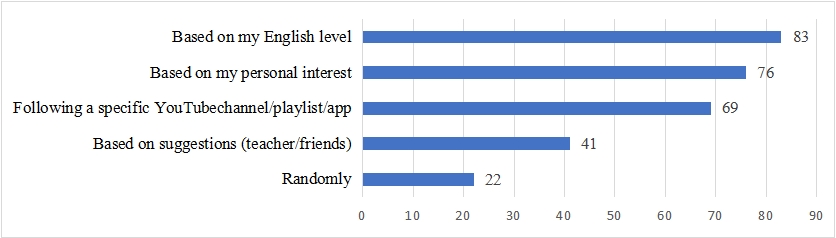
As shown in Figure 2, 83 students reported choosing materials based on their English proficiency level, while 76 selected content that aligned with their personal interests. These results indicate that students considered both comprehensibility and enjoyment when selecting materials. Choosing level-appropriate content may support comprehension, whereas interest-based selection may help sustain motivation for continued listening practice. This finding is reflected in the interviews, where several students described checking if materials were “too hard” by listening for a few minutes and deciding based on how many words they understood. This suggests that students engaged in difficulty calibration by evaluating lexical coverage and the amount of support required to follow the content. For example:
S1: “If I listen to something and I don’t understand many words, I feel that it is too difficult for me. I try again, but if I still don’t understand, I stop and choose an easier video.”
S4: “Sometimes I turn on English subtitles to help me. But if I still don’t understand the meaning of many sentences, even with subtitles, then I know the video is too hard for me.”
S8: “I check how many words I know when I listen. If I only know a few words, I feel the video is too difficult and I change it.”
S12: “If I need to pause the video all the time and use the dictionary a lot, I know it is too difficult for me to follow.”
These responses align with the survey data showing that learners make material choices consciously and often based on comprehensibility. A further 69 students followed recommended channels or apps, which reflects the growing influence of digital platforms. Teacher or peer suggestions were cited by 41 students. A minority (n = 22) admitted to choosing randomly, suggesting that while most learners adopt a strategic approach, a segment lacks clear direction in pre-listening preparation. Figure 3 illustrates how often students practice EL outside the classroom.
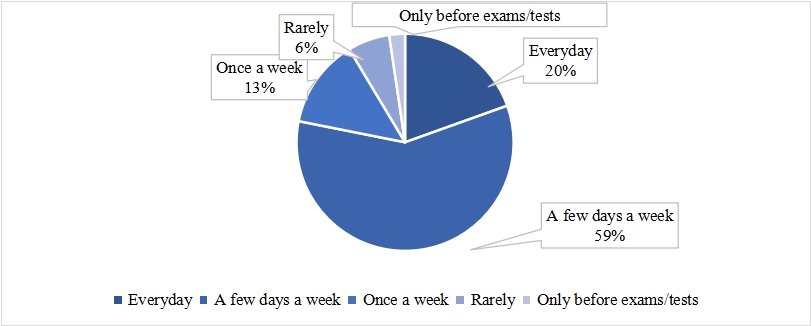
Figure 3 presents the frequency of students’ listening activities outside the classroom. More than half of the respondents reported engaging in EL a few days each week, while about one-third listened to English daily. A smaller number stated that they listened only once a week, rarely, or mainly before tests.
These findings indicate varying levels of engagement in EL among students. However, because the eight-week program required regular listening tasks and weekly submissions, the reported frequency may partly reflect participation in the program rather than fully established long-term listening habits. Nevertheless, the results suggest that many students were able to incorporate EL into their weekly routines during the study period, although consistent daily listening was less common. Figure 4 identifies the specific techniques students used during listening.
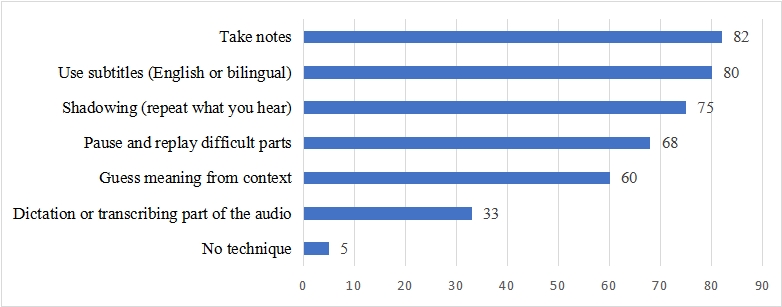
According to Figure 4, the most commonly employed strategies were note-taking (n = 82), using subtitles (n = 80), and shadowing (n = 75), in which learners repeat what they hear. These responses suggest frequent use of cognitive strategies (e.g., note-taking, shadowing) together with comprehension support tools (e.g., subtitles). This is also reflected in the interviews. For example:
S1: “I always turn on English subtitles. They help me understand what the people are saying and learn new words.”
S4: “After I finish the video, I use a dictionary to check the meaning of new words and write them in my notebook.”
S11: “I learn English words from songs. I listen and sing along to remember the words and how to say them.”
S12: “Shadowing is the best for me. I listen and speak at the same time with the speaker. It helps my listening and speaking together.”
These findings indicate that students actively supported comprehension through a combination of meaning-focused strategies, repetition, and language support tools suited to their current level. These were followed by pausing and replaying difficult parts (n = 68), and guessing meaning from context (n = 60). Pausing and replaying may also reflect metacognitive monitoring, as learners adjusted listening pace when comprehension difficulties occurred. Dictation or transcription was the least frequently reported practice, selected by 33 students, while 5 students reported using no particular technique at all.
As indicated in Figure 5, the two most frequently selected activities were reviewing vocabulary after listening (n = 88) and listening again for clarity (n = 80). These quantitative trends are clearly echoed in student comments.
S4: “After I finish the video, I use a dictionary to check the meaning of new words and write them in my notebook.”
S6: “I try to remember the new words by writing and reading them again. This helps me use them later.”
S11: “I learn English words from songs. I listen and sing along to remember the words and how to say them.”
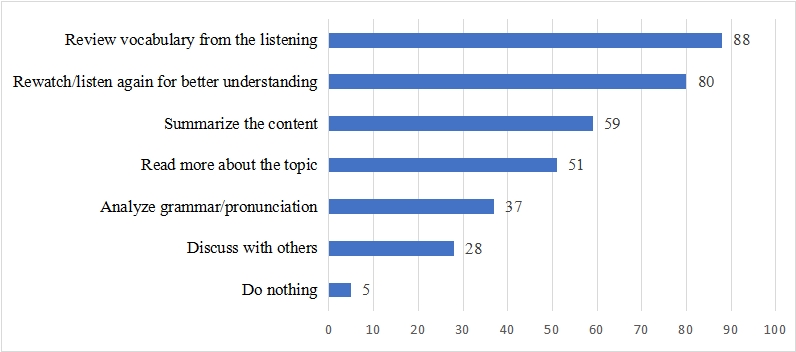
Such practices illustrate how students independently extend EL into vocabulary building and comprehension reinforcement. These activities were followed by summarising the content (n = 59) and reading more about the topic (n = 51). Fewer students reported analyzing grammar or pronunciation (n = 37) or discussing with others (n = 28). Only 5 learners stated they did nothing after listening. To explore barriers to EL practice, Figure 6 identifies common challenges encountered during EL.
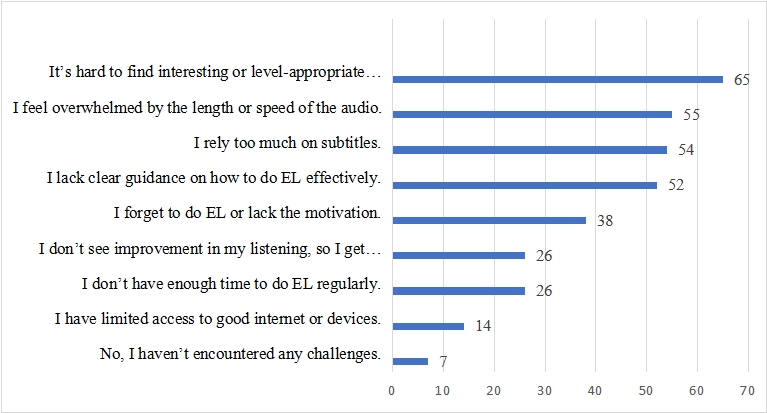
As reported in Figure 6, students experienced several challenges in EL that can be grouped into broader categories. First, input difficulty and access to suitable materials were the most frequently reported issues. The largest number of students (n = 65) reported difficulty finding interesting or level-appropriate materials. In addition, 55 students reported problems with fast speech and audio length, while 54 students felt overly dependent on subtitles. These findings suggest that both linguistic difficulty and material selection influenced students’ ability to sustain listening practice.
Second, affective and motivational challenges were also evident. Interview responses illustrate how repeated comprehension difficulties and limited perceived progress reduced confidence and motivation:
S1: “Yes, I feel frustrated when I listen and don’t understand anything. It makes me feel like I am not good at English.”
S7: “I feel lazy when I don’t see my English getting better. I think I try hard but nothing changes, so I lose interest.”
S8: “If the video is long and I cannot understand much, I stop watching early. I don’t want to continue.”
These responses indicate that difficulty in understanding materials may lead to frustration, lower self-confidence, and reduced willingness to continue listening.
Third, routine and guidance-related challenges were reported by a smaller but notable group of students. A total of 52 students identified a lack of methodological guidance, while others reported irregular habits (n = 38) and scheduling problems (n = 26). This suggests that, beyond language difficulty, some students also needed clearer support in organising regular EL practices and selecting effective ways to listen.
Overall, the findings indicate that students’ challenges in EL were shaped by a combination of input difficulty, affective factors, and routine management rather than by a single obstacle. In response to those challenges, Figure 7 presents the solutions students used to address these difficulties.
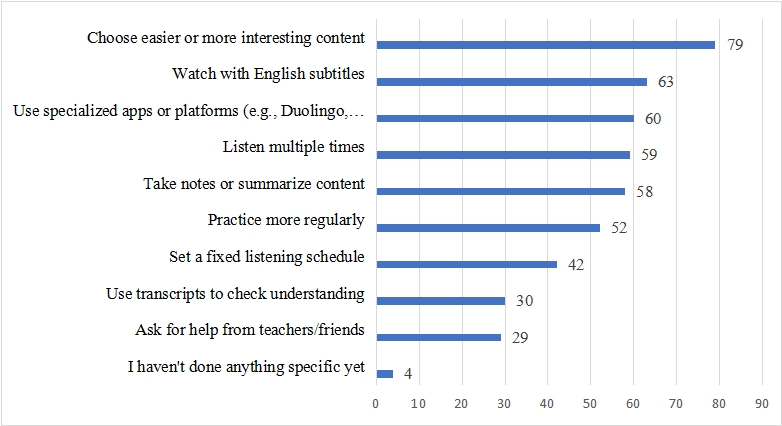
As can be seen from Figure 7, the most common reported response was choosing easier or more interesting materials (n = 79), followed by watching with English subtitles (n = 63) and using specific apps (n = 60). Interview data show similar self-directed approaches. For example:
S1: “I always turn on English subtitles. They help me understand what the people are saying and learn new words.”
S2: “I use the slow speed on YouTube. When the speaker talks slowly, I can hear each word more clearly.”
S8: “I begin with easy videos and then move to harder ones. This helps me slowly improve step by step.”
These responses suggest that students commonly adjusted material difficulty, playback speed, and support tools when encountering comprehension problems during EL. Other reported behaviours included listening multiple times (n = 59), taking notes or summarising (n = 58), and increasing listening time (n = 52). Some learners developed fixed listening schedules (n = 42), while others used transcripts to check understanding (n = 30) or sought help from teachers or peers (n = 29). These practices suggest that students relied on a range of practical strategies to manage difficulties encountered during EL.
In summary, regarding the first research question, the findings indicate that students reported active use of diverse digital tools and resources when practising EL, with YouTube, English movies or TV shows, podcasts, and social media platforms being the most frequently selected materials. These findings suggest that learners tended to choose accessible and engaging sources that offered authentic language input. In selecting materials, students commonly considered both their English proficiency level and personal interests, indicating attention to comprehensibility and enjoyment. They also reported using a range of listening strategies and supportive behaviours, especially note-taking, subtitles, shadowing, pausing and replaying difficult parts, and guessing meaning from context. Overall, the findings show that students actively adapted materials and strategies to support their EL practices according to their individual needs and listening ability.
Students also encountered several challenges in their EL practices. The most common difficulties involved finding interesting or level-appropriate materials, understanding fast speech or lengthy audio, and becoming overly dependent on subtitles. In addition, some learners reported a lack of methodological guidance, irregular listening habits, scheduling problems, and reduced motivation. Interview responses further indicated that repeated comprehension difficulties and limited perceived progress could lower confidence and willingness to continue listening. To manage these challenges, students reported coping behaviours such as choosing easier materials, using subtitles, slowing playback speed, listening multiple times, using transcripts, and setting fixed schedules. These findings suggest that while students showed initiative in addressing difficulties, sustained EL practices may require clearer pedagogical support and guidance.
DISCUSSION
This study explored how first-year English majors implemented EL and what difficulties they encountered in the process. The discussion below addresses each research question in turn.
RQ1: What tools, resources, and strategies do students use in practicing EL?
Students reported active use of digital platforms, especially YouTube, English films, and podcasts, as their main EL resources. This preference confirms findings by Renandya and Farrell (2011) and Ivone and Renandya (2019), who noted that authentic online materials increase motivation and provide meaningful exposure. However, unlike the participants in Chang and Millett’s (2014) study, who combined graded and authentic input, most participants relied largely on informal entertainment media, suggesting limited guidance in choosing level-appropriate materials. Listening frequency varied, because although many practised several times per week, fewer reported daily listening. Vo (2013) similarly found that Vietnamese learners often treat out-of-class listening as optional rather than habitual. Students also selected materials largely based on personal interest, showing autonomy but not always pedagogical awareness. Strategies such as note-taking, using subtitles, and shadowing were among the most commonly reported practices, alongside pausing and replaying. These patterns indicate that students employed a range of strategies to support their listening, although their use of these strategies may not always be systematic. Post-listening practices were mainly limited to vocabulary review or rewatching.
RQ2: What challenges do they encounter when engaging in EL practices?
The most frequently reported challenge was difficulty in finding suitable and level-appropriate materials, followed by issues related to input difficulty, time management, and motivation. These concerns echo those reported in Renandya and Farrell (2011) and Ulfa (2019). Some students also reported reliance on subtitles, which may influence how they process listening input (Chang & Millett, 2014).
To address these challenges, students reported choosing easier materials, using subtitles or transcripts, and adjusting their listening routines. Some also reported setting schedules, indicating emerging self-regulation. However, several students reported having no clear plan, which supports Vandergrift’s (2007) view that explicit strategy support is important in developing listening practices. Overall, the findings suggest that while students are aware of different ways to manage difficulties, their practices remain variable and not always consistently applied.
CONCLUSION
This study extends the growing body of EL research by documenting how first-year English majors in a Vietnamese tertiary context implement EL in practice. The findings suggest that while students demonstrate willingness and emerging autonomy in engaging with authentic digital materials, their listening behaviours remain largely exposure-driven rather than strategically regulated. EL is primarily approached as a source of comprehensible input and vocabulary expansion, with limited evidence of systematic metacognitive planning or reflective skill development.
The study also reveals a tension between access and effectiveness. Although digital platforms provide abundant listening opportunities, learners continue to face difficulties related to material selection, processing speed, motivation, and overreliance on supportive tools such as subtitles. These patterns indicate that autonomy alone does not guarantee optimal listening development. Instead, the findings point to the need for structured scaffolding that supports learners in transforming exposure into sustained skill growth. By offering empirical insights from an underrepresented EFL context, this research contributes localised evidence to the EL literature and underscores the importance of integrating guided strategy development into autonomous listening practices at the tertiary level.
PEDAGOGICAL IMPLICATIONS
The findings suggest several evidence-based implications for teachers seeking to support students’ EL practices. As the most frequently reported challenge was difficulty finding interesting or level-appropriate materials, teachers could provide curated playlists or resource banks organised by proficiency level, topic, and listening purpose. In addition, brief training in difficulty judgement, which could involve helping students evaluate speech rate, vocabulary load, and overall comprehensibility, may support more effective material selection and reduce frustration.
As many students also reported dependence on subtitles and difficulty understanding fast speech, teachers could introduce staged captioning support, beginning with English subtitles and gradually reducing reliance as students gain confidence. Strategy instruction in pausing, replaying, note-taking, shadowing, and guessing meaning from context may further strengthen listening comprehension. Since irregular habits and motivation were also identified, teachers may encourage sustainable EL routines through weekly logs, short reflection tasks, or portfolio-based tracking. These forms of structured support may help students maintain regular engagement while still preserving learner autonomy.
LIMITATIONS
This study has several limitations. First, the data were collected from a single group of first-year English majors at one university, which may limit the generalisability of the findings. Second, the study relied primarily on self-reported data, which may be subject to response bias. Third, as the study was conducted within an eight-week EL programme with structured weekly tasks, students’ practices were shaped by this context. Finally, the interview data were based on short responses in simple English, which may limit the depth of qualitative insights.
References
Borges Ucán, J. L. (2010). Benefits of using extensive listening in ELT. In Memorias del VI Foro de Estudios en Lenguas Internacional (FEL 2010) (pp. 36-44). Universidad de Quintana Roo.
Braun, V., & Clarke, V. (2006). Using thematic analysis in psychology. Qualitative Research in Psychology, 3(2), 77-101. https://doi.org/10.1191/1478088706qp063oa
Chang, A. C.-S., & Millett, S. (2014). The effect of extensive listening on developing L2 listening fluency: Some hard evidence. ELT Journal, 68(1), 31-40. https://doi.org/10.1093/elt/cct052
Creswell, J. W. (2012). Research design: Qualitative, quantitative, and mixed methods approaches (4th ed.). SAGE.
Dörnyei, Z. (2007). Research methods in applied linguistics: Quantitative, qualitative, and mixed methodologies. Oxford University Press.
Field, J. (2008). Listening in the language classroom. Cambridge University Press. https://doi.org/10.1017/CBO9780511575945
Gavenila, E. I., Wulandari, M., & Renandya, W. A. (2021). Using TED Talks for extensive listening. PASAA, 61, 147-175. https://doi.org/10.58837/chula.pasaa.61.1.6
Goh, C. C. M. & Vandergrift, L., (2012). Teaching and learning second language listening: Metacognition in action. Routledge. https://doi.org/10.4324/9780203843376
Ivone, F. M., & Renandya, W. A. (2019). Extensive listening and viewing in ELT. TEFLIN Journal, 30(2), 237-256. https://doi.org/10.15639/teflinjournal.v30i2/237-256
Krashen, S. D. (1982). Principles and practice in second language acquisition. Pergamon Press.
Nugroho, D. Y. (2020). EAP students’ perceptions of extensive listening. Metathesis: Journal of English Language, Literature, and Teaching, 4(1), 95-106. https://doi.org/10.31002/metathesis.v4i1.2296
Renandya, W. A., & Farrell, T. S. C. (2011). “Teacher, the tape is too fast!” Extensive listening in ELT. ELT Journal, 65(1), 52-59. https://doi.org/10.1093/elt/ccq015
Rost, M. (2011). Teaching and researching listening (2nd ed.). Pearson Education.
Rusmiati, R., Rakhmyta, Y. A., Hanif, H., & Saputra, E. (2024). Extensive listening as a tool for language proficiency improvement: A qualitative analysis of student feedback. Getsempena English Education Journal, 11(1), 28-38. https://doi.org/10.46244/geej.v11i1.2876
Ulfa, N. (2019). Students’ perception on the use of extensive listening. In Proceedings of the 1st Bogor English Student and Teacher (BEST) Conference 2019 (pp. 101-108). Universitas Ibn Khaldun Bogor.
Vandergrift, L. (2007). Recent developments in second and foreign language listening comprehension research. Language Teaching, 40(3), 191-210. https://doi.org/10.1017/S0261444807004338
Vo, Y. (2013). Developing extensive listening for EFL learners using Internet resources. Hawaii Pacific University TESOL Working Paper Series, 11, 29-51. https://www.hpu.edu/research-publications/tesol-working-papers/2013/new-with-metadata/02-yenvo2013.pdf
Waring, R. (2010). Extensive listening. http://www.robwaring.org/el/
Yurko, N. A., & Styfanyshyn, I. M. (2020). Listening skills in learning a language: The importance, benefits and means of enhancement. In Representation of educational achievements, mass media and the role of philology in the modern system of sciences (pp. 38-46). UKRLOGOS Group. https://doi.org/10.36074/rodmmrfssn.ed-1.04
Downloads
Published
Data Availability Statement
The data supporting the findings of this study are available from the corresponding author upon reasonable request.
Issue
Section
License
Copyright (c) 2026 Thanh Truc Nguyen, Ngoc Tuyen Tran

This work is licensed under a Creative Commons Attribution-NonCommercial-NoDerivatives 4.0 International License.